 India
India  UK
UK USA
USA 
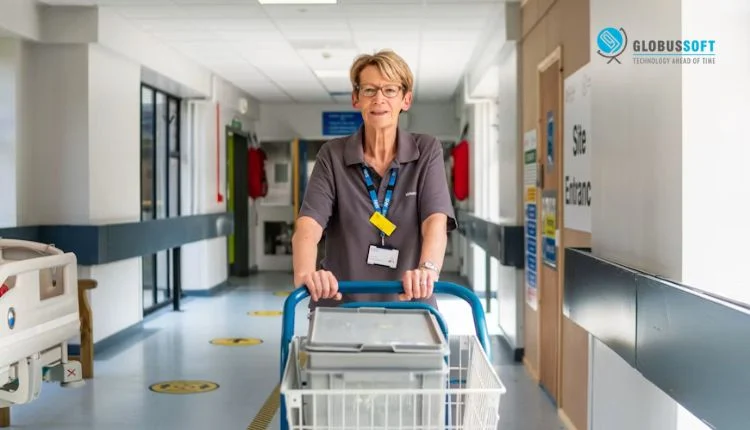
Hospitals are among the busiest and most complex environments to secure. A single facility may serve thousands of patients, visitors, healthcare professionals, and vendors every day, creating constant movement across entrances, emergency departments, pharmacies, parking lots, and restricted clinical areas. While traditional CCTV systems have long been a part of hospital security, simply recording video is no longer enough to address today’s evolving risks.
The need for smarter security has never been greater. According to the U.S. Bureau of Labor Statistics, healthcare workers experience workplace violence at five times the rate of workers in other industries. At the same time, hospitals continue to face challenges such as unauthorized access, infant protection, medication theft, workplace violence, and delayed emergency response. Security teams can no longer rely on operators watching dozens—or even hundreds—of camera feeds around the clock.
Artificial intelligence is changing that reality. Instead of passively recording incidents, AI-powered security platforms can analyze live video, detect unusual activity, identify potential threats, and notify security teams within seconds. This enables hospitals to respond faster while improving safety for patients, staff, and visitors.
In this article, you’ll learn how AI is transforming security systems for hospitals, why traditional surveillance is becoming insufficient, and which AI capabilities are helping healthcare facilities create safer and more efficient environments.
1. AI Turns Hospital Cameras into Active Security Partners
Traditional surveillance systems are primarily designed to record footage for later review. Unfortunately, by the time someone discovers an incident, valuable response time has already been lost.
AI changes the purpose of hospital cameras entirely. Instead of acting as passive recording devices, cameras become intelligent sensors that continuously analyze activity and notify security personnel when something unusual occurs.
This shift is especially valuable in hospitals because security teams cannot realistically monitor hundreds of live camera feeds at once. AI continuously watches every connected camera simultaneously, helping teams focus only on events that require attention.
Examples include:
- Detecting unauthorized entry into restricted departments
- Identifying suspicious behavior around sensitive areas
- Monitoring unusual crowd formation in emergency departments
- Alerting staff to after-hours activity
- Recognizing potential safety risks before they escalate
Rather than replacing security personnel, AI helps them prioritize incidents that genuinely require immediate action.
2. Smarter Security Systems for Hospitals Improve Response Time
One of the biggest advantages of modern security systems for hospitals is their ability to connect surveillance with intelligent analytics instead of relying solely on recorded video.
For example, platforms like Coram demonstrate how hospitals can upgrade existing IP camera infrastructure without replacing their current cameras. According to its healthcare platform, Coram combines AI-powered video analytics with continuous monitoring, real-time alerts, access control integration, environmental sensor integration, natural-language video search, firearm detection, and journey tracking across multiple cameras while supporting HIPAA-compliant deployments. It also helps security teams quickly locate specific incidents from thousands of hours of footage instead of manually reviewing recordings.
This type of intelligence enables hospitals to:
- Respond faster to security incidents
- Improve coordination during emergencies
- Reduce investigation time
- Maintain better situational awareness across departments
Instead of reviewing footage after an event, security teams receive actionable information while the situation is still developing.
3. AI Makes Hospital Investigations Faster and More Accurate
Investigating security incidents has traditionally been one of the most time-consuming responsibilities for hospital security teams.
Imagine trying to locate a visitor who entered a restricted pharmacy six hours earlier across hundreds of cameras. With conventional systems, investigators often spend hours manually reviewing footage.
AI dramatically simplifies this process.
Modern video intelligence allows investigators to search using descriptions rather than timestamps alone. Instead of remembering exactly when an incident occurred, security teams can search for specific characteristics or events and quickly retrieve relevant video clips.
This capability becomes invaluable when investigating:
- Missing medical equipment
- Unauthorized staff movement
- Visitor disputes
- Medication diversion
- Workplace violence incidents
- Patient safety concerns
Reducing investigation time allows hospitals to resolve incidents faster while minimizing operational disruption.
4. AI Strengthens Protection for High-Risk Hospital Areas
Not every location inside a hospital carries the same level of risk.
Certain departments require significantly higher levels of monitoring because they contain valuable assets, sensitive information, or vulnerable patients.
Examples include:
- Pharmacies
- Emergency departments
- Neonatal units
- Data centers
- Medication storage rooms
- Research laboratories
- Controlled access areas
AI enables hospitals to create intelligent monitoring rules for these spaces instead of relying on general surveillance.
For example, the system can immediately notify security teams if someone enters a restricted area outside approved hours, if unusual activity occurs near medication storage, or if movement patterns suggest potential security concerns.
This targeted approach allows hospitals to allocate resources where they matter most.
5. AI Improves Safety Without Increasing Security Staff
Many hospitals face ongoing staffing shortages—not only among healthcare professionals but also within security departments.
Hiring additional personnel is expensive, and continuously expanding security teams isn’t always practical.
AI helps existing teams become significantly more effective by automating routine monitoring tasks.
Instead of requiring operators to constantly watch dozens of screens, AI filters video streams and highlights only meaningful events.
This allows security personnel to spend more time:
- Responding to emergencies
- Assisting clinical staff
- Coordinating with law enforcement
- Investigating incidents
- Supporting hospital operations
Rather than replacing human decision-making, AI enhances it by reducing repetitive monitoring work.
6. AI Creates Better Coordination During Emergencies
Hospital emergencies evolve rapidly.
Whether responding to workplace violence, unauthorized visitors, missing patients, or other critical situations, every second matters.
AI improves emergency response by providing real-time visibility across the facility.
Instead of checking cameras individually, security teams can quickly understand where an incident started, how people moved throughout the building, and which departments may be affected.
This supports faster decision-making and better communication between:
- Hospital security
- Clinical leadership
- Emergency response teams
- Facility management
- Local law enforcement
Better situational awareness often leads to faster containment and safer outcomes.
7. The Future of Hospital Security Is Intelligence, Not More Cameras
Hospitals are already heavily monitored.
The challenge isn’t the number of cameras—it is how effectively the information they capture can be used.
Artificial intelligence is transforming surveillance into a proactive security strategy capable of identifying risks before they become major incidents.
As healthcare facilities continue expanding their campuses, increasing digital infrastructure, and managing larger patient populations, AI will become an essential part of hospital security operations.
Future systems will continue evolving beyond simple monitoring by combining video analytics, predictive insights, access management, and intelligent automation into a single security ecosystem.
For hospitals focused on improving patient safety, protecting staff, and responding faster to emerging threats, AI is quickly becoming one of the most valuable security investments available.
FAQs
Can AI replace hospital security personnel?
No. AI supports security professionals by automating monitoring and identifying potential risks, allowing staff to respond more efficiently instead of continuously watching camera feeds.
Are AI hospital security systems compatible with existing cameras?
Many modern AI platforms are designed to integrate with existing IP camera infrastructure, allowing hospitals to enhance security without replacing all of their current equipment.
How does AI improve patient safety?
AI helps detect suspicious behavior, unauthorized access, unusual movement, and other security concerns in real time, enabling faster intervention and reducing response times.
Is AI surveillance suitable for healthcare privacy requirements?
Yes, provided the system is deployed with appropriate privacy controls and healthcare compliance measures. Many healthcare-focused AI platforms are designed with HIPAA compliance and secure data handling in mind.
Conclusion
Hospital security is no longer just about recording video—it is about understanding what is happening across a facility as events unfold. AI gives hospitals the ability to detect risks earlier, respond faster, investigate incidents more efficiently, and make better use of existing security resources. As healthcare environments become larger and more complex, intelligent surveillance is shifting from an optional upgrade to a strategic necessity.
The question is no longer whether hospitals need AI-powered security, but how quickly they can adopt it to stay ahead of evolving safety challenges.
Quick Search Our Blogs
Type in keywords and get instant access to related blog posts.


 +91 8767115115