 India
India  UK
UK USA
USA 
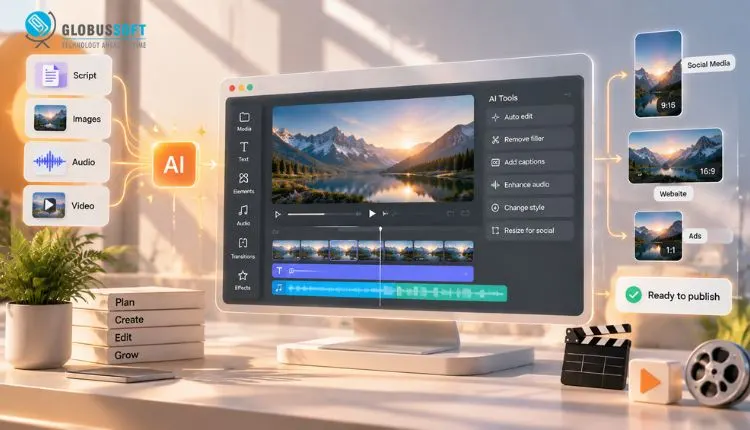
Video has become one of the most important ways for businesses to communicate with customers, promote products, and build brand awareness. From social media campaigns and product demonstrations to training materials and customer stories, companies are producing more video content than ever before.
However, creating high-quality videos requires more than recording footage. Businesses often need to manage multiple stages of production, including planning, editing, reviewing clips, adding visual elements, improving audio, and creating different versions for various platforms.
For many teams, the editing process becomes one of the biggest challenges. Traditional video editing requires time, technical skills, and repeated manual work. As businesses increase their content production needs, AI-powered video tools are helping teams create and edit videos more efficiently.
AI is changing the way businesses approach video production by reducing repetitive tasks, improving workflows, and allowing teams to focus more on creativity and strategy.
Why Video Creation Can Be Challenging for Businesses
Creating videos for business purposes involves many different steps. Even a short marketing video may require hours of preparation and editing before it is ready for publishing.
Businesses often need to:
- Review large amounts of raw footage
- Select the best clips
- Remove unnecessary sections
- Adjust timing and pacing
- Add captions and graphics
- Improve audio quality
- Create multiple versions for different platforms
For small teams, handling all these tasks manually can slow down content production. Marketing teams may have ideas for new campaigns but struggle to create enough video content due to limited time and resources.
This is where AI-powered workflows are becoming valuable. Instead of replacing creative decisions, AI helps businesses manage the operational parts of video production more effectively.
How AI Is Changing Video Production Workflows
Traditional editing tools give creators detailed control over every part of a project. However, they also require users to manually complete most editing actions.
AI-powered video tools introduce a different approach. They can understand instructions, analyse content, and assist with repetitive parts of the workflow.
For example, businesses can use AI to:
- Identify important sections from long recordings
- Organize video clips
- Generate captions
- Adjust scenes based on instructions
- Create different content versions
- Improve overall editing speed
This allows teams to move from spending most of their time managing technical steps to focusing on storytelling, messaging, and audience engagement.
AI Helps Businesses Manage Repetitive Editing Tasks
One of the biggest advantages of AI in video production is reducing repetitive work.
A company creating weekly social media videos may record hours of footage but only use a few minutes in the final version. Manually finding those important moments can take significant time.
AI-assisted editing can help analyse footage and prepare a stronger starting point for editors. Instead of beginning with a completely empty timeline, teams can work from an organized structure and refine the final result.
This approach is especially useful for businesses creating:
- Customer testimonials
- Product demonstrations
- Educational videos
- Webinar recordings
- Social media content
- Internal training videos
By reducing manual tasks, AI allows creative teams to produce more content without increasing production workload.
How Businesses Can Use AI Video Editing Tools
Modern businesses need video tools that are flexible and easy to integrate into existing workflows. AI video editors can help teams make changes faster while keeping control over the final output.
Invideo editor brings together a professional editing timeline and AI editing agents to simplify repetitive parts of the editing process. Teams can work with their footage, give instructions, review AI-assisted changes, and refine the final project while keeping all edits accessible and editable.
For businesses creating videos at scale, AI-powered editing workflows make it easier to edit videos with AI through simple instructions. Teams can adjust scenes, change video styles, and refine content without manually managing every editing step.
This type of workflow helps marketing teams, content creators, and businesses produce more video variations while maintaining creative control over the final result.
The Role of AI in Improving Marketing Content
Video marketing has become essential for businesses across industries. Companies use videos to explain products, attract customers, share updates, and communicate their brand message.
However, creating different versions of the same content for different audiences can require additional editing time.
AI tools help businesses adapt existing content more efficiently. A single video can be adjusted for different platforms, audiences, or campaigns without rebuilding the entire project from the beginning.
For example, a product video created for a website may need shorter versions for social media platforms. AI-assisted workflows can help teams create these variations faster while keeping the original message consistent.
AI Supports Collaboration Between Business Teams
Modern businesses often have multiple teams involved in video production. Marketing teams, designers, content creators, and managers may all need to review and update the same project.
AI-powered video workflows can make collaboration easier by keeping projects organized and accessible. Teams can review changes, provide feedback, and make improvements without repeating the entire editing process.
Invideo editor follows this workflow by combining AI assistance with an editable timeline. Teams can use AI support for repetitive tasks while continuing to make creative decisions throughout the project.
This balance helps businesses maintain efficiency without losing control over their content.
Benefits of AI Video Editing for Different Teams
AI-powered video tools can support different areas of business operations.
Marketing Teams
Marketing teams can create promotional videos, campaign content, and social media assets faster by reducing manual editing work.
Sales Teams
Sales teams can create product demonstrations, presentations, and customer-focused videos with less production effort.
Training Teams
Businesses can develop educational and internal training content more efficiently by improving the editing process.
Creative Teams
Creative professionals can focus more on storytelling and visual decisions while AI handles repetitive operational tasks.
The Future of Business Video Creation With AI
The role of AI in video production will continue to expand as businesses create more digital content.
Future AI-powered tools will become better at understanding creative instructions, managing complex projects, and supporting complete production workflows.
The goal of AI is not to remove human creativity from video production. Instead, it is helping businesses reduce time-consuming tasks and giving teams more opportunities to focus on ideas, strategy, and storytelling.
As video becomes an even bigger part of business communication, AI-assisted workflows will help organizations create content faster while maintaining quality.
Conclusion
AI is transforming the way businesses create and edit video content by making production workflows faster and more accessible. From organizing footage to reducing repetitive editing tasks, AI tools are helping teams manage the growing demand for video content.
Businesses can now create more content without relying only on traditional editing processes. Tools like invideo editor show how AI assistance can work alongside human creativity by helping teams handle operational tasks while keeping control over the final project.
As companies continue adopting digital content strategies, AI-powered video editing will play an important role in improving productivity, collaboration, and creative workflows.
Quick Search Our Blogs
Type in keywords and get instant access to related blog posts.


 +91 8767115115