 India
India  UK
UK USA
USA 
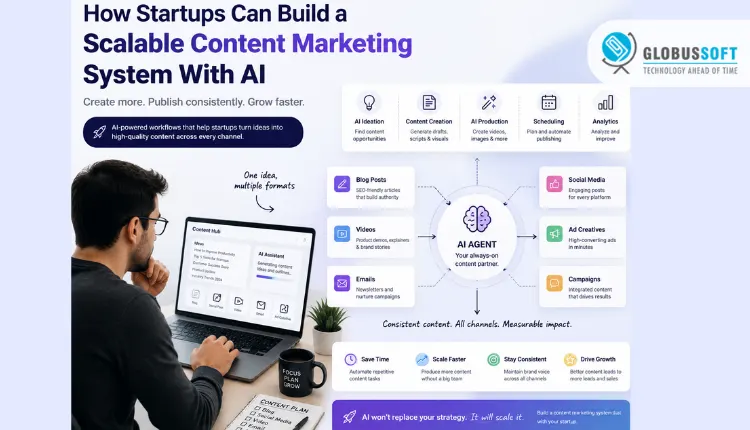
For startups, content marketing is one of the most effective ways to build awareness, educate customers, and create long-term brand value. However, maintaining a consistent content presence is often difficult for early-stage teams.
A startup may need blog articles to improve search visibility, social media posts to engage audiences, advertisements to attract customers, and videos to explain its products. Managing all these channels requires time, planning, and resources that many small teams do not have.
The challenge is not a lack of ideas. Most startups have plenty of stories, product updates, and industry insights to share. The difficulty lies in turning those ideas into consistent, high-quality content across multiple platforms.
AI is changing how startups approach content marketing by helping teams automate repetitive tasks, improve creative workflows, and produce more content without expanding their teams significantly.
The goal is not to replace marketers or creators. Instead, AI helps startups build a more scalable system where teams can focus on strategy, creativity, and customer understanding.
Why Content Scaling Is Difficult for Startups
Early-stage companies often operate with limited resources. A small marketing team may be responsible for content strategy, social media management, email campaigns, paid advertising, and customer communication.
As the company grows, content demands increase. A startup may need:
- Educational blog content
- Social media campaigns
- Product videos
- Email newsletters
- Customer stories
- Advertisement creatives
Creating each piece manually can slow down marketing efforts. Teams may spend more time managing production tasks than developing new ideas.
This is why scalability becomes a major challenge. Startups need systems that allow them to create more content without compromising quality or brand consistency.
Building a Content Strategy With AI Assistance
A scalable content system starts with a strong strategy. Before creating content, startups need to understand their audience, goals, and messaging.
AI tools can help teams analyze customer interests, identify content opportunities, and organize ideas into structured plans.
For example, a startup launching a project management platform can use AI assistance to develop content around productivity challenges, workflow improvements, customer education, and industry trends.
Instead of creating random posts, teams can build a connected content strategy where blogs, videos, social posts, and campaigns support the same business goals.
Turning One Idea Into Multiple Content Formats
One of the biggest advantages of AI-powered workflows is content repurposing.
A single idea can often become multiple pieces of content. A product announcement can turn into a blog post, social media updates, a short video, an email campaign, and advertisement creatives.
AI helps startups adapt content across different platforms while maintaining the original message. AI tools are also helping startups transform static visual assets into video content. Product images, campaign graphics, screenshots, and customer visuals can be converted into short videos with motion, transitions, and storytelling elements. This allows startups to extend the value of existing creative assets and create more content for social media, advertisements, and product campaigns without starting every video project from scratch.
For example, a founder interview can be turned into short social clips, customer-focused videos, and written content. This allows small teams to maximize the value of every creative effort.
Reducing Content Production Bottlenecks With AI Agents
Content production often becomes complicated because multiple stages need to work together. Research, planning, writing, design, video creation, editing, and publishing all require coordination.
AI agents are helping startups reduce these bottlenecks by supporting connected workflows instead of isolated tasks.
Invideo Agent is one example of how AI agents can support creative production workflows by helping teams move from ideas and references to complete video projects. It connects different stages such as scripting, visual planning, generation, editing, and refinement, making it easier for startups to create videos as part of a larger content system.
For example, a startup launching a new product can use an AI-assisted workflow to develop campaign concepts, create product videos, and produce different versions for social media, advertisements, and marketing channels while maintaining a consistent creative direction.
With InVideo Agent Two, growing teams can manage more complex creative workflows by coordinating areas such as visual planning, storytelling, cinematography, and effects. This helps startups create more content without losing consistency as campaigns become larger.
Creating Consistent Social Media Content
Social media requires frequent content creation, which can become challenging for startups with small teams.
AI tools help marketers maintain a regular publishing schedule by supporting content ideation, visual creation, and content adaptation.
For example, a startup can use AI to transform product updates into engaging social posts, create short educational videos, or develop campaign variations for different audiences.
However, successful social media content still depends on understanding the audience. AI can help with production, but the message needs to remain aligned with the brand’s voice and customer needs.
Scaling Video Marketing Without Expensive Production
Video has become an important part of startup marketing, but traditional production can be expensive and time-consuming.
Startups often need videos for product demonstrations, advertisements, onboarding, and social platforms. Creating all of these through traditional methods may not be practical.
AI-powered video workflows allow startups to create more content with fewer production limitations.
Teams can explore different creative concepts, generate visual assets, and create marketing videos faster. This makes video a more accessible channel for startups that previously could not invest heavily in production.
Improving Marketing Campaigns With AI-Generated Creatives
Advertising often requires testing multiple creative approaches to find what works best.
A startup may need different versions of an advertisement with different visuals, messages, or formats. Producing these variations manually can take significant time.
AI helps marketers quickly create and test more creative options.
For example, a startup running a product campaign can experiment with different video styles, customer-focused messages, and promotional formats before selecting the strongest-performing versions.
This allows teams to make decisions based on audience response rather than relying only on assumptions.
Maintaining Brand Consistency Across Content
As startups publish more content, maintaining a consistent brand identity becomes increasingly important.
A company’s blog, social media posts, advertisements, and videos should all feel connected. The tone, visual style, and messaging should represent the same brand.
AI tools can help maintain this consistency by allowing teams to create content using shared references and guidelines.
For example, a startup creating multiple product videos can maintain consistent visuals, product details, and storytelling approaches across different campaigns.
This helps smaller companies build recognition and appear more established.
Using AI Analytics to Improve Content Performance
Creating content is only one part of content marketing. Startups also need to understand what performs well.
AI-powered analytics tools can help teams identify audience behavior, engagement patterns, and content opportunities.
This information allows marketers to improve future content strategies.
Instead of creating content based only on assumptions, startups can use data insights to understand which topics, formats, and messages connect best with their audience.
Also Read –
How to Create Marketing Funnels That Convert
Proven Content Marketing Tips: How To Create Content That Converts
Challenges of Using AI for Content Marketing
While AI can make content production more efficient, startups still need strong creative direction.
Poorly planned AI-generated content can feel generic or disconnected from the brand.
Successful AI-powered content systems require:
- Clear brand messaging
- Human review
- Audience understanding
- Creative strategy
AI works best when it supports marketers rather than replacing strategic thinking.
The Future of AI-Powered Content Systems for Startups
AI is changing content marketing from a manual production process into a more connected system.
Future startup marketing teams will increasingly use AI to manage different parts of content creation, from research and planning to production and optimization.
This will allow smaller teams to compete with larger companies by creating more personalized, consistent, and engaging content.
The startups that benefit most will be those that combine AI efficiency with strong storytelling and customer understanding.
As these needs grow more specific, many startups reach a point where off-the-shelf AI platforms no longer cover every use case. This is when partnering with an AI app development company becomes valuable — helping teams build custom AI-powered tools, internal dashboards, or automation systems tailored to their exact content workflows, rather than adapting their processes around generic software limitations.
Final Thoughts
Building a scalable content marketing system is one of the biggest challenges startups face. Limited teams need to create blogs, videos, social content, and campaigns while maintaining quality and consistency.
AI helps solve this challenge by reducing repetitive work, improving creative workflows, and making content production more efficient.
When used strategically, AI allows startups to build stronger marketing systems that support growth without requiring large teams or expensive production processes.
Quick Search Our Blogs
Type in keywords and get instant access to related blog posts.


 +91 8767115115