 India
India  UK
UK USA
USA 

Some brands gain more exposure in front of their audience because they stay consistent and active when their audiences are online. While others fade, not because they lack quality, but because they remain hidden where customers never look. Visibility shapes trust, and trust shapes buying decisions. That is where search engine marketing steps in as a practical and measurable way to put a brand in front of a motivated audience. Businesses aren’t just looking for clicks anymore; they want intent, relevance, and timing that convert leads to action.
Before exploring tools, keywords, and strategies, it helps to understand the role this approach plays in modern customer journeys. People turn to search engines with a purpose. They want solutions, answers, and products without wasting time. If your brand doesn’t show up during those moments, someone else will. This blog breaks down the essentials of SEM, connects each concept to the next, and guides you through a complete picture of how it works.
Hit ‘Play’ Button & Tune Into The Blog!
What Is SEM?
 Search engine marketing (SEM) is a way for businesses to promote their products or services on search engines like Google. When people search for something online, they usually have a specific need or question. SEM helps brands place their ads at the top of those search results, right when the user is actively looking for a solution.
Instead of showing ads randomly to everyone, SEM targets people who are already interested. To avoid confusion, this is also the right place to clarify how paid search differs from search engine optimization marketing, which focuses on improving organic rankings. SEM does not replace SEO, but rather complements it. As the next section explains, both work together in a well-rounded approach.
For example, if someone searches “workforce management tool,” companies offering that tool can display their ads on that exact results page. And after those ads, you would find websites or platforms (like EmpMonitor 😜) that are organically ranking on that keyword. This gives a business instant visibility and a higher chance of getting clicks, leads, and customers.
How SEM Differs From SEO?
SEO builds long-term credibility, but it takes time. The goal is to earn visibility through content, relevance, and overall website quality. By contrast, search engine marketing provides instant placement through paid ads.
Brands often debate where to invest, but the real strength appears when both efforts work side by side. SEO captures broad interest, and SEM captures commercial intent. When paired, they support each other. SEO informs the themes and keywords customers care about, and SEM provides immediate testing opportunities to see what people respond to.
To make the relationship clearer, let’s move deeper into the building blocks that connect both: keywords.
The Role Of Keywords
 Keywords function as bridges between user intent and brand offerings. Every time someone enters a query, they reveal purpose. Understanding why someone searches a phrase matters more than the phrase itself.
This connection becomes especially visible in search engine marketing, where advertisers must choose terms that reflect what buyers genuinely want. Keywords with purchase signals attract high-intent users. Keywords with broad meaning drive awareness. Recognizing this difference helps you decide how to shape your campaigns.
But keywords are not instantly obvious. They come from research, patterns, and behavioral insights. That brings us to how meaningful keyword research fits into the process.
Strong Keyword Research
Keyword research is the foundation of any real SEM plan. The goal isn’t to gather hundreds of phrases, but to understand which ones reveal buyer intent. During this stage, businesses analyze volume, competition, relevance, and commercial value.
As part of this, negative keywords also matter. They act as filters to prevent ads from showing for irrelevant searches. Removing noise saves budget and improves accuracy. Research sharpens your decisions before spending a single dollar.
This is also where secondary concepts come in. Phrases used in sem marketing or google ads sem discussions often highlight the importance of high-intent keywords. Research keeps you grounded, and the next step uses this information to design a structured account.
Account Structure For Better Performance
A well-planned account structure decides how smoothly campaigns run. Instead of creating a single cluster of ads, a strong structure organizes elements into campaigns, ad groups, keywords, and landing pages.
Each campaign focuses on a broad category. Each ad group focuses on a specific theme within that category. This design matters because search engines reward relevance. When your structure is clear, your Quality Score improves, and cost per click goes down.
This leads us directly into the process that decides when and where your ads appear: the ad auction.
How The Ad Auction Works?
 Many assume the highest bidder always wins, but that’s not how it works. Every time someone enters a query, the search engine runs an instant auction. Ads enter the auction only if their keywords match the user’s intent.
Placement depends on two major factors: the maximum bid and the Quality Score. When these two combine, they form the ad rank. A strong ad rank helps your business appear at the top even if your bid isn’t the highest.
This ensures search engine marketing remains accessible even to smaller brands. With the auction process understood, the next section shows how these decisions influence the benefits businesses receive.
Why SEM Matters For Businesses?
Search engine marketing helps brands show up at the exact moment a person is looking for answers. Instead of casting a wide net, it focuses on people who already have intent, which naturally leads to stronger, more measurable results.
It offers businesses several advantages:
• Control over how much they spend
• Clear performance data
• Faster visibility compared to relying on SEO alone
• Access to people who are closer to making decisions
As you look at these benefits, it becomes obvious that handling everything manually can get complicated. Budget decisions, keyword choices, and performance analysis all demand time and precision. This is usually the point where companies begin searching for a reliable tech partner that can guide them through the layers of search engine marketing and make the process easier to manage.
That transition brings us to a natural introduction of Globussoft, right when readers begin thinking about practical support rather than theory.
How Globussoft Supports Brands With Smarter SEM Systems?
Once a business understands the value of search engine marketing, the next question is how to put it into action. This is where a strong technology partner makes a difference. Globussoft helps brands simplify decision making and cut through uncertainty with systems that provide clarity and direction.
And within its ecosystem, one product aligns especially well with data-backed advertising: PowerAdSpy. Instead of relying on instinct or outdated trends, PowerAdSpy gives marketers reliable intelligence to plan and execute more effectively. It acts as a practical companion for teams that want accurate insights without getting overwhelmed by too many tools or scattered data.
With this foundation set, let’s take a closer look at how PowerAdSpy contributes to more strategic, confident marketing decisions.
How PowerAdSpy Supports Your Performance Goals?
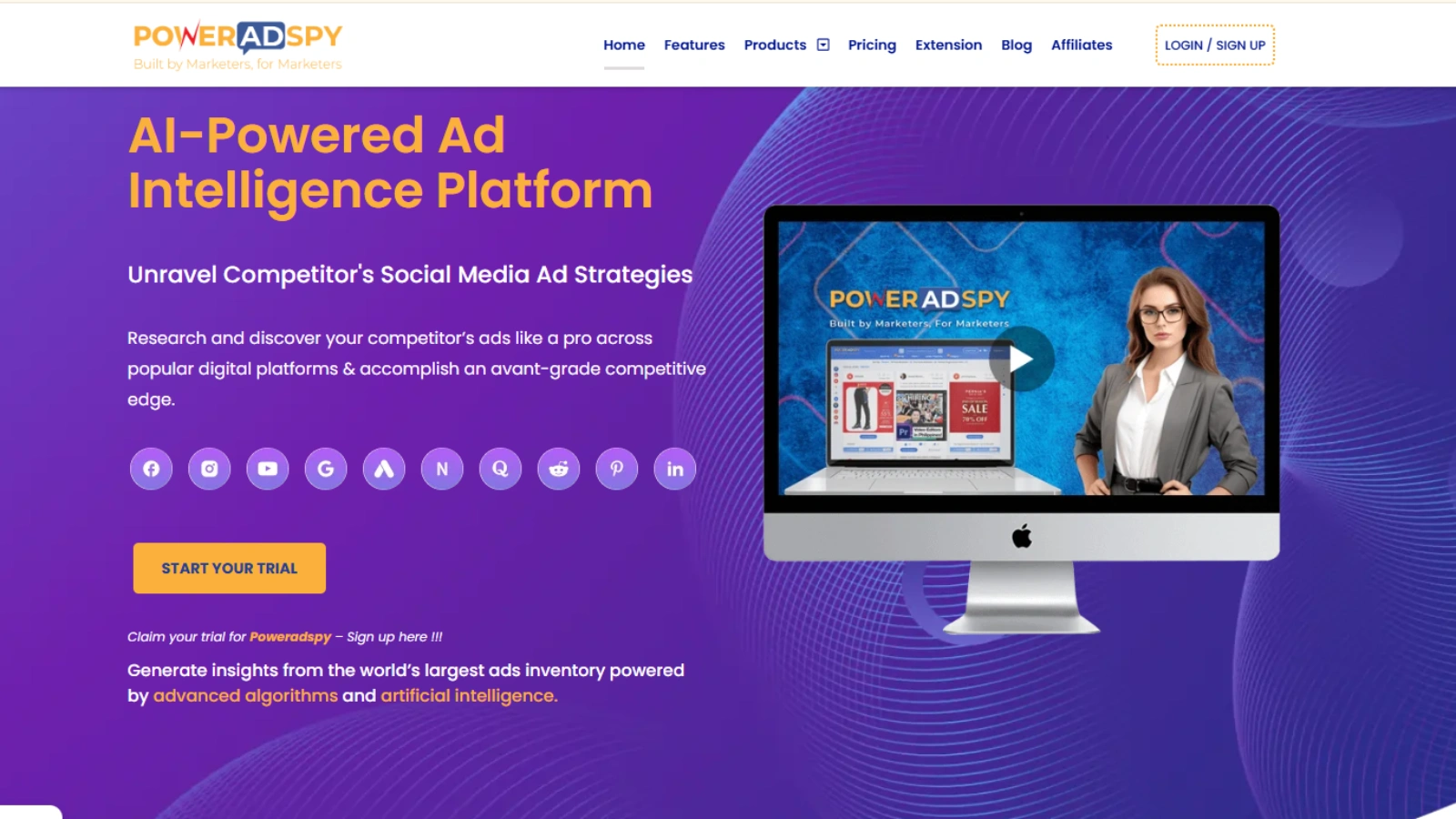 PowerAdSpy is designed to help marketers understand what actually works in paid campaigns. It brings competitive research, creative analysis, and performance patterns together in one place so teams can refine ideas and execute with more confidence.
Wide Ad Intelligence Access
PowerAdSpy collects ads from major platforms, giving marketers a full view of what other businesses are running. This helps teams stay aligned with current trends instead of guessing.
Real-Time Data Insights
It tracks engagement signals, audience behavior, placements, and performance markers. These insights help brands shape campaigns in ways that match audience expectations.
Creative and Keyword Breakdown
Users can examine creatives, captions, formats, and keyword triggers to see why certain ads perform well. This reduces guesswork and trims long experimentation cycles.
Precise Filtering for Niche Research
Marketers can filter ads by keyword, platform, engagement type, industry, and geographic location. This makes it easier to study only what matters to your category.
Faster Campaign Planning
Instead of starting from zero, teams can draw ideas from proven examples. PowerAdSpy cuts down the research stage and helps marketers plan campaigns with better direction.
By giving brands a clearer view of the advertising space, PowerAdSpy helps them build campaigns that feel more relevant and draw better prospects into the funnel. With this support in place, the next step is learning how to apply these insights to strengthen your search strategies and move toward more predictable results.
Read More!
How To Shape A Strong SEM Strategy?
A solid sem strategy involves clear goals, meaningful keywords, smart account structure, and continuous monitoring. Start with a simple base:
- Define what you want—leads, sales, traffic, or visibility.
- Choose keywords that match user intent.
- Group keywords into focused ad groups.
- Write ads centered around what users care about most.
- Ensure landing pages match the promise your ad makes.
- Track performance and refine regularly.
These steps work together to keep campaigns consistent and relevant. Now it’s time to look ahead at the direction this field is moving toward.
Where SEM Is Headed?
 The future of search engine marketing is shaped by automation, smarter algorithms, structured data, and user behavior shifts. Platforms continue to develop systems that predict intent more accurately. Advertisers gain access to tools that refine bidding, targeting, and reporting with minimal manual input.
First-party data will play a larger role, helping brands maintain accurate targeting even as privacy rules tighten. People are also searching differently, using conversational queries and voice search. SEM continues to evolve with these shifts, offering new ways to reach audiences without losing the precision it’s known for.
As we close in on the end of this journey, it’s important to tie everything back to why this method continues to matter.
Final Thoughts
Visibility isn’t a luxury; it’s a requirement for growth. Effective search engine marketing gives brands the ability to meet customers exactly when they’re ready to decide. Through clear structure, thoughtful keywords, and continual refinement, businesses can build a system that delivers consistent results.
Support from teams like Globussoft strengthens the process, especially for brands managing complex operations or planning long-term scaling. As you refine your approach, the next step is exploring how advanced automation and predictive models will reshape paid search even further.
Your brand’s success depends on showing up at the right moment, and SEM ensures you do.
FAQs
- How much budget do I need to start with search engine marketing?
You don’t need a large amount to begin. Even a small test budget can help you understand demand, competition, and performance. The key is to start with focused keywords, measure early results, and scale gradually. - Does search engine marketing work for small or local businesses?
Yes. It’s often even more effective for smaller brands because ads can target specific locations, service areas, or local intent. This helps local businesses appear in front of nearby customers who are ready to decide. - Can I run search ads without previous experience in search engine marketing?
You can, but learning the basics takes time. Most brands start on their own, then later partner with experts or tools once they want more consistent performance or deeper insights. - How long does it take to see results from search engine marketing campaigns?
Results can show up within hours of launching an ad, but refining performance takes longer. Expect the first few weeks to be learning stages while data builds and patterns become clear. - Is search engine marketing helpful for long-term growth or only for short-term visibility?
It supports both. Short-term gains come from instant visibility, while long-term growth comes from ongoing optimization, keyword testing, and steady insight gathering that helps shape smarter decisions over time.
Quick Search Our Blogs
Type in keywords and get instant access to related blog posts.


 +91 8767115115