 India
India  UK
UK USA
USA 
Agile project management helps teams work smarter, move faster, and stay aligned as priorities change. Businesses across software, marketing, HR, and operations use agile methods to improve collaboration and deliver results without delays. Instead of following rigid plans, agile encourages flexible workflows that adapt as work progresses.
This approach supports better decision-making, stronger teamwork, and consistent progress. By focusing on smaller tasks, quick feedback, and continuous improvement, agile helps organizations respond to change with confidence and maintain steady growth.
In a hurry? Listen to the blog instead!
What Is Agile Project Management?
Agile project management is a way of planning and executing work that emphasizes adaptability, continuous feedback, and incremental delivery. In agile, large initiatives are broken into smaller, manageable pieces called iterations or sprints. Each sprint produces value that can be reviewed, tested, and refined. This approach allows teams to respond to changing requirements, customer feedback, and evolving project needs without losing momentum.
At its core, agile is a mindset, a way of thinking and working that encourages teams to focus on collaboration, efficiency, and responsiveness. It differs from traditional project management by promoting flexibility over rigid plans, user value over comprehensive documentation, and iterative progress over one-time releases.
Why Agile Project Management Drives Growth?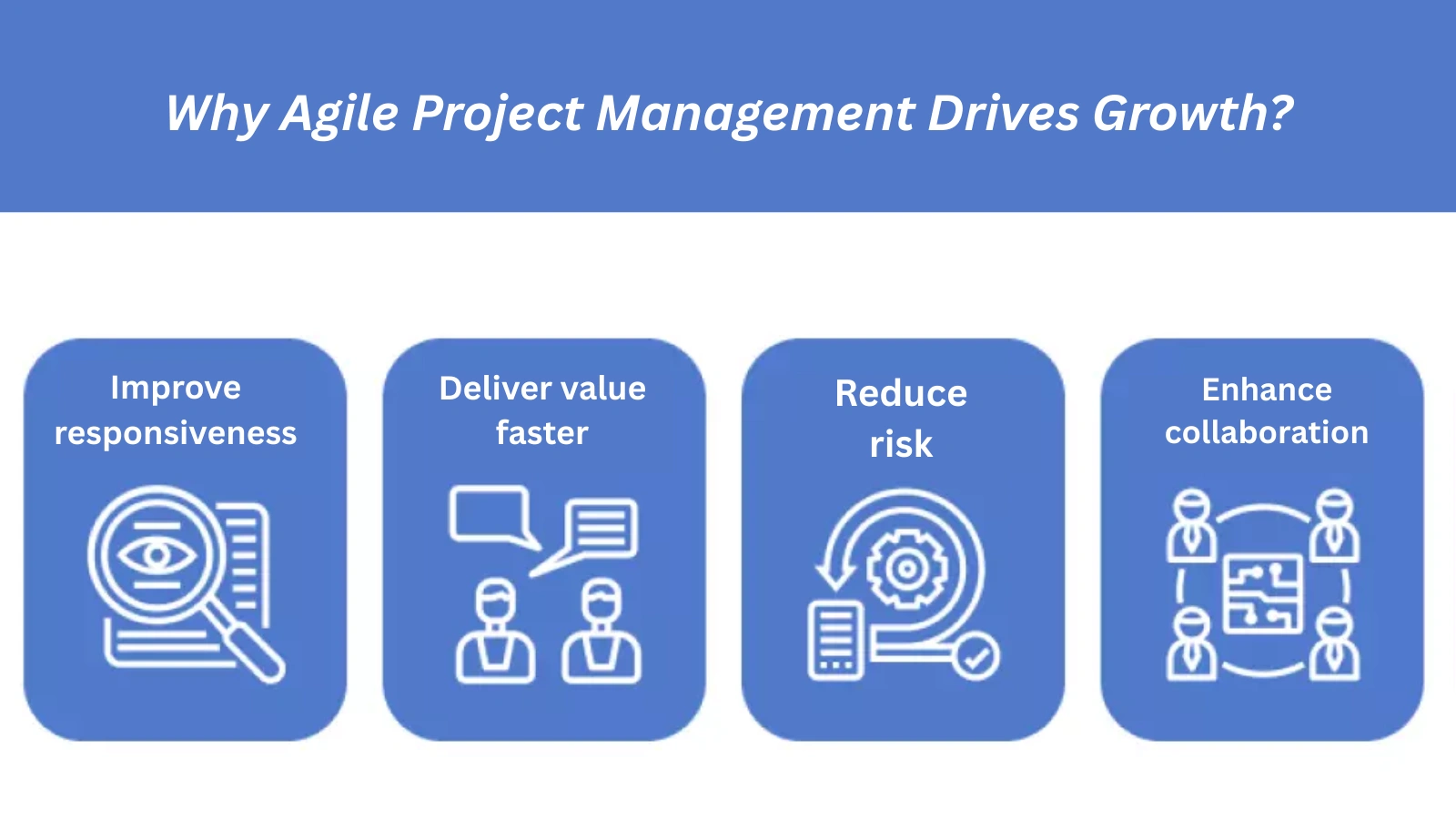
Agile project management has emerged as a growth engine for businesses of all sizes. It enables organizations to:
- Deliver value faster:
Short work cycles help teams release useful outcomes regularly, ensuring progress remains visible while stakeholders receive value without long delays. - Improve responsiveness:
Agile allows teams to adjust plans quickly when priorities change, preventing disruptions and keeping projects aligned with evolving business needs. - Enhance collaboration:
Frequent discussions and shared responsibility encourage transparency, teamwork, and smoother communication across departments and project stakeholders. - Reduce risk:
Continuous testing and regular feedback identify issues early, minimizing costly rework and helping teams maintain quality throughout the project lifecycle.
By focusing on delivering continuous value, agile teams stay closely aligned with customer needs, which drives better business outcomes and accelerates growth.
Agile Project Management vs. Traditional Project Management
Traditional project management models, like Waterfall, follow a linear structure: requirements are set upfront, and work progresses through fixed phases. This predictability can be useful, but it often fails in dynamic environments where customer needs shift or new opportunities emerge.
In contrast, agile embraces flexibility. Agile teams work collaboratively, adjust priorities regularly, and adapt deliverables based on real feedback. This iterative approach reduces uncertainty, improves stakeholder satisfaction, and often results in faster project success.
Agile Frameworks That Support Growth
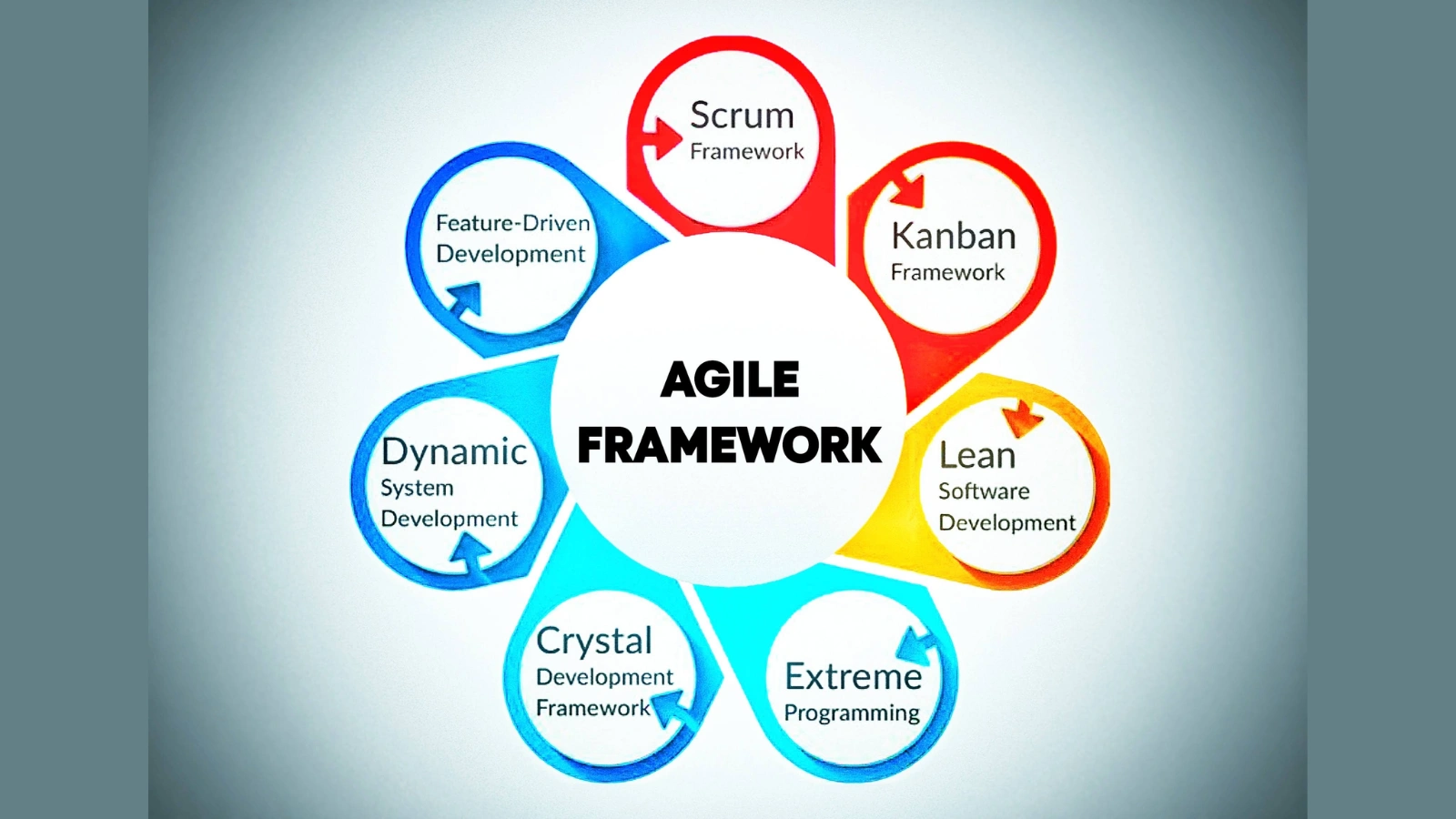
Several agile frameworks and methods guide how agile principles are implemented. Popular ones include:
Scrum:
Scrum organizes work into fixed-length sprints with defined roles like Scrum Master and Product Owner. This structure encourages better planning, accountability, and regular progress checks, allowing teams to deliver consistent results while quickly adapting to changes.
Kanban:
Kanban uses visual boards to display tasks and limit work in progress. This method enhances workflow visibility, reduces bottlenecks, and supports continuous delivery. Teams can track progress in real time, prioritize tasks effectively, and improve overall efficiency.
Scrumban:
Scrumban combines Scrum’s structured sprint planning with Kanban’s flexible workflow management. Teams can prioritize work efficiently, maintain continuous improvement, and adjust plans dynamically. This hybrid approach balances predictability and adaptability, improving productivity as project complexity increases.
Each framework helps teams stay focused, minimize wasted effort, and manage work more effectively as projects grow and evolve.
The Role Of Agile Project Management Software
To succeed with agile, teams need tools that support visibility, collaboration, and transparency throughout the project lifecycle. This is where agile project management software becomes critical. These tools help teams plan work, assign tasks, track progress, and measure performance in real time.
Today’s project management tools allow teams to:
- Visualize work with boards or charts:
Boards and charts give teams a clear view of tasks, priorities, and progress, making workloads easier to manage and adjust. - Manage tasks across iterations:
Teams can break projects into smaller cycles, organize tasks efficiently, and maintain steady progress without overwhelming workloads. - Track time and effort:
Time tracking helps measure productivity, identify delays early, and ensure resources are used effectively across projects. - Monitor progress toward goals:
Real-time tracking shows how close teams are to meeting milestones, helping managers make timely decisions. - Encourage cross-team communication:
Built-in collaboration features keep teams aligned, reduce misunderstandings, and promote faster problem-solving across departments.
Such functionality drives accountability and helps teams deliver work faster and more predictably.
Read More!
How To Use AI Productivity Tools To Work Smarter?
How To Boost HR Management For Workplace Efficiency?
Essential Project Management Tools For Agile Teams
Successful agile implementation relies on a set of supporting tools that enhance coordination and productivity. Some common project management tools include:
- Task and sprint planning boards:
These boards help teams organize tasks into sprints, prioritize work clearly, and maintain steady progress throughout project cycles. - Time tracking dashboards:
Dashboards track time spent on tasks, improve productivity visibility, and help teams estimate workloads more accurately. - Collaboration platforms:
Collaboration tools enable real-time communication, file sharing, and quick feedback, keeping agile teams aligned and responsive. - Reporting and analytics modules:
Analytics tools measure performance, identify bottlenecks, and support data-driven decisions for continuous process improvement.
These tools help teams stay synchronized, ensure deadlines are met, and support continuous improvement, all central to agile success.
How Globussoft Supports Businesses In Agile Environments?
Globussoft helps organizations work smarter by supporting clarity, accountability, and structured execution across teams. Through solutions like EmpMonitor and EmpCloud, businesses gain better visibility into team performance, task progress, and resource usage.
These platforms support agile project management by helping teams track work accurately, understand productivity patterns, and make informed decisions based on real data. When teams clearly see how work progresses and where improvements matter, agile project management becomes easier to implement, scale, and sustain across departments.
To support this approach at the execution level, Globussoft delivers practical tools that give teams real-time visibility and control over daily work.
EmpMonitor: Boosting Team Productivity With Real-Time Insights
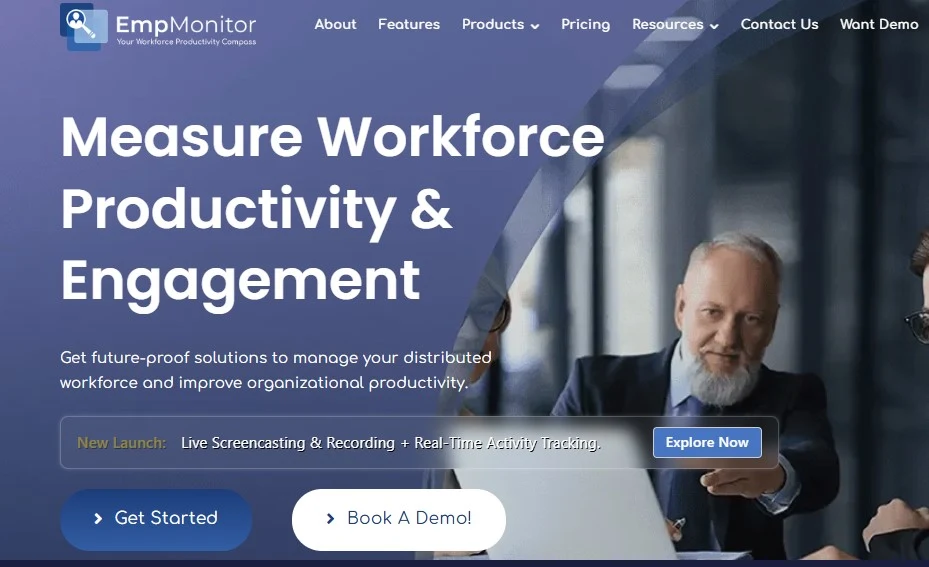
One way Globussoft supports agile project management is through EmpMonitor, a comprehensive workforce management and monitoring solution. EmpMonitor provides features that support agile teams by delivering actionable insights into work patterns, productivity, and task execution.
Key Features of EmpMonitor:
- Real-time activity tracking: Understand what teams are working on and how time is spent throughout the day.
- Task and project visibility: Monitor progress across tasks and projects directly within the platform.
- Time and attendance tracking: Keep accurate records of working hours to support productivity and compliance.
- Context-rich reporting: Generate insights that help improve workflows and identify areas for improvement.
- Security and compliance monitoring: Track crucial data and reduce internal risk with alerts and activity logs.
EmpMonitor’s analytics and visibility help teams iterate more effectively, reduce bottlenecks, and align work with agile goals. These insights support better decision-making, which is essential in agile environments where responsiveness matters.
EmpCloud: Enhancing Team Efficiency and Collaboration
In addition to EmpMonitor, EmpCloud offers a full workforce management suite that supports organizational agility across HR and operations. It brings together essential components like HRMS, attendance, onboarding, and project oversight, all of which tie into agile project workflows.
Highlights of EmpCloud:
- HRMS and onboarding: Streamline hiring and team setup to support agile teams from day one.
- Attendance and compliance: Manage HR processes more efficiently to minimize administrative overload.
- Project management visibility: Track assignments and deliverables with clear project dashboards.
- Performance and career development: Guide team growth and skill enhancement with structured performance modules.
By managing workforce operations more effectively, EmpCloud supports the human side of agile execution. Teams can focus on delivery and collaboration rather than paperwork and tracking.
Agile Project Management In Hybrid And Remote Work
Modern teams increasingly operate in hybrid or fully remote environments. Agile project management, supported by tools like EmpMonitor and EmpCloud, ensures teams stay productive and aligned no matter where they work. With real-time visibility, accurate time tracking, and centralized dashboards, hybrid teams can operate cohesively, maintain accountability, and deliver continuously.
Measuring Agile Success With Data
Agile is most effective when teams track progress using real data. Measuring key performance indicators ensures continuous improvement and aligns work with business goals. Workforce and project management tools like EmpMonitor and EmpCloud provide actionable insights to support this process.
Velocity and Delivery Rate
Track how much work a team completes within each sprint. Measuring velocity helps assess productivity, identify bottlenecks, and plan future iterations effectively.
Time Spent on Tasks vs Results
Compare hours spent on tasks against actual outcomes. This highlights efficiency, uncovers wasted effort, and ensures resources are focused on high-value activities.
Team Collaboration Metrics
Monitor communication, task handoffs, and collaborative engagement. Strong collaboration improves coordination, reduces misunderstandings, and ensures teams work toward shared goals.
Cycle Time per Iteration
Measure the time taken to complete tasks from start to finish within each iteration. Reducing cycle time increases responsiveness and accelerates value delivery.
Tools like EmpMonitor and EmpCloud provide real-time insights into tasks, attendance, and performance. Using this data, teams can optimize workflows, improve accountability, and refine agile processes continuously.
Best Practices For Agile Project Management
Agile succeeds when teams follow consistent practices that promote clarity, accountability, and continuous improvement. These strategies help deliver value efficiently while remaining adaptable to change.
- Break Projects into Measurable Tasks: Divide larger initiatives into smaller, trackable tasks. This makes work more manageable, enables faster progress, and allows teams to measure results effectively.
- Adopt Clear Communication Rhythms: Establish regular check-ins, stand-ups, and updates. Consistent communication ensures alignment, prevents misunderstandings, and fosters collaboration across all team members.
- Use Tools That Support Transparency: Leverage project management software like EmpMonitor and EmpCloud. These tools provide visibility into tasks, timelines, and performance, keeping everyone accountable and informed.
- Encourage Feedback and Continuous Improvement: Regularly gather input from team members and stakeholders. Iterative feedback helps refine processes, enhance solutions, and strengthen overall team performance.
- Measure and Adapt Quickly to Change: Monitor metrics and project progress closely. Agile teams adjust plans rapidly to address new requirements, ensuring projects remain relevant and on track.
Following these best practices keeps teams focused on delivering meaningful results, reduces wasted effort, and promotes a culture of responsiveness and continuous growth.
Conclusion:
Agile project management isn’t just a methodology; it’s a strategic advantage. It allows teams to deliver value quickly, respond to change effectively, and foster collaboration that drives innovation. By embracing agile principles and supporting them with the right tools and systems like EmpMonitor and EmpCloud from Globussoft, businesses can achieve faster delivery, better team performance, and explosive growth in today’s dynamic environment.
FAQs
- What is agile project management?
Agile project management is a flexible approach that breaks work into small, manageable increments. It prioritizes collaboration, iterative progress, and adapting quickly to changes, delivering continuous value to teams and stakeholders. - How does agile project management differ from traditional methods?
Unlike traditional methods, agile focuses on iterative cycles, continuous feedback, and adaptability. It emphasizes team collaboration, responsiveness to change, and incremental value delivery, rather than following rigid, linear project plans. - What are some popular agile frameworks?
Common agile frameworks include Scrum, Kanban, and Scrumban. They help teams plan sprints, visualize workflows, manage priorities, reduce bottlenecks, and maintain continuous improvement across projects of varying complexity. - How can tools like EmpMonitor and EmpCloud support agile?
EmpMonitor and EmpCloud provide real-time task tracking, performance insights, attendance monitoring, and reporting. They help teams implement agile practices effectively by enhancing visibility, accountability, and collaboration across workflows. - What are the key benefits of agile project management?
Agile enhances collaboration, improves responsiveness, reduces risk, and enables faster delivery. It promotes continuous improvement, empowers teams to adapt quickly, and aligns work with business goals for better results.
Quick Search Our Blogs
Type in keywords and get instant access to related blog posts.


 +91 8767115115