 India
India  UK
UK USA
USA 
AI has evolved beyond its traditional practices, which were primarily focused on use within a research environment or only with very large-scale technology companies. Today, AI development services enable organisations to automate processes, identify opportunities for new revenue from data that they already have access to, and better compete and grow their organisation based on how AI-enabled solutions can provide value to their operations.
With the change in perception regarding the application of AI as a viable option for business solutions rather than as an impossible concept, there has been an increased demand for businesses to locate credible partners for the development of AI technology and how to implement that technology into their businesses in a way that will enable them to effectively use AI to achieve their business goals.
Listen To The Podcast Now!
Why AI Development Services Matter More Than Ever
In today’s world, the way we do business is evolving quickly due to rapid speed of change, customisation, and data-driven decision-making. Most legacy systems struggle to keep up with these evolving requirements, particularly when decisions need to be made in real-time. The standout capabilities of AI-driven systems are their ability to create intelligent solutions designed to meet each company’s unique goals through the use of AI development services.
Rather than using generic systems, businesses get AI systems that learn from the data being collected and adapt based on user behaviour to provide improved functionality over time. No matter which of the many different types of AI solutions you utilize (i.e. predictive analytics, intelligent automation or chatbots), AI provides flexibility that traditional or mature application systems simply can’t provide.
As companies become more fully aware of the benefits that AI-based software provides, they start to have conversations about how AI software is actually developed and utilized to create performance measurement capabilities.
What It Really Means To Develop AI Software
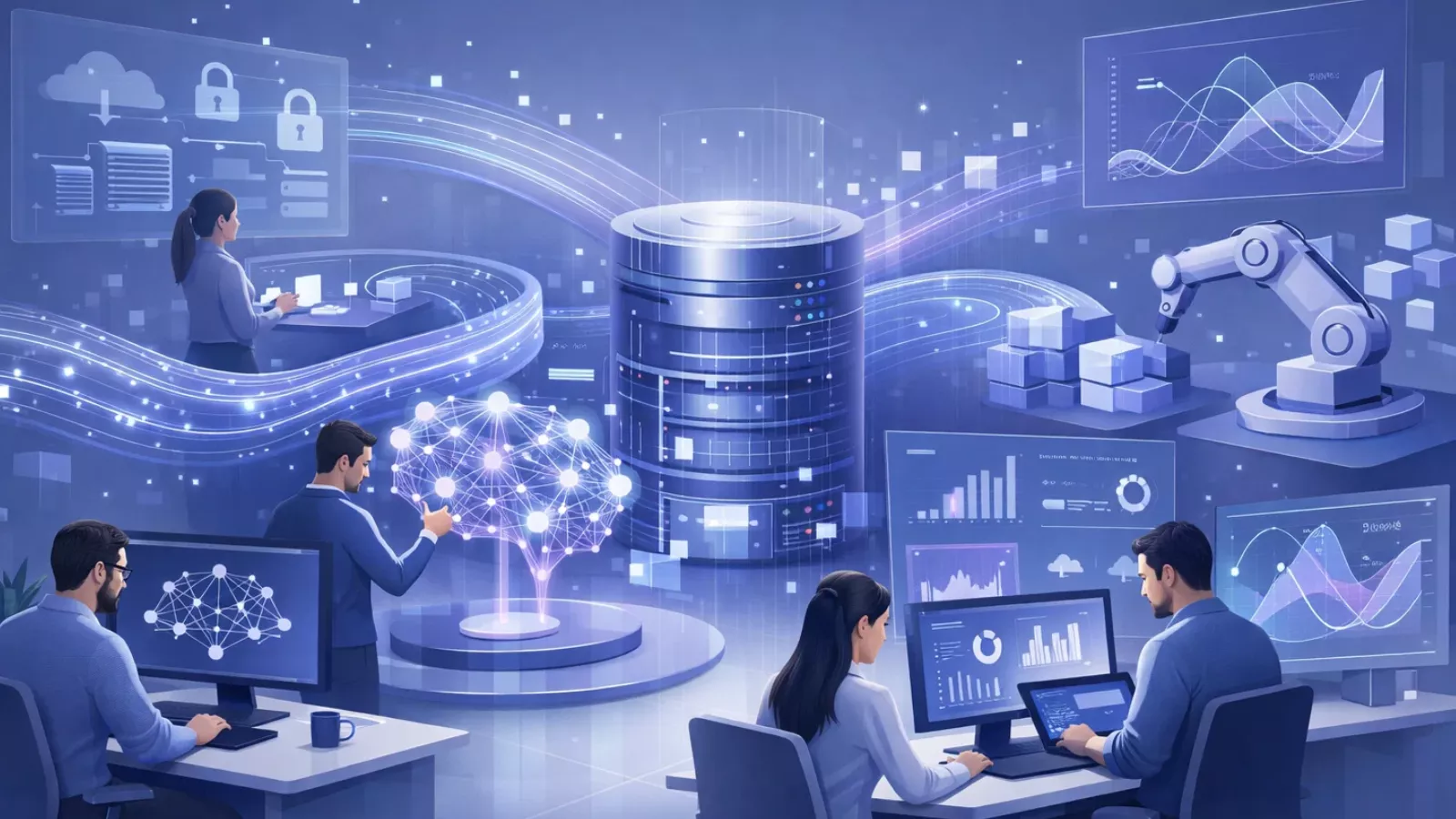
To develop AI software, organizations must rethink traditional software development approaches. AI-driven systems are not built as static applications. Instead, they are designed to learn, adapt, and improve continuously. This shift affects every stage of the development process, from early planning to long-term maintenance. As a result, many businesses rely on AI development services to ensure their systems are scalable, secure, and aligned with long-term goals.
AI software development combines intelligent automation with human expertise, enabling teams to build smarter, faster, and more resilient applications that align closely with business objectives. By leveraging professional AI development services, organizations can move beyond experimentation and implement solutions that deliver consistent value across operations.
AI’s Role in Modern Software Development
AI is transforming how software is designed and delivered by introducing tools that improve productivity, accuracy, and decision-making. Rather than functioning independently, AI systems collaborate with developers to enhance the development workflow, which is a core focus of modern AI development services.
Key ways AI supports software development include:
- Translating business ideas into structured technical requirements
- Converting requirements into user stories and feature definitions
- Assisting in code generation, testing, and documentation
- Improving development speed without sacrificing quality
This collaborative approach ensures AI enhances human capabilities instead of replacing them, creating a more efficient and innovative development environment supported by well-structured AI development services.
How AI Supports Code Generation and Development
One of the most impactful uses of AI in software development is code creation. AI-powered tools use natural language processing to understand human instructions and translate them into functional code. This capability is increasingly integrated into enterprise-grade AI development services to accelerate delivery timelines.
This approach allows teams to:
- Generate code snippets or complete functions from text descriptions
- Reduce repetitive coding tasks and boilerplate work
- Improve consistency across large codebases
- Minimize human error during development
By automating routine coding activities, AI enables developers to focus on complex logic, system architecture, and performance optimization. With the right AI development services in place, organizations can achieve higher-quality software with fewer development bottlenecks.
AI-Driven Testing, Debugging, and Quality Assurance
Beyond development, AI plays a crucial role in ensuring software quality. Traditional testing methods often require extensive manual effort, but AI introduces smarter, adaptive testing strategies that are commonly embedded within advanced AI development services.
AI enhances testing and debugging by:
- Automatically generating test cases based on user stories
- Identifying bugs, vulnerabilities, and inefficiencies early
- Predicting future issues using historical data patterns
- Prioritizing critical tests to improve coverage and efficiency
This proactive approach improves software reliability while reducing time spent on repetitive testing cycles. Businesses that adopt AI development services benefit from more stable applications and lower post-deployment risks.
AI in Project Management and DevOps Processes
Developing AI software also changes how projects are managed and deployed. AI-driven tools assist teams in organizing tasks, managing resources, and optimizing deployment pipelines, all of which are key components of enterprise-level AI development services.
AI contributes to project management and DevOps by:
- Automating routine scheduling and task allocation
- Providing more accurate project timelines using data analysis
- Enhancing CI/CD pipelines through intelligent monitoring
- Detecting performance issues in real time to prevent failures
These capabilities help organizations deliver software faster while maintaining stability and scalability, especially in complex or high-demand environments supported by reliable AI development services.
The Role of AI Software Development Services in Business Growth
AI software development services bridge the gap between advanced technology and practical business use. They bring together technical expertise, industry knowledge, and scalable infrastructure to ensure AI solutions are not just innovative, but also usable. For companies investing in AI development services, this translates into faster implementation and reduced operational risk.
Instead of experimenting blindly, businesses benefit from proven frameworks and best practices. AI development partners also help with model maintenance and updates, ensuring systems stay accurate as data and business conditions evolve. As AI adoption grows, AI development services are becoming a strategic investment rather than a technical expense, especially as AI in companies continues to transform entire industries.
How AI in Companies Is Changing Everyday Operations

AI in companies has moved far beyond experimental projects and isolated IT initiatives. Today, AI is embedded into daily business operations, helping teams work faster, make better decisions, and respond more effectively to changing market demands. Instead of functioning as a standalone technology, AI operates across departments, supporting both strategic planning and routine execution.
This shift is transforming how organizations manage people, processes, and customer relationships.
AI in Marketing and Customer Engagement
AI has significantly changed how companies understand and engage with their audiences. Rather than relying on broad assumptions, businesses now use AI to analyze real-time customer behavior and preferences.
AI supports marketing and engagement by:
- Analyzing customer data to identify patterns and buying intent
- Personalizing content, offers, and recommendations at scale
- Optimizing campaign performance using predictive insights
- Powering AI chatbots that handle customer queries 24/7
AI-powered chatbots, for instance, provide instant responses, resolve common issues, and route complex cases to human agents. This reduces response times, lowers support costs, and improves overall customer satisfaction without increasing operational overhead.
AI in Finance and Risk Management
In finance, AI enables companies to move from reactive problem-solving to proactive risk prevention. Intelligent systems continuously monitor financial data to detect unusual activity and potential threats.
Key applications of AI in finance include:
- Identifying transaction anomalies and potential fraud
- Automating invoice processing and expense categorization
- Improving cash flow forecasting and budgeting accuracy
- Enhancing compliance through real-time monitoring
By detecting irregularities early, AI helps companies reduce financial losses and maintain stronger control over their financial operations.
AI in Human Resources and Workforce Management
Human resources is another area where AI in companies is creating measurable impact. AI tools help HR teams manage large volumes of data while making more informed people-related decisions.
AI-driven HR systems assist with:
- Resume screening and candidate shortlisting
- Predicting employee turnover using behavioral and performance data
- Analyzing productivity trends and engagement levels
- Supporting fairer and more consistent hiring processes
These tools allow HR teams to spend less time on manual tasks and more time on talent development, employee experience, and strategic workforce planning.
AI in Operations and Supply Chain Management
Operational efficiency is a major priority for growing businesses, and AI plays a key role in optimizing supply chains and internal workflows. By analyzing historical and real-time data, AI systems improve visibility and predict disruptions before they occur.
AI improves operations by:
- Forecasting demand more accurately
- Optimizing inventory levels and reducing waste
- Identifying supply chain bottlenecks
- Improving logistics planning and delivery timelines
For companies managing local deliveries, a free delivery planner can support better route organization, reduce manual planning, and help teams keep delivery schedules more predictable.
These insights help companies reduce costs, avoid delays, and maintain consistent service levels even in volatile market conditions.
AI as a Decision-Support System, Not a Replacement
A critical aspect of AI adoption is understanding its role within organizations. AI in companies is not designed to replace human judgment but to support it with data-driven insights.
AI enhances decision-making by:
- Processing large datasets faster than humans can
- Highlighting patterns and risks that might go unnoticed
- Providing recommendations based on predictive analysis
- Enabling leaders to make informed, timely decisions
Human expertise remains essential to interpret AI outputs, apply context, and guide strategic direction. This collaboration ensures AI serves as a reliable assistant rather than an uncontrolled system.
Why Companies Move Toward Advanced AI Solutions
As businesses experience these operational improvements, they often reach a point where basic AI tools are no longer sufficient. Off-the-shelf solutions may lack customization, scalability, or integration with existing systems.
This leads companies to:
- Explore more advanced and tailored AI implementations
- Invest in scalable AI software development services
- Adopt the best AI tools suited to their industry and goals
- Build long-term AI strategies instead of isolated use cases
This progression marks a shift from experimentation to maturity, where AI becomes a core part of business operations rather than an optional enhancement.
By embedding AI into everyday workflows, companies gain greater agility, efficiency, and insight. These practical benefits explain why AI adoption continues to accelerate and why organizations increasingly seek structured AI development services to support long-term growth.
Choosing the Best AI Tools for Business Needs
With countless AI platforms and frameworks available, selecting the right tools can feel overwhelming. The best AI tools are not necessarily the most popular ones, but those that align with a company’s objectives, data environment, and scalability requirements.
Some tools excel at natural language processing, making them ideal for chatbots and content analysis. Others are better suited for computer vision, predictive analytics, or automation. The key is understanding where AI will create the most impact and choosing tools that integrate smoothly with existing systems.
This is another area where AI development services add value. Instead of relying on trial and error, businesses receive guidance on tool selection, customization, and deployment. Once the tools are in place, the focus shifts toward building AI solutions that evolve with the organization.
Custom AI Solutions vs Off-the-Shelf Software
Off-the-shelf AI software can be a good starting point, especially for common use cases. However, as businesses grow and processes become more complex, generic solutions often fall short.
Custom AI development allows companies to build systems that reflect their unique workflows, data structures, and customer expectations. This customization leads to higher accuracy, better performance, and greater long-term value.
By working with an experienced AI development partner, organizations gain solutions designed for their present needs while remaining flexible for future expansion. This balance between immediate functionality and long-term scalability is what separates successful AI adoption from short-lived experimentation.
The Importance Of Scalability and Ethics in AI Development
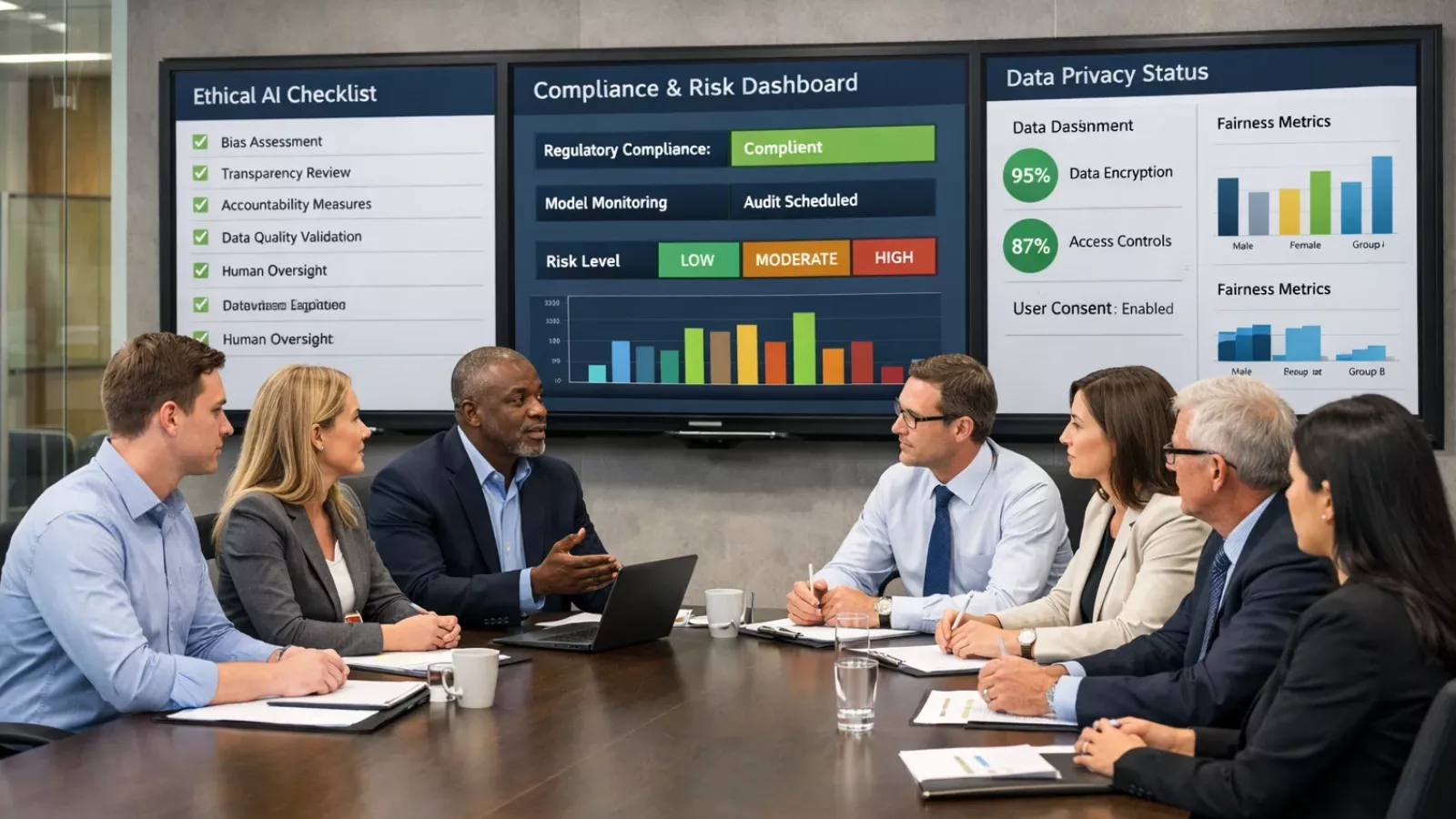
As AI systems become more integrated into business operations, scalability and ethical considerations cannot be ignored. AI models must handle increasing data volumes without losing performance, and they must operate transparently and responsibly.
Responsible AI development includes minimizing bias, ensuring data privacy, and maintaining compliance with regulations. AI development services play a critical role here by implementing governance frameworks and continuous monitoring systems.
This responsible approach not only reduces risk but also builds trust among users, customers, and stakeholders. Trust, after all, is essential for long-term adoption and business success.
Why Globussoft Is the Right Partner for AI Development Services?
At Globussoft, AI development is approached with a clear business-first mindset. The focus is not just on building intelligent systems but on delivering solutions that solve real problems and create measurable impact.
From strategy and data preparation to model development and deployment, Globussoft offers end-to-end AI software development services tailored to diverse industries. The team works closely with clients to ensure AI solutions align with operational goals and integrate seamlessly into existing ecosystems.
By combining technical expertise with a deep understanding of business processes, Globussoft helps organizations confidently adopt AI and scale it as their needs evolve.
Looking Ahead: The Future of AI in Business
AI adoption will continue to accelerate as tools become more accessible and use cases more refined. Businesses that invest early in structured AI development gain a competitive edge by improving efficiency, decision-making, and customer experience.
The key is not just adopting AI, but adopting it strategically. With the right AI development services, companies can move beyond experimentation and build systems that deliver consistent value over time.
As AI becomes a core component of digital transformation, partnering with an experienced development team like Globussoft ensures that innovation remains practical, scalable, and aligned with business growth.
Quick Search Our Blogs
Type in keywords and get instant access to related blog posts.

 +91 8767115115