 India
India  UK
UK USA
USA 
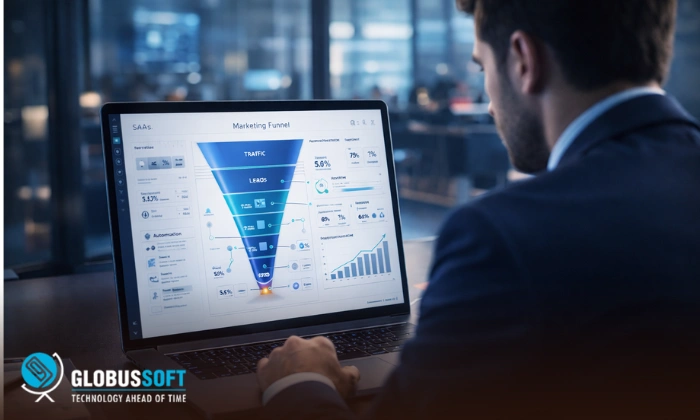
You don’t have a traffic issue. You are having trouble converting.
Every day, businesses spend millions of dollars on ads.They post content. They hire agencies. They redesign websites. And still…Revenue doesn’t grow the way it should. Visitors come. They scroll. They leave. No enquiry. No purchase. No follow-up. And the worst part? You start questioning everything.
“Should I increase my ad budget?”
“Is my product priced wrong?”
“Do I need better creatives?”
“Is the market too competitive?”
But here’s the uncomfortable truth. Most businesses are trying to sell without building a buying journey.
They focus on getting attention. But they don’t design what happens after that attention.
Even if you have the best product in the world. The best team. Even the best marketing campaigns.
But if there’s no structured path that moves a stranger from curiosity to trust to purchase
Your sales will always feel inconsistent.
That structured path is called a marketing funnel.
And if you understand it properly,
You stop guessing…
and start converting.
In this guide, we’re going to break down marketing funnels from the ground up: what they are, why most businesses get them wrong, and how to create sales funnels for conversions that turn traffic into predictable revenue.
Because growth isn’t about doing more marketing. It’s about doing it in the right order.
Listen To The Podcast
What Is a Marketing Funnel, and Why Does It Matter for Your Business?
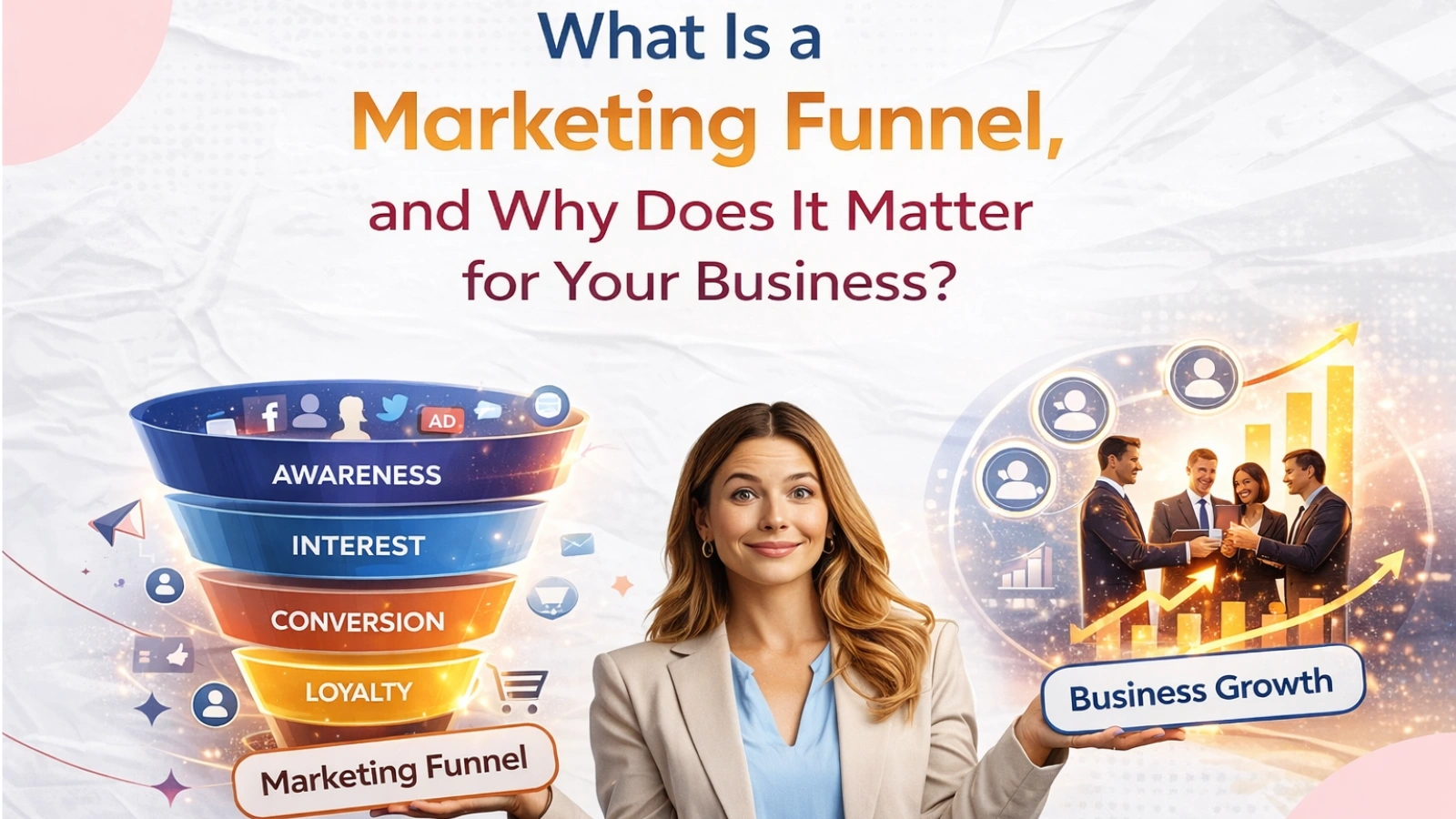
A marketing funnel is a journey that takes a customer from discovering your brand to becoming a paying, hopeful, and repeat customer.
In simple words, it is a system that guides total strangers into loyal buyers. Instead of just hoping that someone will visit and buy something from the site, it is intentional plotting leading them through a process that feels natural and helpful.
Why Is It Called A Funnel?
The marketing funnel name comes from the shape of the customer journey. Imagine it as pouring water into a funnel at the top; a large amount flows in. But as it moves downward, the space narrows, and only a smaller amount comes out at the bottom.
The top: At the very top, you have a large number of people who discover your business through social media, search engines, or ads (traffic). The audience at this stage is broad, wide, and full of possibilities.
The Middle: As they move further down, not everyone stays; some lose interest, and some are not the right fit. The remaining audience begins to engage more seriously. They download your guide, sign up for your newsletter, or request more information. These are your leads.
Finally, at the bottom of the funnel, only the interested group remains. These are the people who trust you enough to make a purchase. They become your leads.
The 5 Core Stages of Marketing Funnels
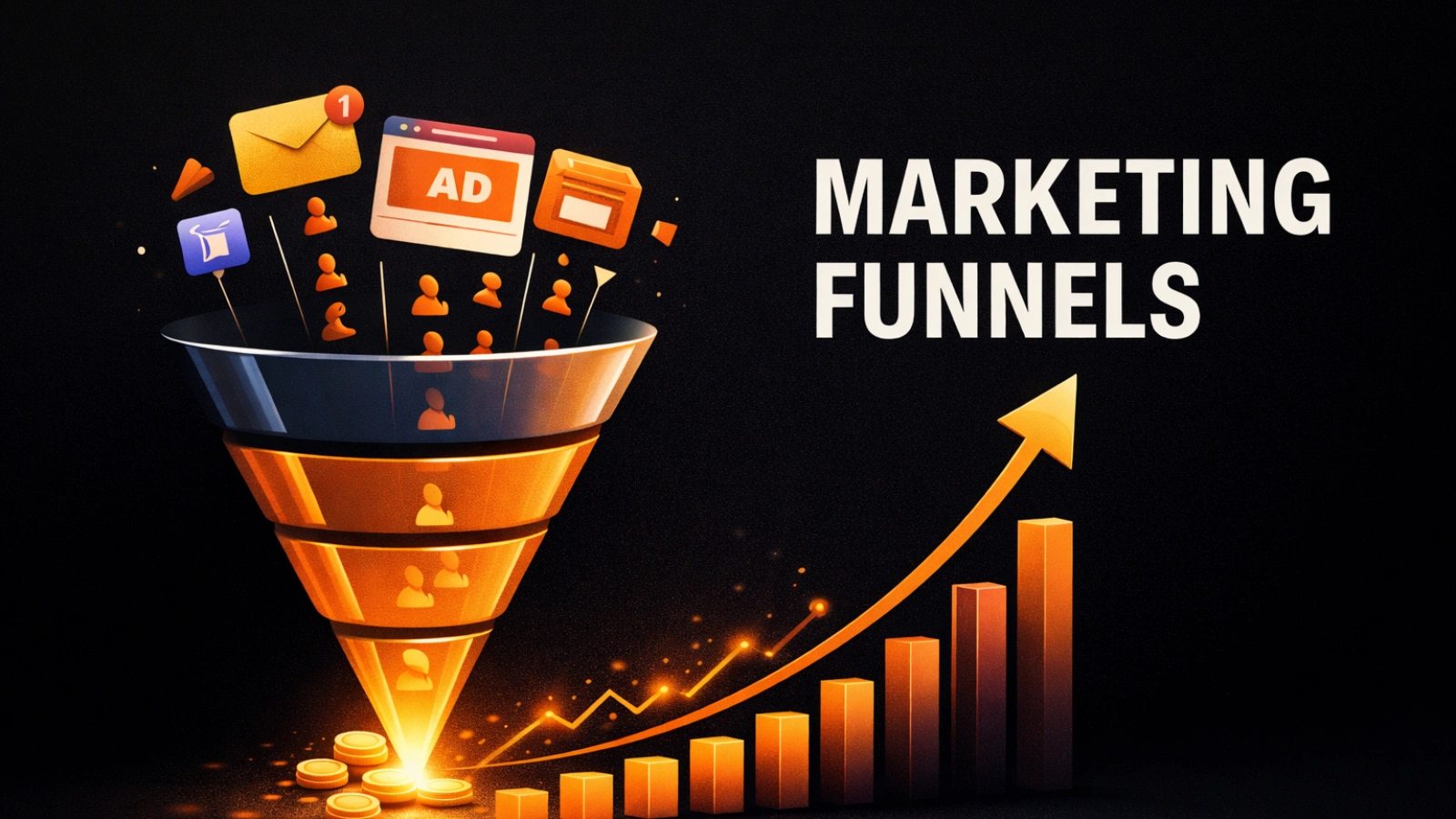
While every business is unique, most marketing funnels follow these five simple stages:
Awareness:
This is the stage where a person learns your name. They are looking to buy; they are usually looking for an answer to a problem or have stumbled across your brand on social media.
For example, someone searches for “how to style oversized shirts” or “best outfits for summer 2026.”
At this stage, they’re not looking to buy from a specific brand, they’re simply exploring ideas. A clothing and apparel brand can create blog posts, Pinterest pins, or Instagram Reels showcasing styling tips, seasonal trends, or fashion guides.
The goal here isn’t to push products but to provide helpful, inspiring content that introduces the brand naturally and builds early awareness.
Interest:
Now that they know you, they want to see if you actually know your stuff; they start “window shopping” through your content, reading more articles, or perhaps signing up for your newsletter.
It is a stage where the customer becomes curious.
That same person spends 10 minutes reading your “Guide to Modern Plumbing” and follows you on Instagram.
Consideration:
At this stage, the customer knows that they have a problem and you have a solution, but they are comparing the solution that you are providing with your competitors‘. They are weighing the pros and cons, looking at reviews, and checking your prices.
For example, they read your customer testimonials and compare your “Pro-Fix Kit” features against a cheaper version on Amazon.
Conversion:
This is the movement of truth. When the research part is over, it is the movement where the customer decides that you are the most reliable solution to their problem.
They move from being a “lead” (someone you talk to) to a “customer” (someone you serve).
They sign the contract, book the consultation, or hit “Buy Now” on your checkout page.
Retention:
The biggest mistake in marketing is thinking that the journey ends with the consideration. Retention is where the business becomes sustainable. At this stage, you are not selling anymore; at this stage, you sell promise so well that the customer doesn’t even bother looking at your competitors next time.
- The Vibe: “They actually delivered what they promised. I’m sticking with them.”
- The Reality: It is 5x cheaper to keep an existing customer than to find a new one. This stage turns a one-time transaction into a long-term asset.
- Practical Example: A week after the purchase, they receive a helpful “Getting Started” video from you, making them feel supported rather than forgotten.
Also Read
How To Use AI In Marketing Effectively?
Why Marketing Funnels Are Critical for Business Growth
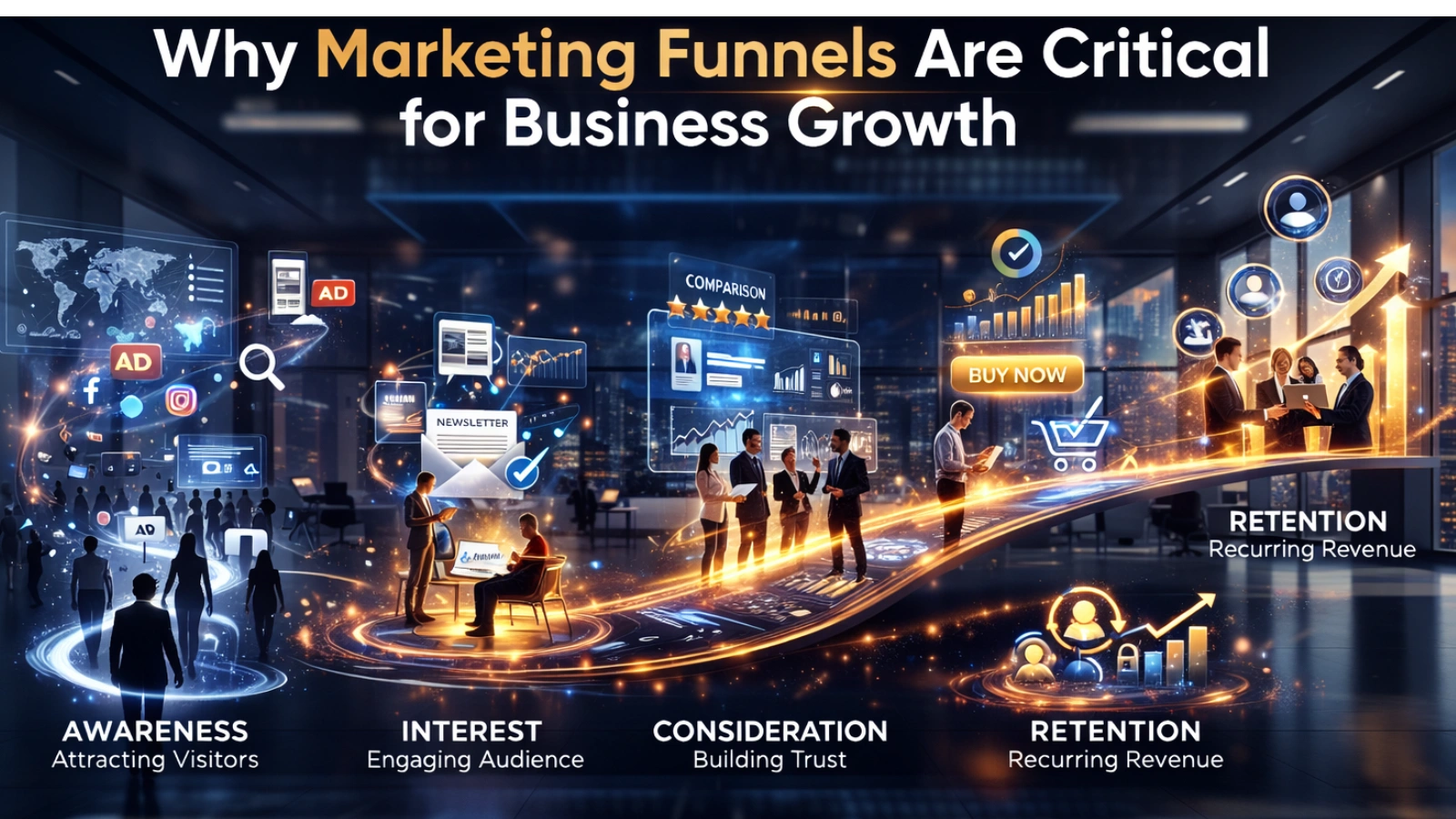
If you are getting traffic but the sales are not enough, you don’t have a traffic problem, but a funnel problem.
In 2026, the internet is noisier than ever. People don’t just stumble onto a website and hand over their credit card info on the first click. They actually need a path to follow. Without a designed marketing funnel, you’re losing market share to competitors who have a clearer path.
Here is why you need an intentional funnel for scaling your business:
It automates your sales process.
A high-performing funnel operates 24/7. It takes a stranger who scrolled your blog post at 2AM and automatically delivers the specific value they need to move closer to a purchase. This allows you to scale your revenue. This allows you to scale your revenue without the need to manually “pitch” every single lead.
It Establishes Authority and Trust at Scale
Modern consumers buy from brands they perceive as credible experts. A funnel provides a framework to prove your expertise before pitching for sales. By providing high-value insights during the awareness and interest stages, you transition from being a “vendor” to a “trusted advisor”. By the time they reach the conversion stage, the purchase feels like a logical next step and not a forced transaction.
It Pinpoints Exactly Where Your Revenue is Leaking
Without a defined funnel, identifying the decline in sales is nothing but guesswork. A funnel transforms the customer journey into a measurable map, showing where the sales are actually dropping.
High traffic but low sign-ups?
It means that your awareness content is effective, but the lead is not strong enough to engage people.
High cart volume but low sales?
It means that your conversion stage has technical friction or lacks enough social proof.
It Maximises Customer Lifetime Value (CLV).
Sustainable growth isn’t about acquisition; it is about retention. An intentional retention stage ensures that you aren’t leaving revenue on the table after the initial transaction. By continuing to support after the sale, you transform a one-time buyer into a loyal brand advocate. According to research from Harvard Business Review, increasing retention by just 5% can boost profits by up to 95%.
It Facilitates a Superior Customer Experience
The buyer wants their problems to be solved and not to be sold to. So when a customer is looking at your product, they are looking for a solution to their problem. A funnel ensures that your audience receives the right information at the right moment in their decision-making process. It replaces a chaotic browsing experience with a smooth, professional, and personalised journey that respects the buyer’s time.
The defining difference between a stagnant business and a high-growth company is predictability. A well-architected marketing funnel provides a repeatable, data-driven system for turning cold traffic into consistent revenue.
The Art of Crafting Sales Funnels for Maximum Impact
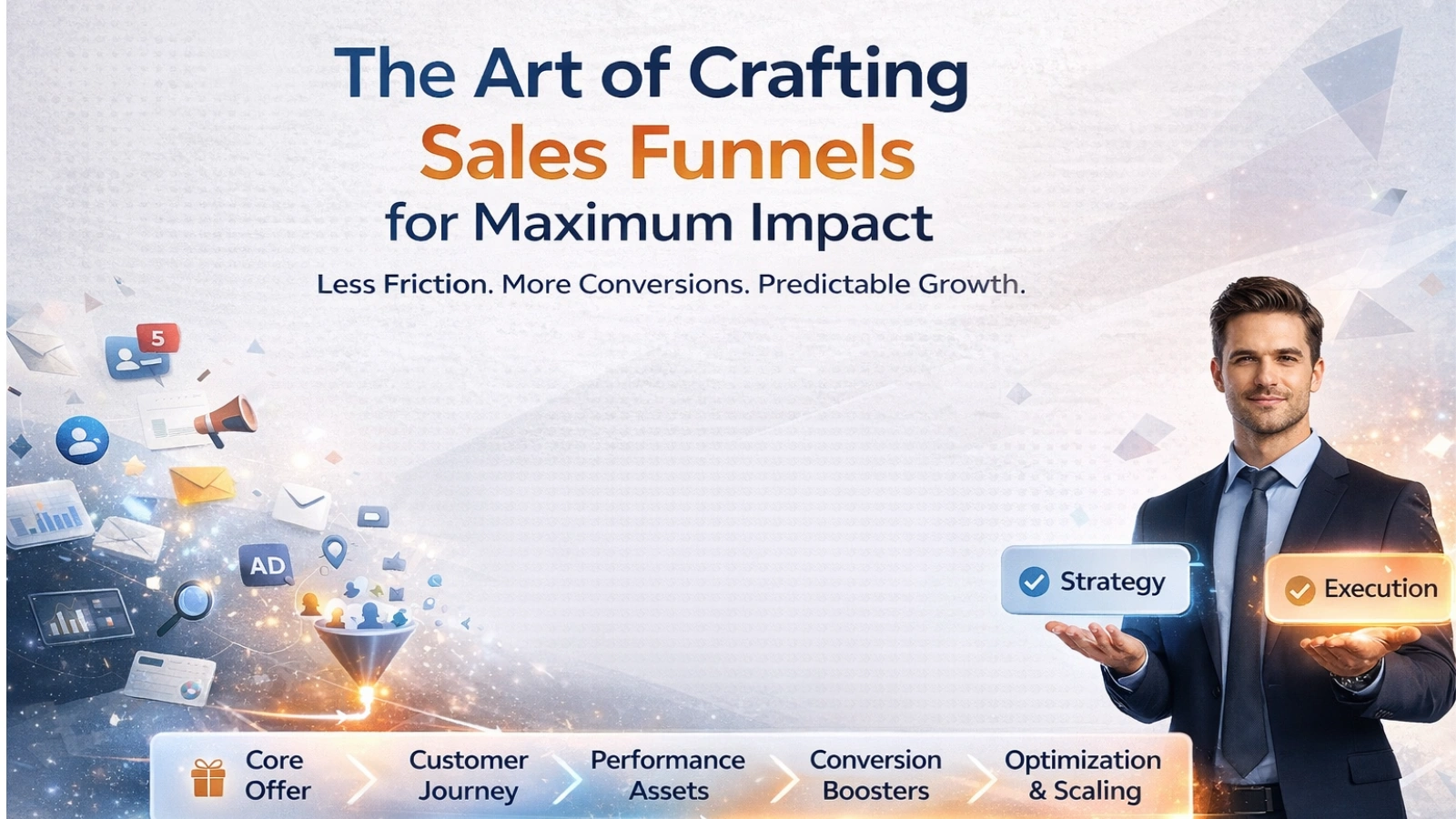
The best funnels aren’t the most complex but the ones with less friction.
Follow these five steps to build a high-converting sales funnel.
Step 1: Define Your Core Offer
Conversion starts with empathy; you are not selling a product but a destination, a destination that is away from the problems. To get this right, you need to identify the specific acute pain that your audience feels right now.
The common mistake that businesses make is targeting a broad audience (e.g., “I help businesses grow”).
Be surgical. (e.g., “I help e-commerce stores reduce abandoned carts.”)
Write down the top three frustrations that your customer vents about at 2.00 AM; your funnel should address the loudest one first.
In a crowded market, “good enough” is a death sentence for conversion. Your UVP is the distinct reason a customer should choose you over doing nothing at all.
The formula for the best unique value proposition is:
[Product/Service] + [Benefit] – [Common Pain Point].
Example: “A 15-minute skincare routine for every skin type that requires zero effort”
Most people are not ready to buy the core offer immediately, so you need an entry point that provides immediate gratification and builds trust, which is your lead magnet.
Don’t try to solve their entire life’s problem for free. Solve one tiny, specific part of it.
Step 2: Identify Your Ideal Customer Journey
You need to map out the psychological shifts a person goes through before they feel safe enough to buy something.
What specific event or question leads them to find you (e.g., “Why is my website traffic dropping?”)
You want the prospect to think, “This brand understands my situation perfectly.”
As a prospect moves closer to purchase, their “internal alarm” goes off. They start looking for reasons not to buy to protect their time and budget. You should dismantle it before they become a dealbreaker.
Mostly, the common barriers are:
- The Price Wall: “Is this worth the investment?” (Counter with ROI case studies).
- The Complexity Wall: “Will this take too long to set up?” (Counter with a ‘quick-start’ roadmap).
- The Trust Wall: “Who else has done this successfully?” (Counter with industry-specific testimonials).
The Strategy: Address these objections head-on in your middle-of-funnel content. Think comparison guides, “Honest Reviews”, or FAQ sections.
Even when the customer trusts you, they often suffer from analysis paralysis, which is the final nudge that moves them from thinking to acting to resolve this.
Step 3: Deploy High-Performance Assets
To maximise the conversion rate, digital infrastructure must be built for speed and singular focus. In 2026, a leaky asset, a slow page, or a confusing email is the fastest way to lose a customer.
- The Landing Page: Use Unbounce to create a single-purpose page. Remove navigation bars and external links—give the user only one path forward.
- Automated Nurture: Implement an email sequence using ActiveCampaign that delivers value-heavy insights for 80% of the journey and makes the pitch for the remaining 20%.
- Frictionless Checkout: Use Stripe’s Optimised Checkout to ensure the payment process takes fewer than three clicks.
Step 4: Conversion grease
Once your infrastructure is built, you need to remove the psychological friction that causes high-value B2B prospects to hesitate at the finish line.
Modern business buyers need to see that people exactly like them have succeeded with your solution.
In B2B, a simple quote no longer works. Modern business buyers need to see that people like them have succeeded with your solution.
For which you can do the following things:
- Instead of just a quote, show a specific result. (e.g., “Reduced overhead by 22% in 90 days for [Company Name].”)
- Authentic video clips of clients speaking about their results.
- Display the logos of well-known brands or industry associations you’ve worked with to borrow their established credibility.
Sales cycles can drag on for months. Strategic urgency gives a prospect a logical reason to prioritise your project now instead of next quarter.
The biggest fear for a business decision-maker isn’t losing money; it’s looking bad to their boss or board. You must remove the risk of “making the wrong choice”.
Ensure your refund policy is clear, professional, and easy to find on the checkout page.
Step 5: High-Level Optimisation & Performance Auditing
An unoptimised funnel is a leaking asset. Precision data allows you to transition from “guessing” to “engineering” your revenue.
B2B journeys are rarely linear. A prospect might find you on LinkedIn, read three blogs, and download a report before ever talking to sales.
Align your content directly with the specific stage where the highest drop-off occurs.
The most valuable data isn’t in your dashboard; it’s in your prospects’ heads.
- The Strategy: Implement a “Post-Loss” survey for deals that didn’t close. Ask: “What was the primary factor in your decision to go in a different direction?”
- The Goldmine: This feedback directly informs your next round of Objective Neutralisation (Step 2), allowing you to proactively solve those issues for future leads.
Why Execution Matters More Than Strategy
By now, you have understood what marketing funnels actually are.
You understand the stages and why structure beats guesswork.
But here is something most of the blogs don’t tell you.
Understanding funnels and building high-performing funnels are two completely different things.
On paper, it sounds like
Run ads → Capture leads → Nurture → Convert → Retain.
The main struggle starts with the execution.
A professional marketing funnel in 2026 is a closed-loop system. By reviewing these metrics monthly, you ensure your marketing spend is an investment with a predictable return, rather than a speculative expense.
- The traffic is misaligned with the offer.
- The landing page doesn’t match user intent.
- The automation sequence feels generic.
- The conversion tracking is incomplete.
- The follow-up system lacks personalisation.
And even a small gap in one stage can weaken the entire funnel.
High-performing marketing funnels require more than just tools. They require:
- Behavioural psychology
- Data-backed decision-making
- Clean technical setup
- Conversion rate optimisation
- Continuous performance auditing
This is where the strategic growth partners make the real difference. There are various platforms that you can use for strategic growth, like Globussoft.
At Globbussoft, we don’t just “run ads” or “design pages”. We architect structured marketing funnels that are built around performance, data, and long-term scalability. From traffic acquisition to retention strategy, every stage is engineered to move prospects forward with clarity and intention.
Conclusion
Because in modern business, growth should not depend on luck.
It should depend on systems.
Is this accurate?
If there is one thing you take away from this guide, let it be
You don’t need more marketing.
You need better sequencing.
Traffic alone doesn’t grow a business.
Offers alone don’t grow a business.
Even great products don’t grow a business on their own.
When your funnel is aligned, every stage supports the next. Visitors become leads. Leads become customers. Customers become repeat buyers. And growth stops feeling accidental.
Whether you’re just starting out or scaling aggressively, building intentional marketing funnels is no longer optional; it’s foundational.
The best businesses are not the ones doing the most marketing.
They’re the ones doing it in the right order.
And when your funnel is designed correctly, conversion stops being a mystery and starts becoming a system.
FAQ
1. Which AI tools can be used to optimise the marketing funnel?
AI tools can improve different stages of the funnel:
- AI-powered analytics tools to track user behaviour
- Chatbots for automated lead qualification
- Email automation platforms with predictive insights
- AI-driven ad optimisation tools
- A/B testing tools for conversion improvement
AI helps to remove the guesswork part and improve overall performance across the funnel
2. How can Globussoft help you with marketing funnel optimisation?
Globbussoft helps businesses to design, implement, and optimise structured marketing funnels.
3. Do small businesses need marketing funnels?
Yes. In fact, small businesses benefit even more from structured funnels because they often have limited marketing budgets. A well-designed funnel ensures every visitor has a clear path toward becoming a customer.
4. Why are marketing funnels important for business growth?
Marketing funnels provide structure. Without a funnel, businesses rely on random marketing efforts. With a funnel, every action, ad, content, email, and offer has a defined purpose. This creates predictable revenue instead of inconsistent sales.
Quick Search Our Blogs
Type in keywords and get instant access to related blog posts.


 +91 8767115115