 India
India  UK
UK USA
USA 
Software is no longer something you build once and ship forever. It learns, adjusts, and rewrites its own behavior in response to the world around it. That shift has a name: adaptive AI. Unlike traditional systems that depend on fixed rules and periodic updates, adaptive AI continuously absorbs new data, refines its models in real time, and improves performance without waiting for a developer to push a release.
This article breaks down what adaptive AI is, how it works, where it’s already changing software, and why it’s becoming the default architecture for the next generation of intelligent applications.
Listen Now
What Is Adaptive AI? (A Simple Explanation)
Adaptive AI refers to artificial intelligence systems that learn and evolve continuously after deployment. Instead of being trained once and frozen, these systems update their internal models based on real-world feedback, changing inputs, and shifting user behavior.
Think of it as the difference between a paper map and Google Maps. A paper map is accurate the day it’s printed and outdated the moment a road changes. Google Maps adapts every minute, rerouting around traffic, construction, and accidents.
Why it matters in modern software: Most modern applications operate in environments that change faster than teams can manually retrain models. Customer preferences shift, fraud patterns evolve, supply chains move, and markets react in seconds. Adaptive AI handles that volatility natively.
Adaptive AI vs static AI systems:
- Static AI is trained on a fixed dataset, deployed, and then frozen until the next manual retrain.
- Adaptive AI learns continuously from live data streams and adjusts its predictions in real time.
- Static AI ages quickly. Adaptive AI gets better the longer it runs.
How Adaptive AI Systems Work in Real Time
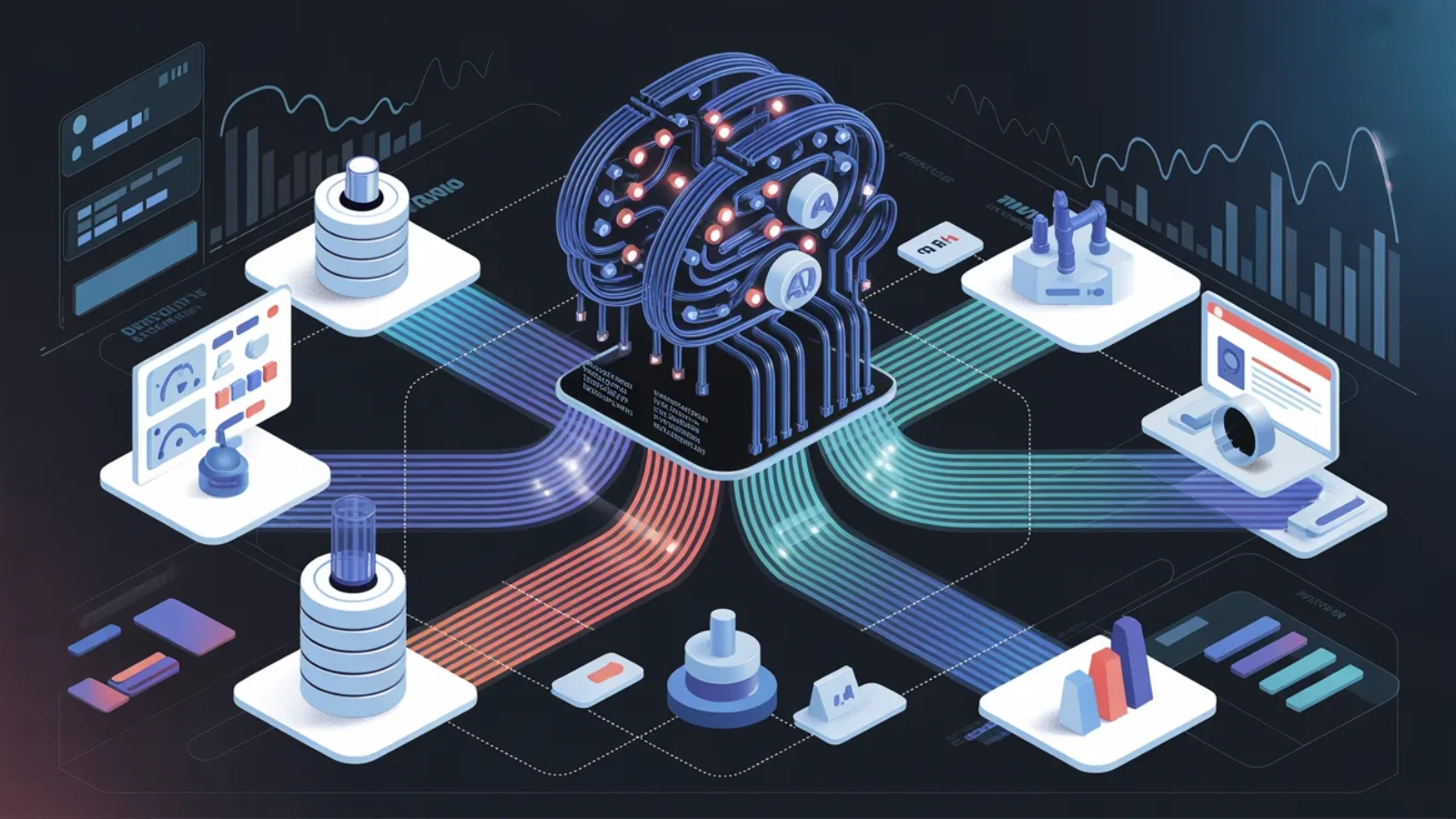
Adaptive AI systems are built around a continuous loop: sense, learn, decide, act, repeat. Four core components make this possible.
Data Collection and Real-Time Inputs
The foundation is a steady stream of fresh data, user interactions, sensor readings, transaction logs, API responses, and environmental signals. Without high-quality, low-latency data pipelines, adaptation can’t happen.
Role of AI/ML Integration in Adaptive Systems
AI/ML integration is the engine room. Machine learning models, supervised, unsupervised, and reinforcement-based, process incoming data, detect patterns, and update their parameters on the fly. Modern adaptive systems often combine multiple model types working in concert.
Feedback Loops and Continuous Learning
Every prediction the system makes generates an outcome, and every outcome becomes new training data. These feedback loops let the model self-correct. If a recommendation engine suggests a product and the user ignores it, that signal feeds back into the model and reduces the likelihood of a similar miss.
Decision-Making and Self-Optimization
Once the model has updated, it acts. Adaptive AI systems optimize for defined goals, reducing latency, increasing conversion, catching fraud, and tuning their own behavior to hit those targets without human intervention.
Adaptive AI vs Generative AI: Key Differences
Adaptive AI and generative AI are often mentioned in the same breath, but they solve different problems.
Generative AI creates new content, text, images, code, and audio based on patterns learned during training. Think GPT-style language models or image generators.
Adaptive AI focuses on learning and adjusting behavior over time, usually within a specific operational context like fraud detection, recommendations, or industrial control.
| Dimension | Adaptive AI | Generative AI |
|---|---|---|
| Primary goal | Learn and adjust to changing inputs | Create new content from learned patterns |
| Training | Continuous, post-deployment | Mostly pre-trained, then fine-tuned |
| Output | Decisions, predictions, optimizations | Text, images, audio, code |
| Best fit | Real-time systems, personalization, automation | Content creation, drafting, design |
| Data flow | Live feedback loops | Prompt → response |
When to use each: Use generative AI when the deliverable is content. Use adaptive AI when the deliverable is a decision that needs to stay accurate as conditions change. The two can, and increasingly do, work together.
Also Read!
How To Understand Types Of Agent In AI? Complete Guide
OpenClaw AI Agent GitHub: 10 Key Benefits
Key Features of Adaptive Learning AI Systems
Adaptive learning AI systems share a set of defining capabilities that separate them from conventional ML deployments.
- Continuous learning capability, models update from new data without requiring full retraining cycles.
- Real-time adaptation, behavior changes within seconds or minutes of detecting a new pattern, not weeks.
- Context awareness, the system understands situational variables (user, location, time, device) and adjusts accordingly.
- Autonomous decision-making, within defined guardrails, the system acts on its own conclusions rather than queuing every choice for human review.
- Self-improving algorithms, performance trends upward over time as the system accumulates experience, similar to how a human expert sharpens their judgment.
These features compound. A system that’s continuously learning, context-aware, and autonomous performs very differently from one with only one of those traits.
How Adaptive AI Is Changing Modern Software
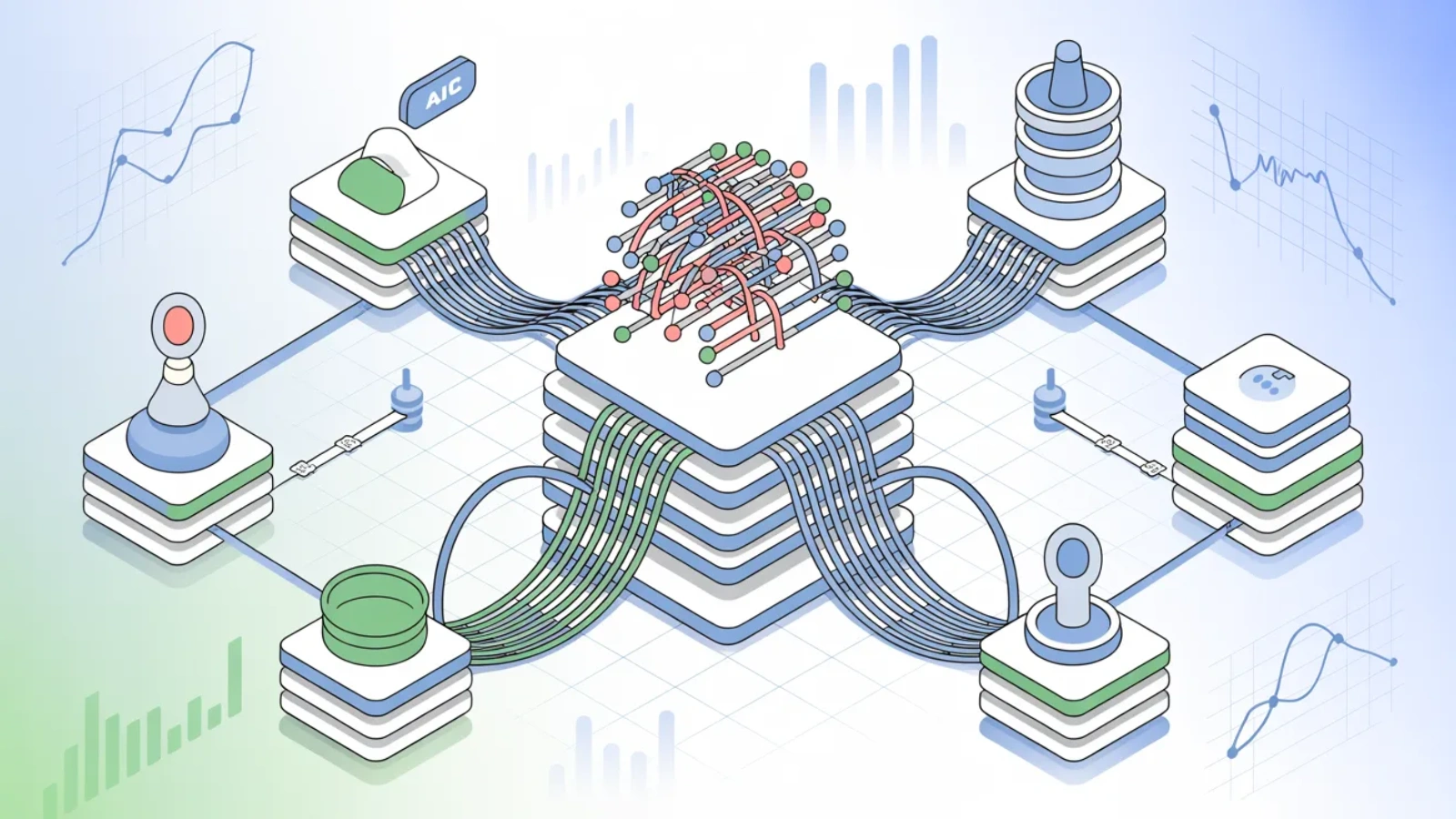
The most important shift adaptive AI brings is philosophical: software is no longer a finished product. It’s a living system.
From Static Software to Self-Learning Systems
Traditional applications follow a release cycle: design, build, ship, patch. Adaptive software collapses that cycle into a continuous improvement loop. The product you use today is measurably different from the one you used last month, even if no one pushed a release.
Real-Time Decision Intelligence
Decisions that once required dashboards, analysts, and meetings now happen automatically. Pricing engines reprice thousands of SKUs per minute. Fraud systems block suspicious transactions before a human could even read the alert.
Personalized User Experiences
Personalization used to mean choosing one of three pre-built segments. Adaptive AI personalizes at the individual level, recommendations, layouts, notifications, even features, and updates that personalize with every interaction.
Reduced Manual Intervention and Smarter Automation
Engineering teams spend less time tuning rules and more time defining objectives. Workflows that once broke whenever inputs deviated from expectations now flex around the deviation. That resilience is what makes large-scale automation feasible.
Real-World Use Cases of Adaptive AI Systems
Adaptive AI isn’t theoretical. It’s already running in production across nearly every major software category.
- SaaS platforms, adaptive AI powers in-app recommendations, churn prediction, and feature suggestions that improve as users interact with the product.
- Education, adaptive learning AI adjusts difficulty, pacing, and content delivery based on individual student performance, used by platforms like Duolingo and Khan Academy.
- Marketing and personalization, campaign engines reallocate budget across channels, audiences, and creatives in real time based on conversion signals.
- Healthcare and predictive systems, adaptive models flag at-risk patients, optimize treatment plans, and refine diagnostic accuracy as new clinical data arrives.
- Business intelligence and analytics, dashboards surface anomalies and adjust the metrics they highlight based on what the user actually pays attention to.
Across these use cases, the common thread is environments where conditions change faster than humans can manually update the system.
AI/ML Integration and Business Benefits of Adaptive AI
The technical foundation of adaptive AI is tight AI/ML integration with operational systems, and that integration is what unlocks measurable business value.
The Technical Layer
Adaptive systems rely on streaming data pipelines, feature stores that update continuously, online learning models, and reinforcement learning AI agents that optimize for long-term reward rather than single-shot accuracy. They sit alongside traditional software stacks, databases, APIs, front-ends, and feed back into them through well-defined integration points.
Reinforcement learning plays a particularly important role. It lets the system experiment with strategies, observe outcomes, and converge on policies that maximize a defined goal. This is how adaptive trading systems, robotic controllers, and recommendation engines refine themselves over time.
Business Benefits That Flow From AI/ML Integration
The capabilities above translate directly into business outcomes:
- Improved accuracy over time, models that learn continuously outperform static models within months of deployment.
- Faster decision-making, decisions that took hours collapse into milliseconds.
- Cost reduction, less manual tuning, fewer retraining projects, and lower operational overhead.
- Enhanced customer experience, personalization, and responsiveness translate directly into retention.
- Scalability, adaptive systems handle growth in users, data, and complexity without proportional growth in engineering effort.
The combined effect is software that gets cheaper to operate and more valuable to users at the same time, a rare combination in technology economics.
Challenges and Risks of Adaptive AI Systems
Adaptive AI’s strengths are also the source of its biggest risks. A system that changes itself is harder to predict, audit, and control.
Data Privacy Concerns
Continuous learning means continuous data collection. That raises real questions about consent, retention, and regulatory compliance, especially under frameworks like GDPR and India’s DPDP Act. Privacy-by-design isn’t optional for adaptive systems; it’s foundational.
Model Drift and Bias
Models that learn from live data can drift away from their original behavior in ways no one notices until something breaks. Worse, they can amplify biases present in the incoming data, encoding them more deeply over time.
Complexity in Implementation
Building an adaptive AI system is significantly harder than deploying a static model. Teams need streaming infrastructure, monitoring tools, retraining pipelines, and governance frameworks that most organizations don’t yet have in place.
Monitoring and Control Issues
When a system changes itself, how do you know it’s still doing what you want? Robust observability, rollback mechanisms, and human-in-the-loop checkpoints are essential, and often underbuilt.
These risks aren’t reasons to avoid adaptive AI. There are reasons to design for them deliberately from day one.
Globussoft AI: Overview
Globussoft is a technology-driven platform focused on building advanced AI-powered solutions for modern businesses. The platform specializes in integrating artificial intelligence, automation, and data-driven systems to help companies improve efficiency, decision-making, and overall digital performance.
Globussoft AI works across multiple domains, including SaaS, marketing automation, and intelligent software systems, making it useful for businesses looking to adopt smarter and more scalable technologies.
What Globussoft AI Offers
- AI-Powered Automation
Helps businesses automate repetitive tasks, workflows, and operations to save time and reduce manual effort. - Custom AI Solutions
Provides tailored AI/ML models and systems based on specific business needs, rather than one-size-fits-all tools. - Data-Driven Insights
Uses advanced analytics to turn raw data into actionable insights for better decision-making. - SaaS & Product Development
Builds scalable software products with AI integration at the core, improving performance and adaptability. - Digital Growth Support
Supports marketing, optimization, and growth strategies using AI-driven tools and systems.
The Future of Adaptive AI and Intelligent Software
The next phase of adaptive AI is already taking shape, and it looks more autonomous and more integrated with generative systems than what’s deployed today.
Adaptive AI + Generative AI Convergence
The two paradigms are merging. Generative models are starting to incorporate adaptive feedback (RLHF and its successors), while adaptive systems are beginning to use generative components to draft strategies, summarize state, and propose actions.
Autonomous AI Systems
The frontier is agents that not only adapt but plan, systems that set sub-goals, execute multi-step tasks, and self-correct when they fail. Early versions are already in production for code generation, research, and customer support.
Self-Optimizing Software Ecosystems
Entire stacks, not just individual models, will tune themselves. Databases that reindex based on query patterns, APIs that reshape their schemas around usage, and infrastructure that reallocates capacity automatically.
Future Trends and Predictions
Expect adaptive AI to become a default layer in software architecture rather than a specialized add-on, the way databases and authentication are today. The companies building this layer well will compound advantages that static-software competitors can’t catch up to.
Conclusion
Adaptive AI represents the shift from software as a fixed artifact to software as a learning organism. Systems that sense, decide, and improve in real time will outperform static ones across nearly every domain, and the gap will widen as the technology matures. For builders, the question isn’t whether to adopt adaptive AI but how quickly, how safely, and where it creates the most leverage.
FAQs About Adaptive AI
What is adaptive AI in simple terms?
Adaptive AI is artificial intelligence that keeps learning after it’s deployed. Instead of being trained once and left alone, it updates itself based on new data and feedback, so it stays accurate as conditions change.
How is adaptive AI different from generative AI?
Generative AI creates content, text, images, and code. Adaptive AI makes decisions and adjusts behavior over time. Generative answers “what should this look like?” Adaptive answers “What should we do, given everything we’ve learned?”
What are adaptive learning AI systems?
Adaptive learning AI systems are applications built around continuous learning loops. They take in real-time data, update their internal models, and change their outputs accordingly. Common examples include personalized education platforms, fraud detection systems, and recommendation engines.
Is adaptive AI the future of software?
It’s becoming the default for any software that operates in changing conditions, which is most modern software. Static systems are increasingly being retrofitted or replaced with adaptive equivalents, and new products are being built adaptive-first.
Quick Search Our Blogs
Type in keywords and get instant access to related blog posts.

 +91 8767115115