 India
India  UK
UK USA
USA 

Running a business without knowing what your competitors are doing is like playing poker with your cards face down. You might get lucky, but you’re probably going to lose. That’s where competitive analysis comes in. It’s not just about stalking your rivals online (though that’s part of it). It’s about understanding the playing field so you can make smarter decisions that actually grow your business.
Here’s the thing: most companies do this completely wrong. They spend hours gathering information, dump it into a massive spreadsheet, and then… nothing. The spreadsheet sits there collecting digital dust while everyone goes back to guessing. We’re going to show you how to do this differently, how to gather insights that you’ll actually use.
Listen To The Podcast Now!
What Is A Competitive Analysis?
So, what is a Social Media Competitive Analysis exactly? Think of it as your business intelligence report. You’re basically figuring out what your competitors are good at, where they’re dropping the ball, how they price their stuff, and how they talk to customers. It’s not about copying what they do. That’s lazy and ineffective. Instead, you’re looking for gaps in the market, understanding what customers actually want, and finding your own lane to dominate. When done right, this process tells you exactly where to focus your energy for maximum impact.
Step 1: Figure Out Who You’re Really Competing Against:
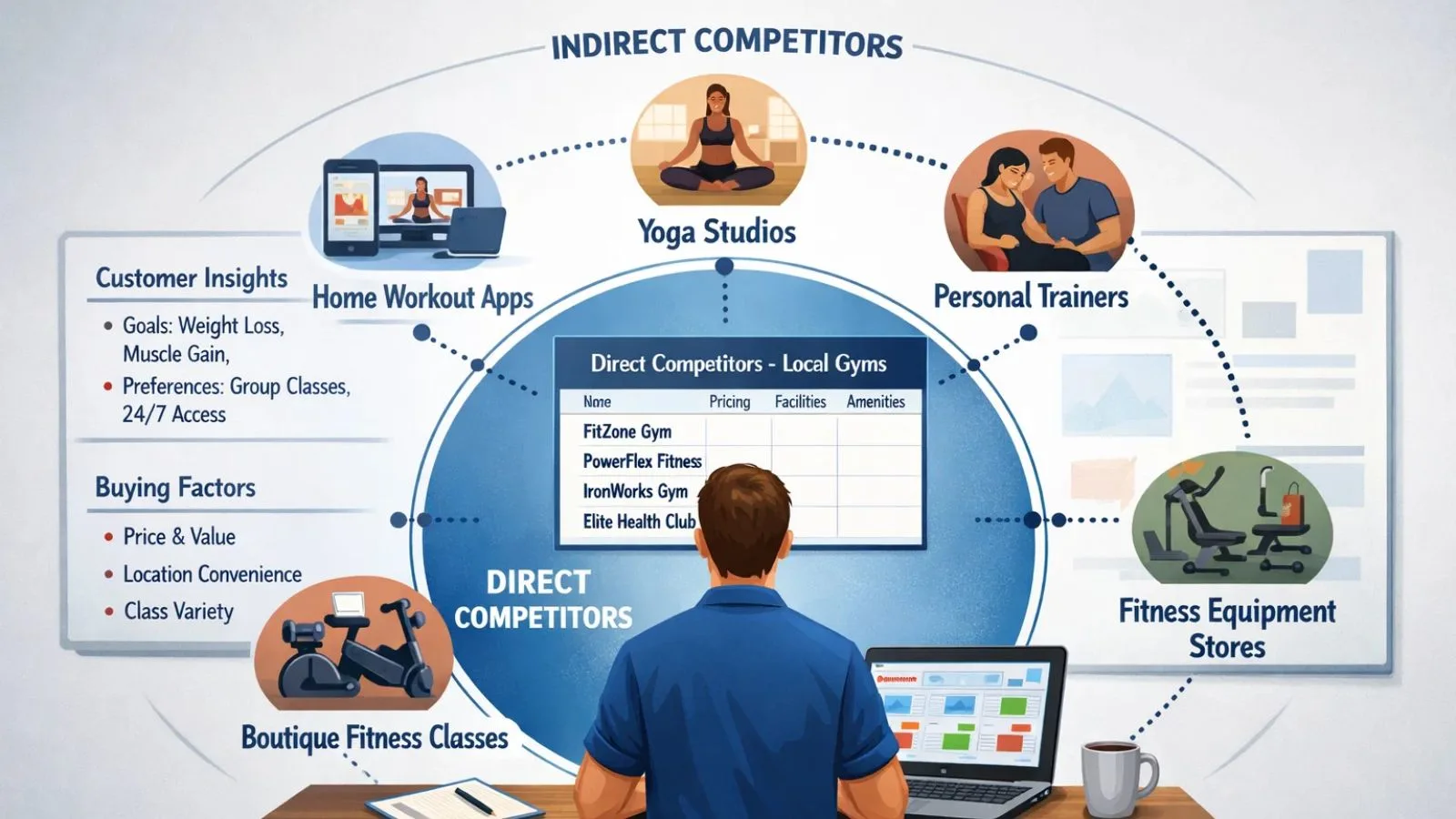
This sounds simple, but you’d be surprised how many businesses get this wrong. You’re not just competing with companies that sell the same thing you do. Think about it from your customer’s perspective. If they don’t buy from you, where does their money go? That’s your real competition.
Direct competitors are the obvious ones; they sell what you sell to whom you sell it to. If you own a gym, the other gyms in your area are direct competitors.
Indirect competitors solve the same problem differently. That gym also competes with home workout apps, yoga studios, and personal trainers.
Start by picking 5-8 direct competitors to analyze deeply. More than that, and you’ll spread yourself too thin. Less than that and you’re missing important patterns.
Step 2: Decide What Actually Matters:
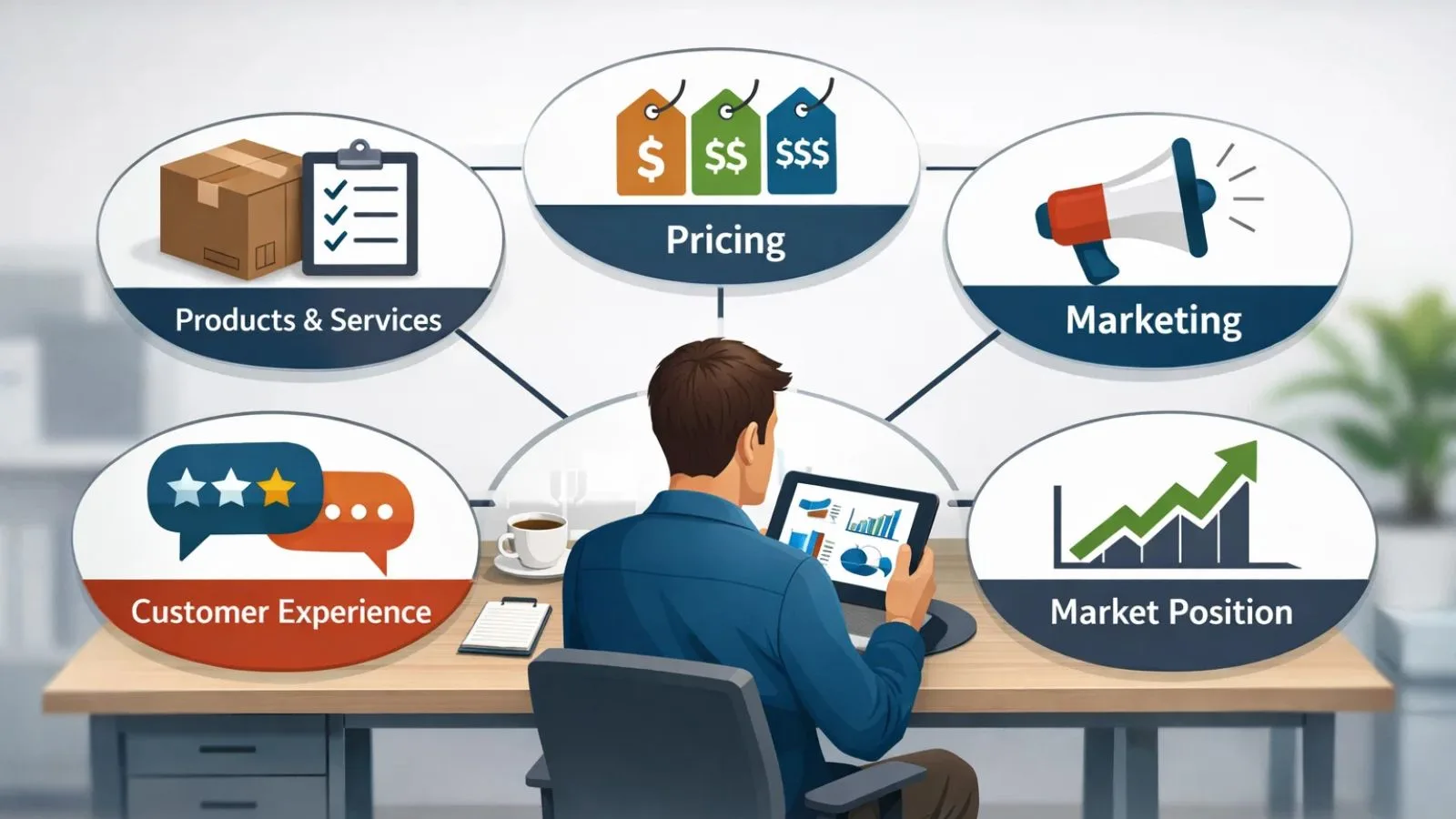
You can’t analyze everything, and trying to will drive you crazy. Focus on the stuff that affects your bottom line.
- Products and Services: What are they selling? What makes it different? Are they adding features you don’t have?
- Pricing: Are they cheaper or more expensive? Do they have different pricing tiers? Any sneaky fees hiding in the fine print?
- Marketing: How do they talk about themselves? Where do they advertise? What’s their brand vibe?
- Customer Experience: How easy is it to buy from them? What are people saying in reviews? Do they respond to complaints?
- Market Position: Are they the big player or the scrappy underdog? Growing fast or plateauing?
Pick the areas that matter most for your business. A tech startup might obsess over product features, while a service business should focus more on customer experience and pricing.
Step 3: Actually Do the Research:

Now for the fun part, detective work. This is where competitive research gets practical. Start with their website. Don’t just look at the homepage for 30 seconds. Click around. Read their blog posts. Check their pricing page. Sign up for their email list and see what they send you. You can learn a ton just from how they try to convert visitors.
Stalk their social media professionally. What gets people talking? How often do they post? Do they ignore customer complaints or jump on them? The comments section often tells you more than the actual posts. Read every review you can find on Google, Yelp, or industry sites. These are your competitors’ customers telling you exactly what works and what doesn’t. Pay special attention to repeated complaints; those are your opportunities.
Use SEO tools to see what they’re ranking for. What topics are they covering? What keywords bring them traffic? This shows you what’s working in your market. Check their job postings. Sounds weird, but it works. If they’re hiring a bunch of customer service reps, they probably have service issues. If they’re building out a new product team, something new is coming.
Step 4: Make Sense of What You Found:
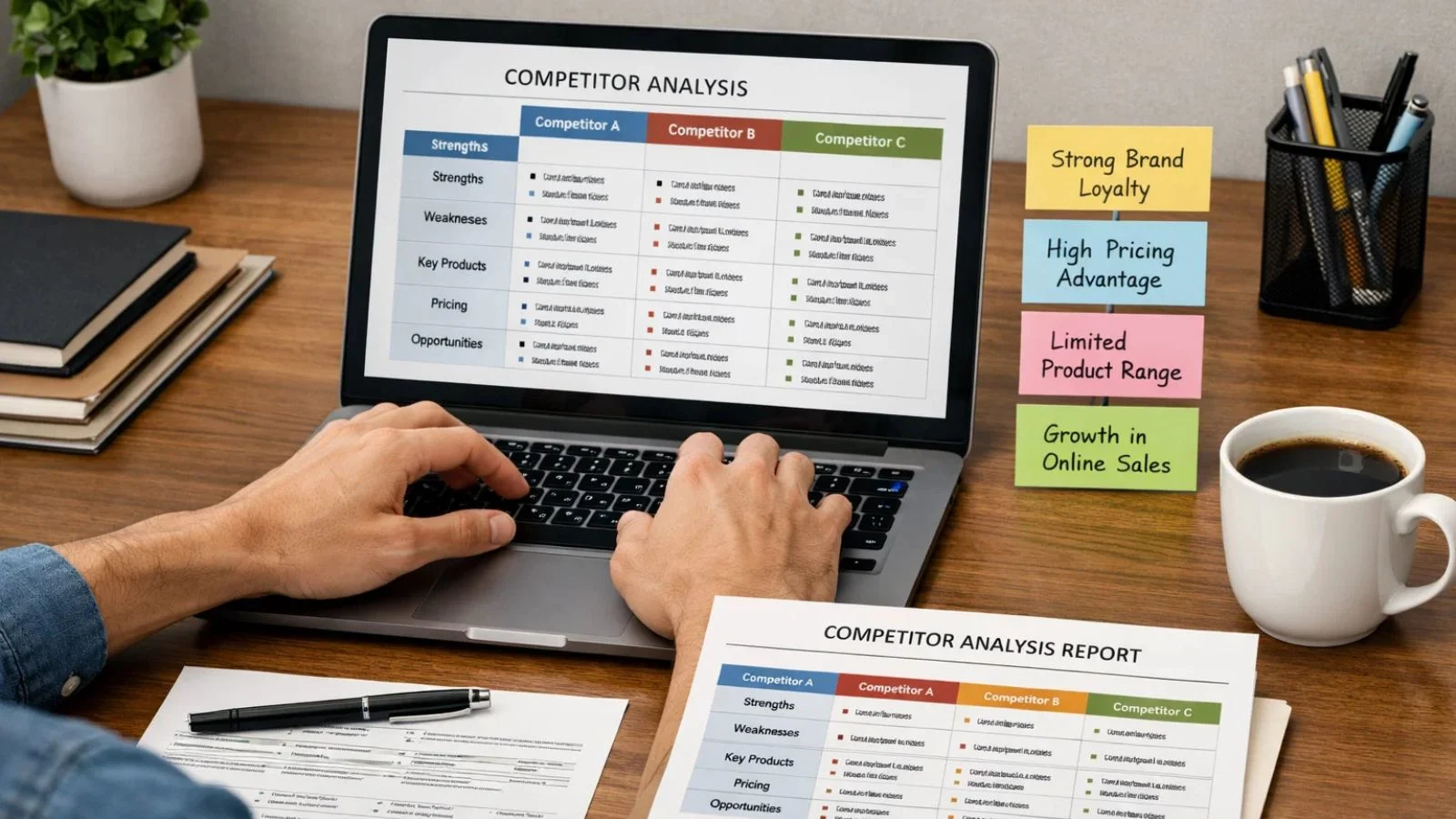
Having a bunch of notes scattered everywhere is useless. You need to organize this stuff so you can actually use it. Create a simple comparison document that includes basic info about each competitor, their main strengths, their weaknesses, how their products stack up against yours, how their pricing compares, what makes them different, and opportunities you’ve spotted. Keep it clean and scannable. If someone on your team can’t understand your findings in five minutes, you’ve made it too complicated.
Step 5: Keep Watching, Markets Don’t Stand Still:

Here’s what separates winners from everyone else: they keep paying attention. Your competitors aren’t going to stop innovating just because you did your competitive analysis. Markets shift. New players enter. Customer preferences change. If you only check in once a year, you’re basically flying blind for 11 months.
Set up a rhythm that works for your business. For most companies, a deep dive every quarter makes sense, with quick monthly check-ins on the basics. Fast-moving industries might need weekly monitoring. Track changes over time. Is that scrappy startup slowly eating your lunch? Are your competitors all moving in the same direction while you’re standing still? Patterns tell you where the market is headed before it’s obvious to everyone. Remember, competitive analysis isn’t a project you finish; it’s a habit you build. The companies that win are the ones that stay curious and alert.
Also Read:
How To Do Social Media Competitive Analysis Effectively?
Competitive Ad Intelligence: Stay Ahead in Digital Marketing
How Globussoft Makes This Actually Manageable?
Let’s be real, doing competitive research manually is exhausting. Jumping between websites, tracking social media activity, monitoring pricing changes, and going through endless reviews quickly turns into a full-time job.
That’s where experienced professionals make a difference. At Globussoft, we’ve worked across diverse industries, helping brands navigate their marketing challenges with clarity and confidence. Along the way, we also guide businesses toward the right tools—such as ad intelligence platforms like PowerAdSpy, that simplify competitive research and turn scattered data into meaningful insights.
In this context, platforms like PowerAdSpy enable organizations to gain structured visibility into competitive advertising activity across multiple channels. By accessing live and historical ad data, teams can evaluate market positioning, identify messaging trends, and benchmark performance—without relying on fragmented manual research.
Complementing this, AdsGPT helps enterprises move from insight to execution with greater speed and consistency. Along with supporting competitive understanding, it assists teams in generating ad concepts and copy through AI-driven interactions, ensuring creative output remains aligned with market signals.
Together, these solutions support data-backed decision-making at scale. Both PowerAdSpy and AdsGPT are products developed by Globussoft, designed to help businesses approach competitive research and advertising with greater efficiency and clarity.
Competitor Analysis Example:
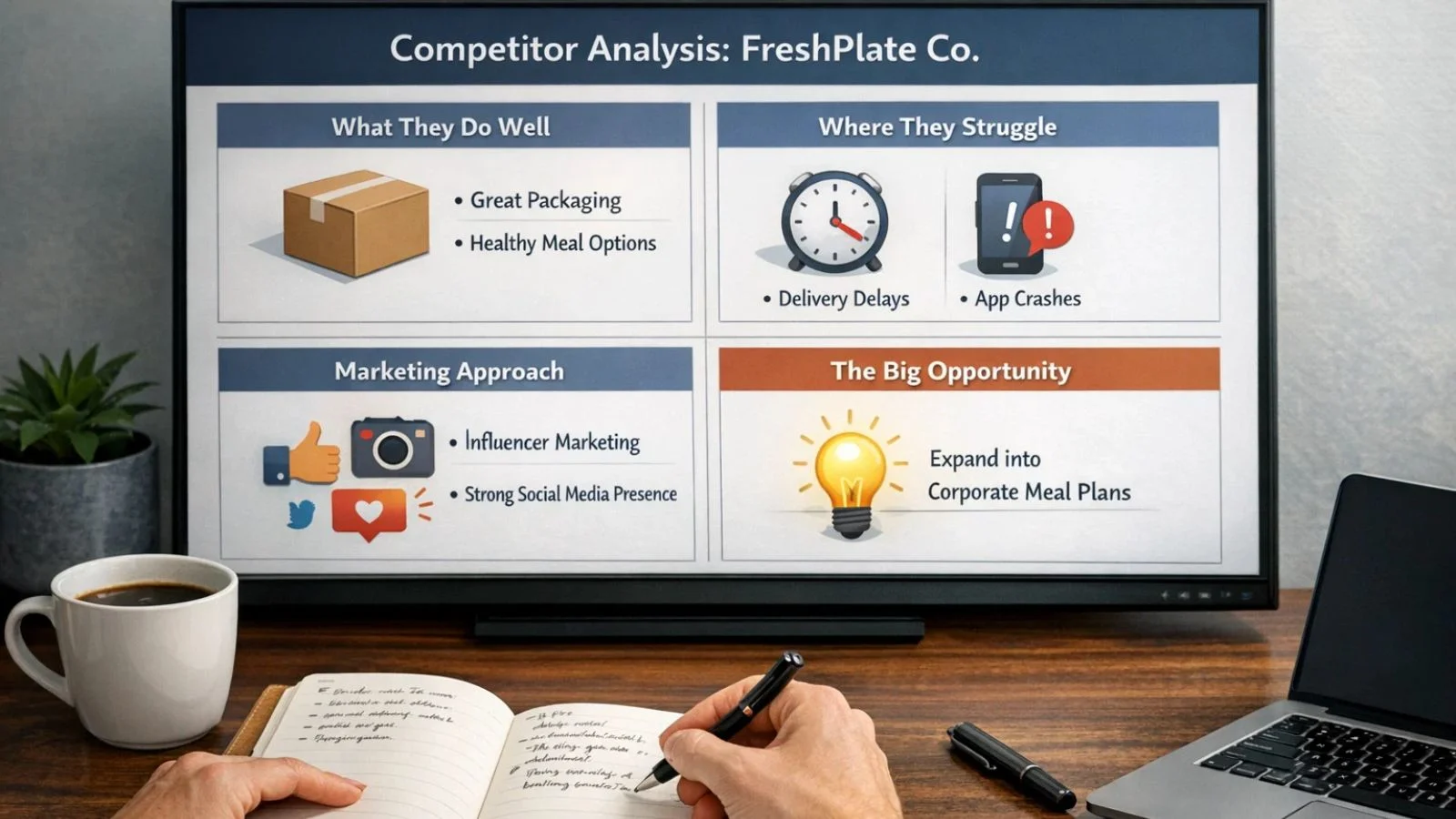
Let’s make this concrete. Say you’re running a meal kit delivery service and analyzing a major competitor:
Competitor Analysis: FreshPlate Co.
What They Do Well: Amazing packaging that keeps food fresh, a wide variety of dietary options, a really strong Instagram presence, and partnerships with celebrity chefs that create buzz.
Where They Struggle: Customers complain about delivery delays, their app crashes frequently, canceling subscriptions is confusing on purpose, and they’re pricier than alternatives. Their Marketing Approach: Heavy influencer marketing, lots of recipe content on YouTube, referral program that pays well, targeting busy professionals and health-conscious millennials.
The Big Opportunity: Their customers are frustrated with unreliable delivery and complicated cancellation. We could win by being the “honest, reliable” option with flexible subscriptions and guaranteed delivery windows. See how this immediately gives you direction? You’re not just listing facts, you’re finding your angle.
Conclusion:
Look, conducting a competitive analysis that actually matters isn’t rocket science, but it does require discipline. You need to focus on the right competitors, ask the right questions, gather information systematically, and most importantly, use what you learn. Stop treating this like a homework assignment and start treating it like the business intelligence it is. The companies that consistently monitor their competition, spot opportunities early, and move quickly are the ones that thrive. Everyone else is just hoping things work out.
FAQ’s:
Q1: How often should I do a competitive analysis?
Ans: Every three months for a thorough review, with monthly quick checks on your top competitors. If your industry moves fast, check in more often.
Q2: What if I’m just starting?
Ans: Perfect time to do this. You’ll avoid mistakes your competitors already made and find opportunities they missed.
Q3: Do I need expensive tools for competitive analysis?
Ans: Not at all to start. Free tools and manual research work fine. As you grow, platforms like GlobussoftAI save massive time and catch things you’d miss manually.
Q4: Should I worry about small competitors?
Ans: A small competitor might be tomorrow’s market leader. Keep an eye on upstarts, they’re often the most innovative and aggressive.
Quick Search Our Blogs
Type in keywords and get instant access to related blog posts.


 +91 8767115115