 India
India  UK
UK USA
USA 

Managing time effectively is one of the biggest challenges in both professional and personal life. With constant notifications, expanding to-do lists, and competing priorities, it’s easy to feel busy yet unproductive. This is where structured time management methods play a crucial role in helping individuals regain control over their schedules and workflows.
When time is not managed well, tasks pile up, deadlines are missed, and stress levels increase. On the other hand, using proven methods of time management helps improve focus, reduce overwhelm, and create a clear path toward achieving daily and long-term goals. Effective time management isn’t about doing more in less time; it’s about doing the right things at the right time.
By applying the right techniques and aligning them with clear goals, individuals and teams can transform the way they work. Modern productivity tools and platforms, including solutions offered by companies like Globussoft, further support these methods by streamlining tasks, tracking progress, and enabling better planning. With the right approach, time becomes a resource you control—not one that controls you.
You can Listen to this Blog here.
Why Is It Important to Understand Time Management Methods?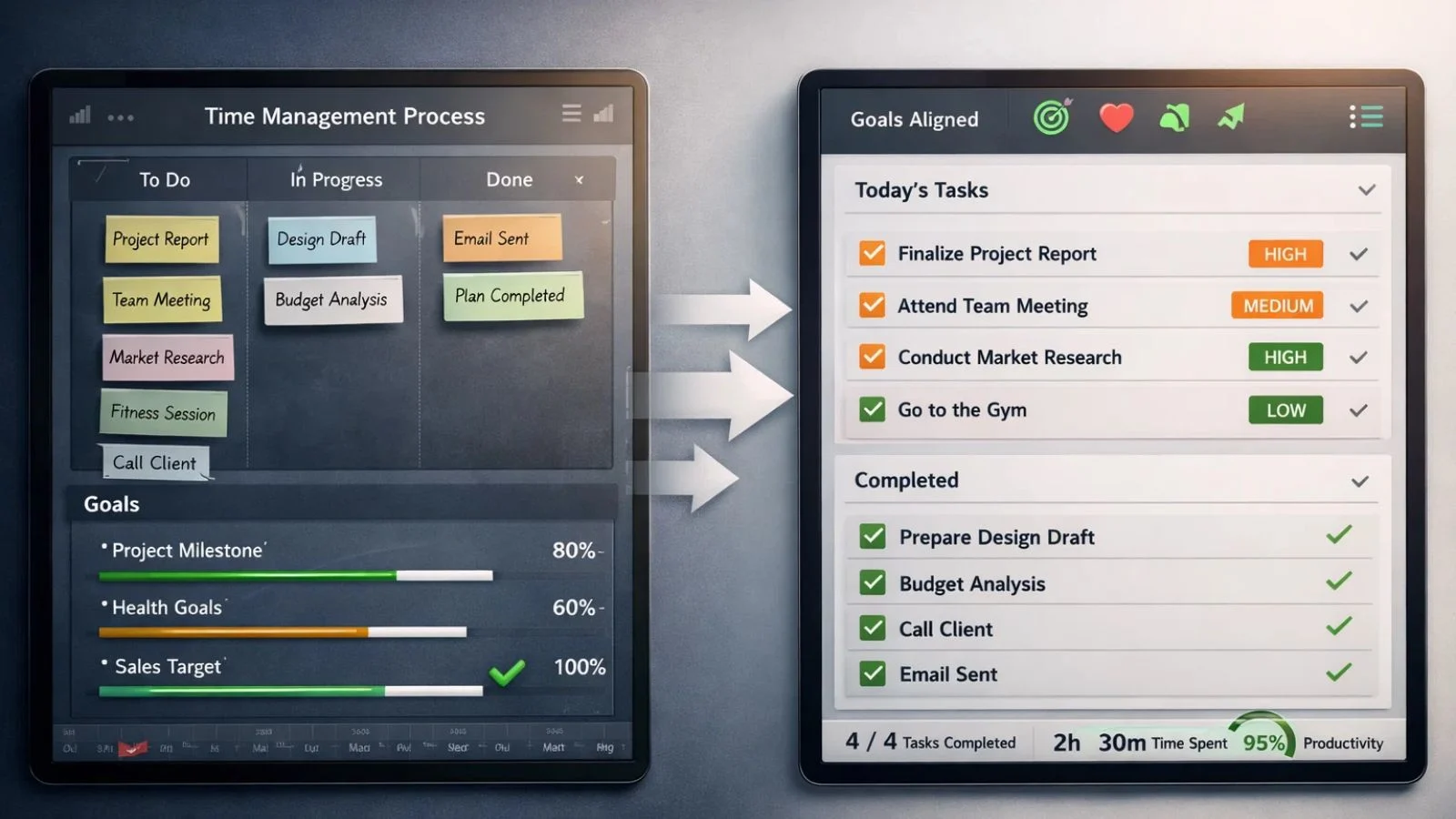
Time management methods are structured approaches designed to help individuals plan, prioritize, and execute tasks more efficiently. Rather than reacting to work as it comes, these methods provide a clear framework for organizing time around what truly matters. When applied consistently, they help improve focus, reduce distractions, and support better decision-making.
Different methods of time management serve different purposes. Some focus on prioritization, while others emphasize scheduling, goal alignment, or eliminating inefficiencies. The key is not to follow every method available, but to understand how each one works and choose what fits your workflow and responsibilities.
An important foundation of effective time management is strong goal setting strategies. Clear goals give direction to daily tasks and help determine where time should be invested. Without goals, even the best time management techniques can feel unproductive. When goals and time management methods work together, productivity becomes purposeful rather than chaotic.
By understanding the principles behind these methods, individuals can move from constant multitasking to intentional work. This shift not only boosts productivity but also creates a more balanced and sustainable workflow.
Top Time Management Strategies
Effective time management is all about prioritizing tasks, staying focused, and working efficiently. The best strategies help you decide what’s most important, plan your day, and make consistent progress without feeling overwhelmed.
Some techniques focus on breaking your work into manageable chunks, while others help you organize tasks by priority or set clear goals to stay on track. Visual tools, like task boards or calendars, make it easier to see what needs attention and avoid distractions. Using time wisely also means balancing work with breaks to maintain focus and prevent burnout.
By combining planning, prioritization, and reflection on how your time is spent, you can maximize productivity, reduce stress, and achieve your goals more consistently. The key is finding strategies that fit your personal workflow and sticking with them.
Also Read,
Benefits of Using Time Management Methods
Applying structured time management methods can significantly improve how you work and how you feel throughout the day. Instead of reacting to tasks as they appear, these methods help create clarity, focus, and control over your schedule.
One major benefit is improved productivity and focus. By prioritizing tasks and allocating dedicated time slots, distractions are reduced, and attention stays on high-impact work. This leads to better output in less time.
Effective time management also helps reduce stress and burnout. When tasks are planned and organized, deadlines feel more manageable, and last-minute rushes become less frequent. Knowing what needs to be done and when creates mental calm and confidence.
Another key advantage is better goal achievement. Structured methods support long-term and short-term planning, ensuring daily tasks align with broader objectives. This makes progress measurable and consistent.
Finally, strong time management improves decision-making and work-life balance. With clear priorities, it becomes easier to say no to low-value tasks and make room for personal time, resulting in a healthier and more sustainable workflow.
How to Choose the Right Time Management Method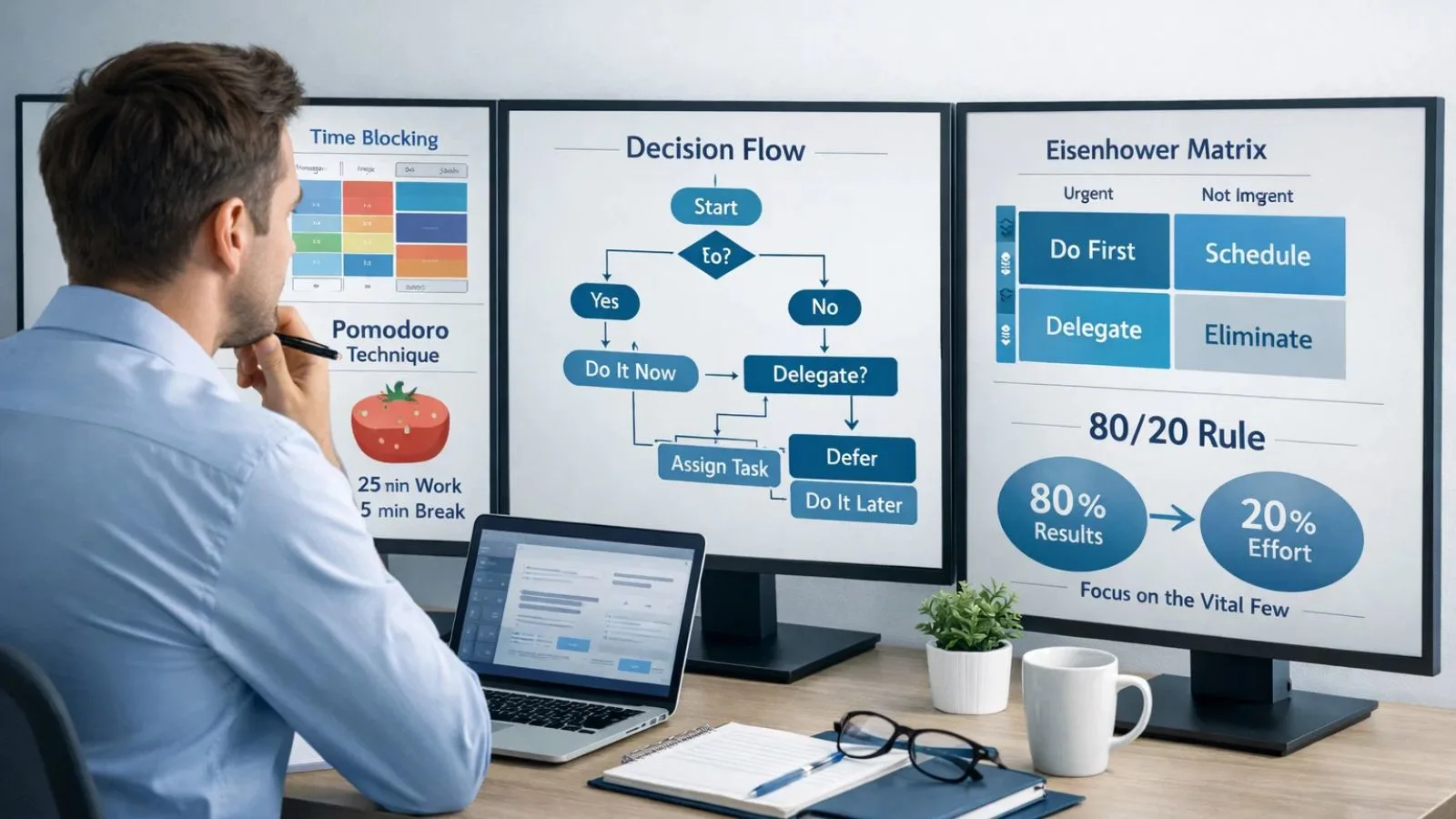
With so many methods of time management available, selecting the right one can feel overwhelming. The key is to choose techniques that align with your work style, responsibilities, and goals rather than forcing a method that doesn’t fit.
Start by assessing how you currently work. If you struggle with distractions, methods like Pomodoro or time blocking can help improve focus. If prioritization is your main challenge, techniques such as the Eisenhower Matrix or ABCDE method may be more effective.
It’s also important to consider your goals. Strong goal setting strategies make time management more effective by giving direction to daily tasks. When your goals are clear, choosing the right method becomes easier because you know where your time should be invested.
Many people find success by combining multiple approaches. For example, using time blocking for scheduling and the 80/20 rule for prioritization can create a powerful productivity system. The most effective approach is one you can maintain consistently and adjust as your workload evolves.
Tools and Software to Support Time Management
While traditional techniques are effective on their own, combining them with digital tools can significantly enhance results. Productivity software helps implement time management methods more consistently by organizing tasks, tracking progress, and reducing manual effort.
Modern tools allow users to plan schedules, set reminders, monitor task completion, and collaborate with teams in real time. This makes it easier to apply methods like time blocking, Kanban boards, and goal tracking without losing visibility.
Technology also supports better accountability. By tracking how time is spent, individuals can identify inefficiencies and adjust their routines. These insights help refine workflows and reinforce better habits over time.
Boost Time Management with Globussoft’s EmpMonitor
Globussoft’s EmpMonitor helps individuals and teams manage time efficiently by tracking tasks, applications, and overall productivity. Key features include:
- Activity Monitoring: See how time is spent and spot inefficiencies.
- Productivity Analytics: Visual dashboards reveal trends for smarter planning.
- Goal Tracking: Monitor daily and weekly targets.
- Automated Reporting: Save time with easy, accurate reports.
- Team Management: Track distributed teams for better accountability.
EmpMonitor turns insights into action, helping users stay organized, focused, and productive.
Also Read,
Conclusion
Effective time management is not about filling every minute with work—it’s about making intentional choices that support productivity, balance, and long-term success. By applying proven time management methods, individuals can gain better control over their schedules and reduce the stress caused by constant multitasking and last-minute deadlines.
From prioritization techniques to structured scheduling, the right methods help align daily tasks with meaningful goals. When combined with strong goal-setting and supported by the right digital tools, these approaches can completely transform the way work gets done.
Whether you’re an individual professional or part of a growing team, investing time in improving how you manage your day pays long-term dividends.
FAQ’s
- What are the best time management methods for productivity?
Some of the best time management methods include the Pomodoro Technique, Eisenhower Matrix, time blocking, the 80/20 rule, and Kanban. The best method depends on your work style and goals. - How do time management methods help achieve goals?
Effective methods align daily tasks with clear objectives. When combined with strong goal setting strategies, time management helps ensure consistent progress toward both short-term and long-term goals. - Can I use multiple methods of time management together?
Yes. Many people successfully combine different methods for time management, such as time blocking for scheduling and prioritization frameworks for decision-making, to create a customized system.
Quick Search Our Blogs
Type in keywords and get instant access to related blog posts.


 +91 8767115115