 India
India  UK
UK USA
USA 
Workplaces have changed dramatically over the last few years. Remote work, hybrid teams, and flexible schedules are now common across industries. While these changes have improved work–life balance for many employees, they have also created new challenges for managers who need visibility into day-to-day operations. This is where employee monitoring plays an important role not as a tool for control, but as a way to enable smarter oversight.
Modern organizations no longer rely on managers constantly checking in or supervising every task. Instead, they use data and insights to understand how work gets done, where bottlenecks exist, and how productivity can be improved. When implemented correctly, employee monitoring helps leaders focus on outcomes rather than minute-by-minute activity, allowing employees to work with greater autonomy and confidence.
However, the concept often raises concerns about privacy and micromanagement. Many employees worry that monitoring means constant surveillance or a lack of trust. In reality, today’s tools are designed to provide high-level visibility rather than intrusive oversight. The goal is to support better decision-making, ensure accountability, and create a balanced work environment where expectations are clear.
In this guide, we’ll explore how employee monitoring has evolved, the types of tools businesses use, and how organizations can implement monitoring practices that improve productivity without damaging trust. By understanding the right approach, companies can achieve smarter oversight while avoiding the pitfalls of micromanagement.
Listen To The Podcast Now!
What Is Employee Monitoring?
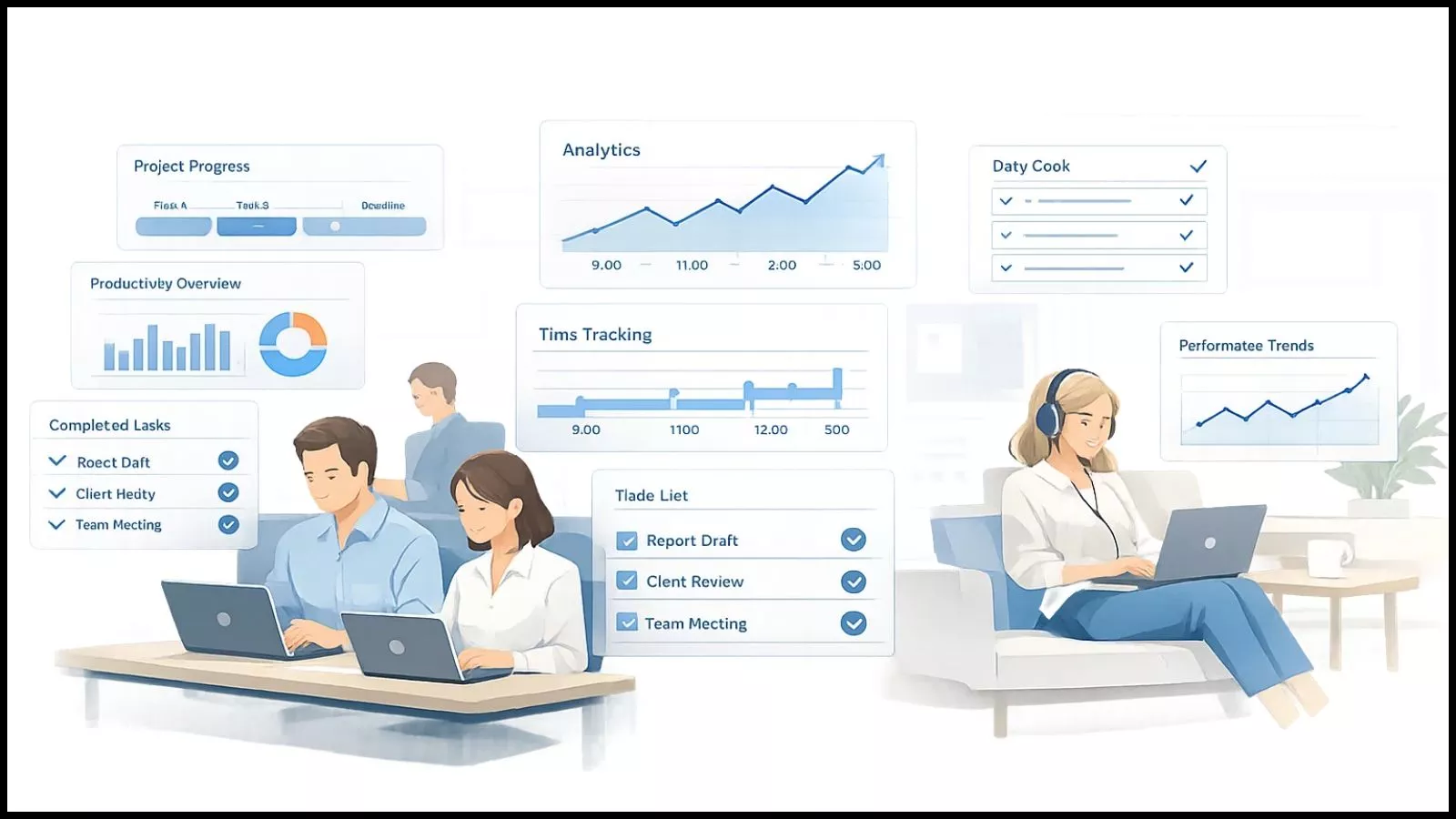 Employee monitoring refers to the practice of tracking and analyzing work-related activities to understand how employees use their time, tools, and systems during working hours. Its primary purpose is not surveillance, but visibility helping organizations gain insights into productivity patterns, workflow efficiency, and operational health.
In the past, monitoring often meant manual supervision or basic time tracking, such as attendance registers or login records. Today, technology has transformed this approach. Modern employee monitoring focuses on collecting meaningful data that shows trends rather than obsessing over individual actions. This allows managers to evaluate performance based on outcomes and consistency instead of constant observation.
It’s also important to distinguish monitoring from spying. Ethical monitoring is transparent, policy-driven, and aligned with business goals. Employees are informed about what data is collected and why it matters. This openness helps build trust and reduces resistance to monitoring practices.
Another common misconception is that monitoring reduces employee autonomy. In reality, when implemented thoughtfully, it can do the opposite. By setting clear expectations and using insights from employee monitoring, managers can reduce unnecessary check-ins, empower employees to manage their schedules, and focus conversations on improvement rather than control.
Why Businesses Use Employee Monitoring Today
The modern workplace is more flexible than ever, but flexibility also brings new management challenges. Distributed teams, varied work hours, and digital collaboration tools make it harder to rely on traditional supervision methods. This is one of the main reasons employee monitoring has become increasingly relevant for businesses today.
One key driver is productivity visibility. Managers need a clear understanding of how work progresses without interrupting employees throughout the day. With employee monitoring, organizations can identify productivity trends, peak working hours, and areas where teams may need additional support—without constant check-ins.
Accountability is another important factor. When teams work remotely or across different locations, it can be difficult to ensure consistent performance. Monitoring provides objective data that helps managers evaluate work fairly, based on actual activity and outcomes rather than assumptions or biases.
Security and compliance also play a major role. Employees regularly access sensitive data, internal systems, and client information from multiple devices and networks. Employee monitoring helps organizations detect unusual behavior, reduce insider risks, and maintain compliance with internal policies and industry regulations.
Finally, businesses use monitoring to improve processes, not just measure people. Insights from employee monitoring can reveal inefficient workflows, overworked teams, or underutilized resources. When used correctly, this data supports smarter decisions that benefit both employees and the organization as a whole.
Key Types of Employee Monitoring
Not all monitoring approaches are the same. Modern organizations use different methods depending on their goals, team structure, and compliance requirements. Understanding these types helps businesses choose a balanced employee monitoring strategy that supports productivity without overreach.
1. Activity-Based Monitoring
This type focuses on tracking overall work activity during scheduled hours. It looks at patterns such as active time, idle time, and work intensity rather than individual actions. Activity-based employee monitoring helps managers understand how engaged teams are across the day without micromanaging tasks.
2. Time and Attendance Tracking
Time tracking is one of the most widely adopted monitoring methods. It records login times, logout times, and total hours worked. This form of employee monitoring is especially useful for remote teams, shift-based roles, and organizations that bill clients based on hours worked.
3. Application and Website Usage Tracking
This approach tracks which applications and websites are used during work hours. It helps identify productive tools versus distractions and supports better resource planning. When used responsibly, employee monitoring at this level focuses on trends across teams, not policing individual behavior.
4. Screen and System Monitoring
Screen and system monitoring provides visibility into how company systems are being used. This type is often applied in roles involving sensitive data or critical systems. Ethical implementation of employee monitoring here requires clear policies and limited access to recorded data.
5. Behavioral and Performance Analytics
Advanced monitoring tools analyze data to identify work patterns, bottlenecks, and performance trends. Instead of tracking every action, this form of employee monitoring supports strategic decisions such as workload balancing, training needs, and process improvement.
By choosing the right mix of monitoring types, organizations can gain meaningful insights while respecting employee autonomy and trust.
Essential Features of Modern Employee Monitoring Software
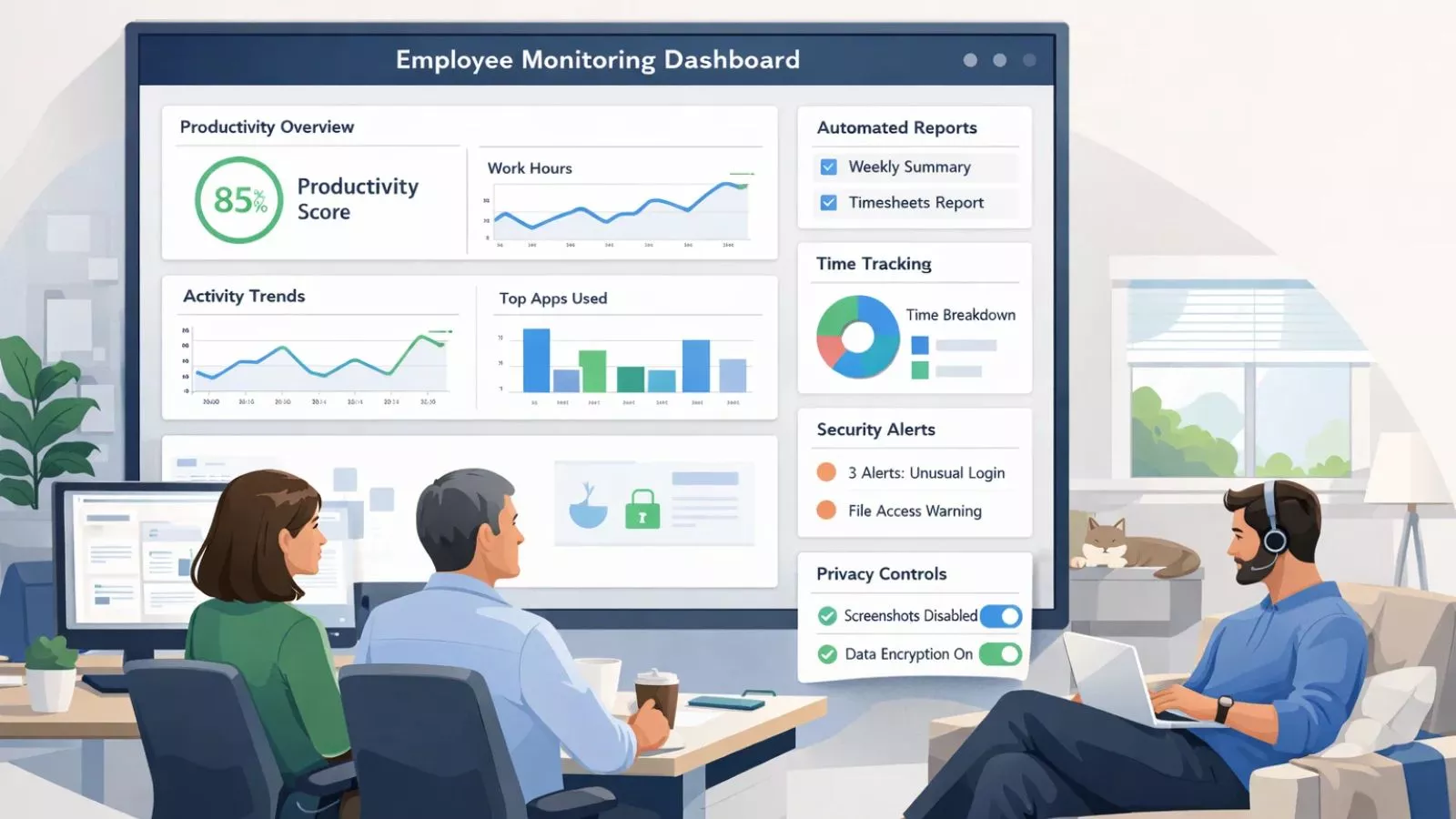 As monitoring practices evolve, businesses increasingly rely on dedicated tools to gain accurate and actionable insights. Modern employee monitoring solutions are designed to be intelligent, flexible, and privacy-conscious, helping organizations manage teams effectively without creating a culture of surveillance.
One of the most important features is a centralized activity dashboard. This provides managers with a clear overview of team performance, highlighting trends rather than isolated actions. With visual summaries and metrics, employee monitoring becomes easier to interpret and more useful for decision-making.
Automated reporting and analytics are equally critical. Instead of manually reviewing data, managers can access scheduled reports that summarize productivity, application usage, and time allocation. These insights allow leaders to spot inefficiencies and optimize workflows using employee monitoring data rather than assumptions.
Time tracking and idle time detection are also common features. These tools help organizations understand how working hours are distributed across tasks and projects. When used correctly, this aspect of employee monitoring supports fair workload distribution and prevents burnout.
Security-related features, such as alerts and anomaly detection, add another layer of value. Monitoring software can flag unusual system activity or access patterns, helping organizations respond quickly to potential risks. Role-based access controls ensure that only authorized personnel can view sensitive employee monitoring data.
Finally, privacy-friendly controls are essential. Modern tools allow businesses to customize what is tracked and when, ensuring monitoring aligns with company policies and legal requirements. These features make employee monitoring a supportive tool rather than an intrusive one.
Employee Monitoring vs. Micromanagement
One of the biggest concerns around employee monitoring is the fear of micromanagement. While the two are often confused, they are fundamentally different in purpose and impact. Understanding this distinction is essential for implementing monitoring in a healthy and productive way.
Micromanagement focuses on constant oversight of individual tasks. Managers check every detail, frequently interrupt work, and measure effort instead of results. This approach often leads to frustration, reduced morale, and lower productivity. In contrast, employee monitoring is about gaining high-level visibility into workflows and outcomes, not controlling every move an employee makes.
When monitoring is used correctly, it actually reduces the need for frequent check-ins. Managers can rely on data to understand performance trends, allowing employees more freedom to manage their time and responsibilities. With employee monitoring, conversations shift from “What are you doing right now?” to “How can we improve this process?”
Transparency also plays a key role. Micromanagement is usually reactive and unstructured, while effective employee monitoring is policy-driven and openly communicated. Employees know what is being tracked and why, which helps build trust and reduces anxiety around oversight.
Ultimately, the difference lies in intent and execution. When monitoring is aligned with clear goals and focused on improvement, it supports autonomy and accountability. When misused, it turns into micromanagement. Striking the right balance ensures employee monitoring enhances performance rather than undermining it.
Legal and Ethical Considerations
Implementing employee monitoring comes with important legal and ethical responsibilities. While organizations have a legitimate need to protect productivity, data, and systems, they must also respect employee privacy and comply with applicable regulations. Ignoring these aspects can lead to mistrust, legal challenges, and reputational damage.
Transparency is the foundation of ethical monitoring. Employees should be clearly informed about what is being monitored, how data is collected, and how it will be used. Clear policies and consent mechanisms ensure employee monitoring is seen as a structured business practice rather than hidden surveillance.
Data protection and privacy laws also play a critical role. Regulations may vary by region, but most require businesses to collect only necessary data and store it securely. Access to monitoring data should be limited to authorized roles, and retention periods should be defined. Responsible employee monitoring aligns with these principles to avoid misuse or overreach.
Ethically, organizations should consider the impact of monitoring on employee well-being. Tracking should focus on work-related activities during office hours and avoid invading personal space. Monitoring behavior outside work hours or capturing unnecessary personal information can quickly erode trust.
Finally, regular policy reviews are essential. As tools and work environments evolve, monitoring practices should be reassessed to ensure they remain fair, compliant, and effective. When legal and ethical considerations are prioritized, employee monitoring becomes a supportive framework rather than a source of concern.
Employee Monitoring Solutions by Globussoft
Choosing the right tools plays a major role in how effective and ethical employee monitoring becomes. Globussoft offers workforce management and monitoring solutions designed to provide clarity without compromising trust. Their approach focuses on actionable insights rather than excessive surveillance, helping organizations understand productivity patterns while respecting employee boundaries.
Tools like EmpMonitor support businesses by offering visibility into work activity, time usage, and system access in a structured and transparent way. Instead of tracking every individual action, these solutions help managers identify trends, optimize workflows, and address inefficiencies at a team level. This makes employee monitoring more about improvement and less about control.
Globussoft’s solutions are particularly useful for remote and hybrid teams, where visibility is often limited. With configurable settings and privacy-friendly controls, organizations can decide what to monitor based on role, function, and compliance needs. This flexibility ensures that employee monitoring aligns with business goals while maintaining a positive workplace culture.
By focusing on productivity, security, and responsible data usage, Globussoft enables companies to implement monitoring practices that support both management objectives and employee trust.
Conclusion
Employee monitoring has evolved far beyond traditional supervision and rigid oversight. In today’s flexible work environment, it serves as a strategic tool that helps organizations understand how work gets done, improve efficiency, and maintain accountability—without falling into the trap of micromanagement.
When implemented with transparency, clear policies, and the right technology, employee monitoring empowers managers to focus on outcomes rather than constant observation. It reduces unnecessary interruptions, supports data-driven decisions, and creates space for employees to work more independently and confidently.
The key lies in balance. Ethical practices, respect for privacy, and a focus on improvement ensure monitoring strengthens trust instead of weakening it. With thoughtful implementation and supportive tools, businesses can achieve smarter oversight that benefits both the organization and its people.
FAQs
1. Is employee monitoring legal?
Yes, employee monitoring is legal in many regions when implemented transparently and in compliance with local labor and data protection laws. Employers should inform employees about what is being monitored, why it is necessary, and how the data will be used.
2. Does employee monitoring reduce employee trust?
Employee monitoring can reduce trust if used excessively or without communication. However, when applied ethically and transparently, it often improves clarity around expectations and reduces unnecessary micromanagement.
3. What is the difference between employee monitoring software and micromanagement?
Employee monitoring software provides high-level insights into productivity trends and system usage, while micromanagement focuses on constant task-level control. The former supports autonomy, while the latter often limits it.
Quick Search Our Blogs
Type in keywords and get instant access to related blog posts.

 +91 8767115115