 India
India  UK
UK USA
USA 
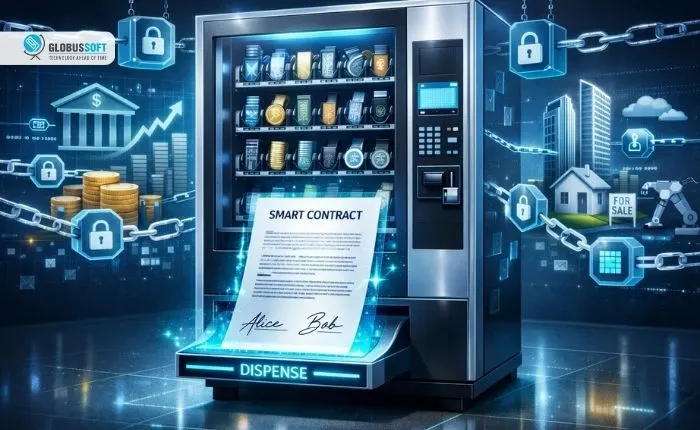
In a digital world, smart contracts are changing how we do business and exchange value. These self-executing agreements are transforming industries from finance to real estate, making transactions faster, cheaper, and more transparent. As Web3 Is Shaping the Next Era of the Internet, these digital contracts are becoming a core foundation of how value moves online.
If you’re a business owner wanting to streamline operations or just curious about blockchain technology, understanding how these digital agreements work is becoming essential. The concept sounds technical, but it’s actually simple. Think of them as digital vending machines. You put in what’s required, and you automatically get what you want without needing anyone in the middle. This approach is cutting out middlemen, lowering costs, and opening up new possibilities across almost every industry.
Listen To The Podacst Now!
What Is a Smart Contract?
It’s a self-executing program stored on a blockchain that automatically enforces an agreement when certain conditions are met. Unlike traditional contracts that need lawyers or notaries to verify and execute terms, these digital agreements run on code. Normally, this involves real estate agents, lawyers, banks, and title companies. With this technology, once you send the payment, property ownership automatically transfers to you. Everything is coded, transparent, and happens without human involvement. You don’t need to trust the other person or a middleman. You just need to trust the code and the blockchain network running it.
How Do Smart Contracts Actually Work?

Understanding how these automated agreements function is easier than you might think.
1. Built on Blockchain Technology:
Smart contracts on blockchain run on distributed ledger technology, meaning they’re stored across thousands of computers at once. This makes them nearly impossible to hack or tamper with. When you create one, it gets deployed to the blockchain network, where it becomes permanent and can’t be changed.
2. How They’re Programmed:
These agreements are written in programming languages like Solidity for Ethereum or Rust for Solana. The code includes conditions (the “if-then” rules), actions (what happens when conditions are met), participants (who’s involved), and assets (what’s being exchanged).
3. The Execution Process:
Here’s what happens when someone uses one:
- Someone starts a transaction on the blockchain
- The network checks if it’s valid
- The code verifies that all conditions are met
- If everything checks out, it executes automatically
- The result gets recorded permanently
- Everyone involved gets confirmation
This whole process usually takes just seconds to minutes, depending on which blockchain network you’re using.
Why They’re So Powerful?

1. Complete Transparency:
Every transaction and term is visible to everyone on the blockchain. This builds trust because anyone can verify what’s happening without relying on a central authority.
2. Speed and Independence:
Once launched, these programs work on their own. No waiting for banks to process payments or lawyers to review documents. Things happen the moment conditions are satisfied, cutting transaction times from days or weeks to minutes.
3. Lower Costs:
By removing intermediaries like lawyers and brokers, these automated agreements significantly cut costs. You only pay small network transaction fees.
4. Accuracy Every Time:
Human error is eliminated. The code runs exactly as written every single time, giving you consistent and predictable results.
Real-World Uses Changing Industries:
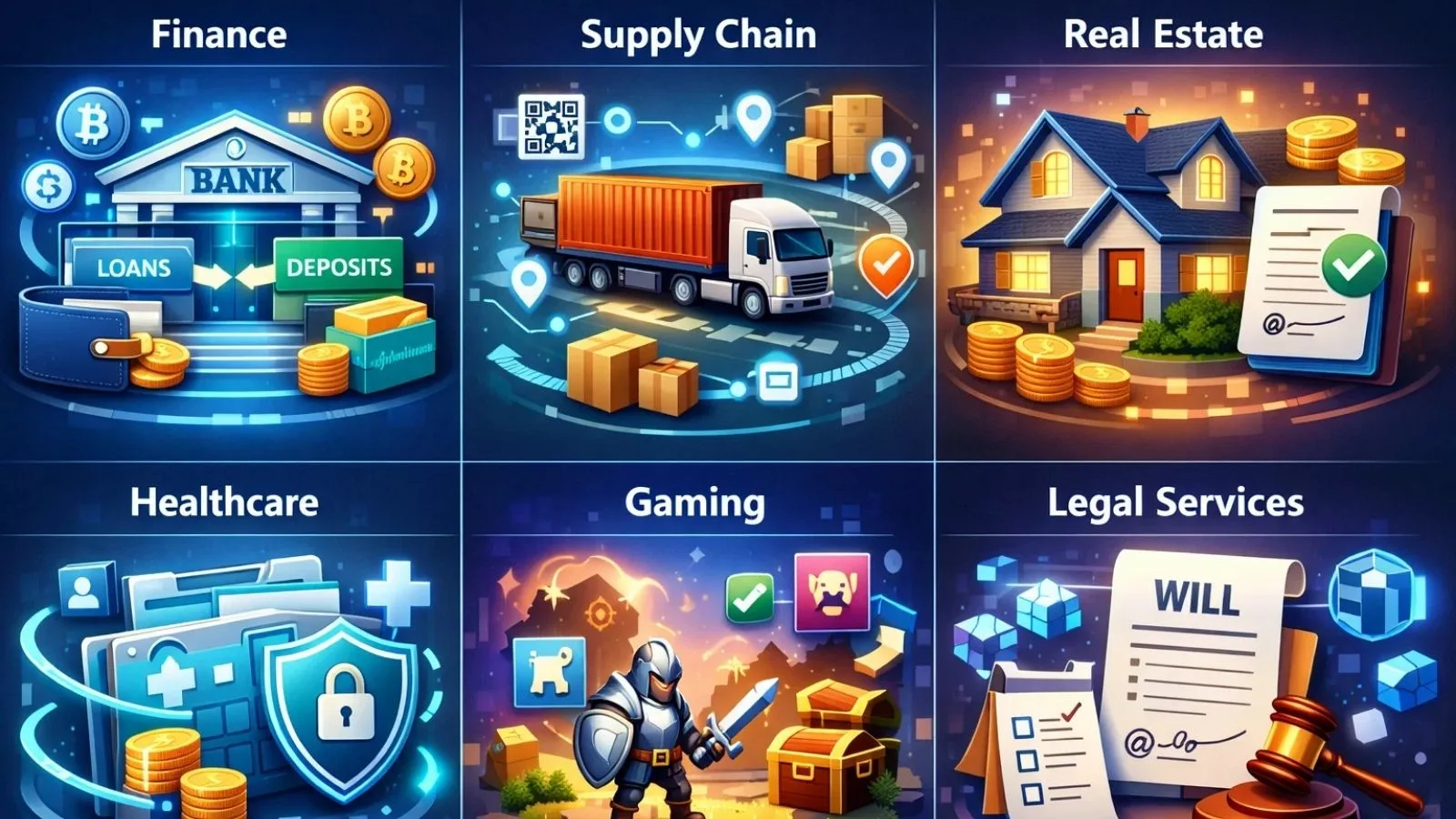
The smart contract application landscape has grown tremendously:
* Finance: DeFi platforms offer lending, borrowing, and trading without traditional banks. You can earn interest on crypto deposits or get loans with automated collateral management.
* Supply Chain: Companies track products from factory to delivery using blockchain agreements that verify authenticity, update inventory, and trigger payments automatically when goods reach checkpoints.
* Real Estate: Property deals are simplified with automated escrow, instant title transfers, and rental agreements that handle deposits and monthly payments without property managers.
* Healthcare: Medical records are securely shared between providers while protecting patient privacy. Insurance claims that used to take weeks now process in hours.
* Gaming: The gaming industry manages in-game assets, enables player trading, and ensures fair gameplay. Digital collectibles (NFTs) depend entirely on this technology for ownership and transfer.
* Legal Services: Digital wills, voting systems, and intellectual property management are being transformed through automated, tamper-proof agreements.
Security Matters:

While these programs offer great benefits, smart contract security is crucial to consider. Since code can’t be changed once deployed, any bugs or vulnerabilities become permanent problems that hackers can exploit.
Main Security Risks:
Programming errors can create loopholes that criminals exploit to steal funds. The famous DAO hack in 2016 cost $60 million because of a code vulnerability.
Many agreements rely on external data sources to trigger execution. If these data feeds are compromised or wrong, the contract might execute incorrectly.
The legal framework around these digital agreements is still developing, creating uncertainty about whether courts will enforce them.
Staying Safe:
To reduce risks, developers and users should conduct thorough code audits before deployment, use tested code libraries, implement multi-signature requirements for large transactions, and regularly monitor for unusual activity.
Also Read:
How Globussoft Makes Smart Contract Development Easy?
As more businesses recognize blockchain automation’s potential, having the right technology partner matters. Globussoft provides comprehensive solutions for organizations wanting to leverage this technology effectively. Globussoft offers services specifically for developing, testing, and deploying blockchain solutions. Their platform provides intelligent code analysis that spots potential vulnerabilities before deployment, dramatically reducing security risks.
In line with its focus on blockchain innovation, Globussoft has also been associated with projects like Power Browser, India’s first Web3-powered browser. The platform emphasizes decentralized browsing, enhanced privacy, and user data control. By incorporating blockchain-based elements and reward mechanisms, Power Browser aims to offer a faster, ad-free experience while exploring new ways to make web interactions more secure and user-centric.
What’s Next in 2026 and Beyond?
The technology keeps evolving quickly. Current trends include faster and cheaper transactions through Layer 2 solutions like Polygon, cross-chain protocols allowing agreements to work across different blockchains, AI integration creating adaptive agreements that respond intelligently to changing conditions, and major corporations and governments increasingly experimenting with blockchain automation.
Conclusion:
Smart contracts are fundamentally changing how we create and execute agreements. By combining blockchain security with automation efficiency, they’re eliminating middlemen, reducing costs, and creating new possibilities. While security remains important, the technology has matured significantly. With proper development practices and tools like Globussoft, organizations can confidently use these innovations to transform operations and stay competitive in our increasingly digital world.
FAQ’s:
Q1: Are smart contracts legally binding?
Ans: Legal status varies by location. Some regions recognize them as enforceable, while others are still developing rules. Consult legal experts in your area.
Q2: Can smart contracts be changed after deployment?
Ans: Traditional ones can’t be altered once deployed. Developers can create upgradeable versions using special patterns, though this adds complexity.
Q3: Do I need cryptocurrency to use smart contracts?
Ans: Most blockchain-based agreements need cryptocurrency for transaction fees. Some private blockchains may work differently.
Q4: How much does creating a smart contract cost?
Ans: Costs vary widely based on complexity and platform. Deployment fees range from a few dollars to thousands, plus development costs.
Quick Search Our Blogs
Type in keywords and get instant access to related blog posts.


 +91 8767115115