 India
India  UK
UK USA
USA 
Fast-paced business environments demand more than individual effort. Team collaboration has moved beyond being a trendy concept and has become a core driver of success. Organizations across industries recognize that strong collaboration fuels innovation, improves productivity, and increases employee satisfaction.
As teams increasingly operate across multiple locations, working together effectively is no longer optional; it’s essential for sustained growth.
Whether you’re building a startup or managing a global enterprise, nurturing team collaboration can fundamentally change how work gets accomplished. This blog explores the benefits, tools, strategies, and emerging trends that shape effective collaboration, helping teams work smarter, communicate better, and achieve shared goals with greater efficiency.
In a hurry? Listen to the blog instead!
Why Team Collaboration Matters?
Effective team collaboration helps organizations tackle complex problems faster and more efficiently. When individuals pool their expertise and resources, teams can achieve more than isolated efforts, especially when supported by the right productivity tool to streamline communication and task management.
Here are some of the reasons why team collaboration is essential:
Increased Productivity:
Collaboration allows teams to divide tasks according to strengths, leading to faster completion of projects. By communicating effectively and sharing resources, teams can reduce duplication of effort and avoid bottlenecks.
Enhanced Creativity and Innovation:
Bringing diverse minds together encourages innovative thinking. Collaborative brainstorming sessions often produce ideas that wouldn’t surface in solo work environments. Teams that collaborate well can adapt to challenges creatively and implement solutions more effectively.
Improved Employee Engagement:
When employees feel their contributions matter and they can collaborate openly, job satisfaction increases. Engaged employees are more likely to stay committed, reducing turnover and fostering a positive workplace culture.
Better Decision Making:
With multiple perspectives contributing to discussions, decisions are informed by a range of insights. Teams that collaborate effectively make more balanced, data-driven choices that align with organizational goals.
Effective Remote Work:
In an era where remote and hybrid work models are prevalent, team collaboration is essential for maintaining alignment. Technology-enabled collaboration bridges the gap between physical distances and keeps projects on track.
Also Read:
Productivity Tools That Every Modern Workplace Needs
What Are The Key Components Of Successful Team Collaboration?
To maximize the benefits of team collaboration, organizations need to focus on a few key components:
Clear Communication:
Without clear communication, collaboration can quickly break down. Teams must ensure that information is shared openly, accurately, and in a timely manner.
Defined Roles and Responsibilities:
Every team member should know their responsibilities and how their work contributes to the bigger picture. This clarity reduces confusion and enhances accountability.
Mutual Trust:
Trust is the foundation of effective team collaboration. Teams that trust each other share ideas freely and take calculated risks without fear of failure.
Shared Goals:
Aligning the team around common objectives ensures everyone is working towards the same outcome. Shared goals provide motivation and create a sense of unity.
Leveraging Technology:
Modern teams rely on tools to facilitate collaboration. From messaging platforms to project management systems, technology makes collaboration seamless, even across time zones.
Tools That Enable Team Collaboration
The right tools play a vital role in improving how teams connect and work together. Selecting the right solutions helps streamline workflows, reduce miscommunication, and keep projects on track. Effective collaboration tools typically support the following areas:
Communication and Coordination:
Centralized communication features allow team members to connect in real time, share updates, and stay aligned without information gaps.
Document Collaboration:
Shared document access enables multiple users to work on files simultaneously, ensuring version control and faster decision-making.
Task and Project Management:
Structured task tracking helps teams assign responsibilities, monitor progress, and meet deadlines with greater accountability.
Performance Visibility:
Built-in analytics and tracking tools provide insights into team productivity and workload distribution.
Modern organizations increasingly rely on unified platforms to manage these functions in one place. AI-powered solutions like EmpCloud, part of Globussoft’s AI-powered ecosystem, bring collaboration, task management, and workforce intelligence together in a single, streamlined environment.
This integrated approach helps teams work more efficiently while maintaining clarity, accountability, and control across projects.
The Role Of AI In Team Collaboration

Artificial Intelligence is transforming team collaboration by automating repetitive tasks, providing real-time insights, and improving decision-making through advanced workplace technology. AI-powered platforms can monitor team performance, optimize workflows, and even predict project risks before they occur.
One example of this innovation is Globussoft, an AI-driven platform designed to enhance productivity across organizations. By combining intelligence, analytics, and automation, Globussoft empowers teams to collaborate smarter and faster.
Introducing Globussoft: AI-Driven Collaboration
Globussoft is all about simplifying challenges and turning ideas into actionable strategies. It’s an AI-first solution suite that addresses the evolving needs of modern organizations. With Globussoft, companies can streamline operations, foster innovation, and enhance team collaboration across departments.
Globussoft’s approach is unique because it doesn’t just provide tools, it provides a platform that integrates insights, workflows, and automation. Teams using Globussoft can coordinate effectively, reduce redundancies, and ensure projects are delivered on time.
Globussoft’s AI-Powered Product Ecosystem
Innovation isn’t a one-time effort; it’s a habit. Globussoft embodies this by constantly evolving its ecosystem of AI-driven products. These solutions are designed to tackle everyday business challenges, enhance productivity, and improve team engagement.
One of the most critical aspects of effective collaboration is workforce management. Managers need visibility into tasks, progress, and accountability without disrupting daily workflows. With tools like EMPCloud, this becomes practical and efficient. It offers a centralized view of task assignments, real-time progress tracking, and performance insights, enabling managers to stay informed while teams remain focused. This balance of oversight and autonomy helps organizations maintain transparency, improve coordination, and achieve consistent outcomes.
How Is EmpCloud Transforming Workforce Management?
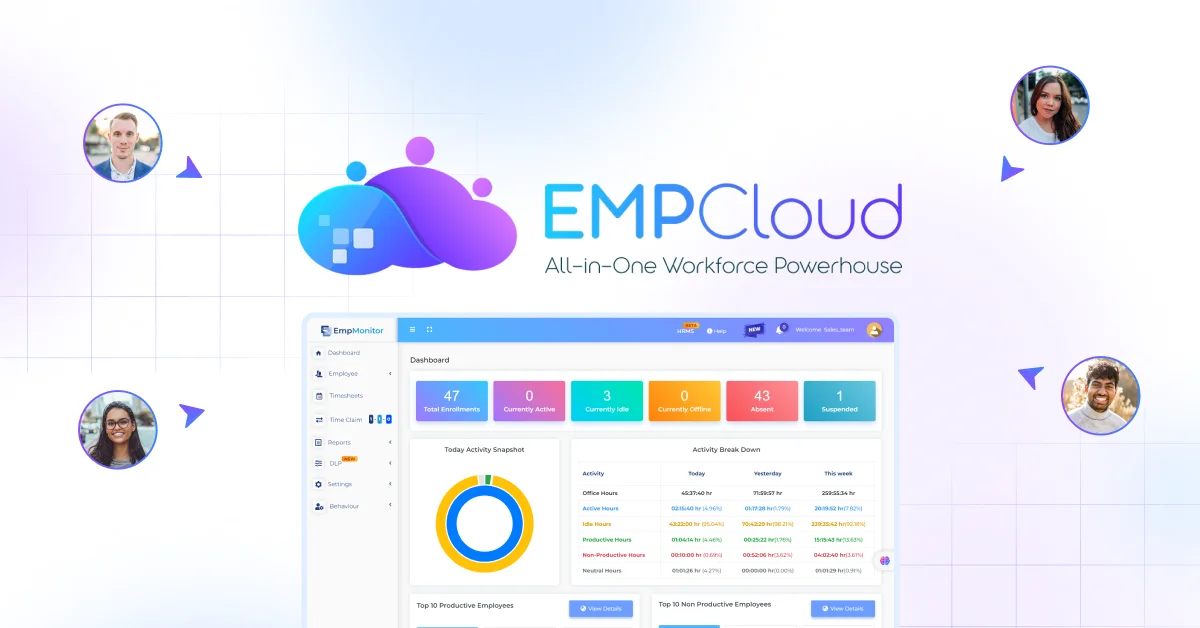
EmpCloud is an AI-powered platform that simplifies team oversight and ensures seamless collaboration. It’s designed to address multiple aspects of workforce management, from onboarding to project management. Below are some key features of EmpCloud:
Recruitment & Onboarding:
- Seamlessly integrate top job platforms for efficient hiring
- Conduct virtual interviews and onboarding processes
- Streamline recruitment workflows for faster team growth
EmpMonitor:
- Track employee productivity in real-time
- Monitor internet activity and project progress
- Enable proactive management to optimize performance
HRMS:
- Manage attendance, leave, and compliance efficiently
- Maintain accurate records for streamlined HR operations
- Enhance policy documentation and workflow accuracy
Field Force Management:
- Track mobile workforce with Geo-location features
- Monitor activities to ensure operational efficiency
- Optimize field performance through real-time insights
Payroll Management:
- Automate salary processing, tax management, and compliance
- Ensure timely payouts and financial accuracy
- Reduce administrative workload for HR teams
Emp Biometrics:
- Advanced facial recognition ensures accurate attendance
- Prevents buddy punching and ensures accountability
- Enhances security and operational integrity
Project Management:
- Visualize tasks with Gantt charts and Kanban boards
- Keep track of deadlines and project progress
- Improve coordination and collaboration among team members
Reward & Recognition:
- Identify top performers automatically using AI analytics
- Provide incentives and recognition to boost morale
- Encourage a performance-driven culture
Performance & Career Management:
- Monitor employee performance metrics
- Facilitate skill development and career growth
- Drive engagement through personalized growth plans
Exit & Portfolio Management:
- Streamline exit formalities with minimal friction
- Maintain employee portfolios for reference and background verification
- Ensure smooth transitions while retaining valuable knowledge
EmpCloud demonstrates how an AI-driven platform can optimize team collaboration at every stage of the employee lifecycle. It centralizes processes, automates tasks, and provides actionable insights for better decision-making.
Also Read:
How Workplace Technology Is Reshaping Modern Business Operations
What Are The Best Practices For Effective Team Collaboration?
Even with advanced platforms supporting daily operations, successful team collaboration depends heavily on strong processes and a supportive work culture. Teams that combine the right tools with thoughtful practices are better equipped to stay aligned, productive, and adaptable.
Regular Check-Ins:
Hold consistent daily or weekly meetings to review priorities, assess progress, and resolve challenges early. These check-ins create alignment, prevent delays, and keep everyone focused on shared objectives.
Transparent Communication:
Encourage open conversations where team members can share ideas, ask questions, and provide constructive feedback. Clear reporting structures ensure that information flows smoothly across teams without confusion.
Leverage Collaboration Software:
Use centralized platforms designed for team coordination to manage conversations, tasks, and updates in one place. This reduces fragmented communication and ensures everyone works with the latest information.
Define Clear Workflows:
Establish structured workflows for task execution, approvals, and project tracking. Clear processes improve accountability, reduce uncertainty, and help teams move work forward efficiently.
Encourage Knowledge Sharing:
Promote a culture where team members regularly share expertise, insights, and lessons learned. Knowledge sharing minimizes silos, supports faster problem-solving, and strengthens collective performance.
How Can You Measure The Impact Of Team Collaboration?
Successful team collaboration isn’t just about processes; it’s about measurable outcomes. Organizations should track metrics such as:
- Project completion rates and deadlines met
- Employee engagement and satisfaction scores
- Efficiency gains and resource utilization
- Innovation metrics, including new ideas implemented
AI-powered tools like EmpCloud provide real-time insights into these metrics, enabling managers to make informed decisions and continuously improve team collaboration strategies.
Overcoming Challenges In Team Collaboration

Despite its many benefits, team collaboration can face obstacles that affect efficiency and alignment. Recognizing these challenges early allows organizations to address them proactively and build stronger, more connected teams.
Communication Gaps:
Remote work arrangements, different time zones, and inconsistent communication channels can create misunderstandings and delays. Regular check-ins, clear communication guidelines, and centralized platforms help ensure that information flows smoothly across the team.
Resistance to Change:
Adopting new collaboration tools or workflows often meets hesitation, especially when teams are comfortable with existing processes. Providing proper training, ongoing support, and clearly demonstrating how new systems simplify work can encourage faster and more confident adoption.
Misaligned Goals:
When objectives are unclear or poorly communicated, team members may prioritize tasks differently, leading to inefficiencies. Setting clear goals, defining success metrics, and regularly reinforcing shared priorities help keep everyone aligned and focused.
Cultural Differences:
Teams made up of diverse backgrounds bring varied communication styles, work habits, and expectations. Fostering an inclusive environment that respects differences, encourages open dialogue, and promotes mutual understanding helps teams collaborate more effectively.
Future Trends In Team Collaboration
As technology continues to evolve, team collaboration is becoming smarter, more seamless, and highly adaptive. Organizations that embrace these trends can stay ahead in productivity, innovation, and employee engagement.
AI-Powered Insights:
Next-generation platforms will increasingly use AI to provide predictive analytics, track team performance, and identify potential bottlenecks before they occur. These insights help managers make proactive decisions, optimize resource allocation, and enhance overall efficiency.
Integrated Ecosystems:
Future collaboration software will combine messaging, document sharing, project management, and performance tracking in a single hub. This reduces the need to switch between multiple tools, improves workflow continuity, and keeps teams aligned in real time.
Remote-First Strategies:
With remote and hybrid work becoming standard, organizations will prioritize tools and processes designed for distributed teams. Cloud-based platforms will enable seamless communication, virtual collaboration, and consistent productivity, regardless of location or time zone.
Automation and Workflow Optimization:
Routine and repetitive tasks will increasingly be automated, allowing team members to focus on creative problem-solving and strategic initiatives. Intelligent workflow systems will streamline approvals, task assignment, and reporting, reducing delays and minimizing human error.
Conclusion
In a rapidly changing business landscape, strong team collaboration is no longer optional, it’s essential. By combining clear communication, shared goals, and the right tools, organizations can foster a culture of efficiency, creativity, and engagement.
Platforms like Globussoft, with its AI-driven approach, and software like EmpCloud, which centralizes workforce management, are transforming the way teams operate. These solutions enable organizations to streamline processes, enhance productivity, and ultimately achieve strategic objectives faster.
Investing in team collaboration software and creating a collaborative culture today is an investment in long-term organizational success. With the right technology, processes, and mindset, your team can achieve more together than ever before.
FAQs
1. How does team collaboration impact company culture?
Strong team collaboration builds a culture of trust, transparency, and shared responsibility. When employees collaborate effectively, they feel more connected to their peers and the organization’s mission. This sense of belonging encourages open communication, reduces workplace conflicts, and creates a positive environment where people feel valued and motivated.
2. Can small businesses benefit from advanced collaboration platforms?
Yes, small businesses can gain significant advantages from advanced collaboration platforms. These tools help streamline communication, organize tasks, and improve visibility across teams, even with limited resources. By using scalable solutions, small businesses can operate with the efficiency and structure of larger organizations without heavy overhead costs.
3. What role does data analytics play in improving collaboration?
Data analytics provides valuable insights into team performance, workload distribution, and engagement levels. By analyzing collaboration patterns, organizations can identify bottlenecks, optimize workflows, and make informed decisions that improve overall efficiency and coordination.
Quick Search Our Blogs
Type in keywords and get instant access to related blog posts.


 +91 8767115115