 India
India  UK
UK USA
USA 
Artificial intelligence continues to transform how modern businesses operate. From automated customer support to AI-generated marketing campaigns, organizations rely on intelligent systems to stay competitive. Yet confusion still surrounds one key comparison: LLM vs. Generative AI.
Many professionals use these terms interchangeably. However, they represent different layers of AI capability. If decision-makers misunderstand this distinction, they risk choosing the wrong tools for their business goals.
This guide explains LLM vs. Generative AI in depth. It clarifies definitions, highlights technical differences, explores real-world use cases, and examines how companies can leverage the right AI systems for measurable growth.
Hit ‘Play’ Button & Tune Into The Blog!
What Is The Core Difference Between LLM And Generative AI?
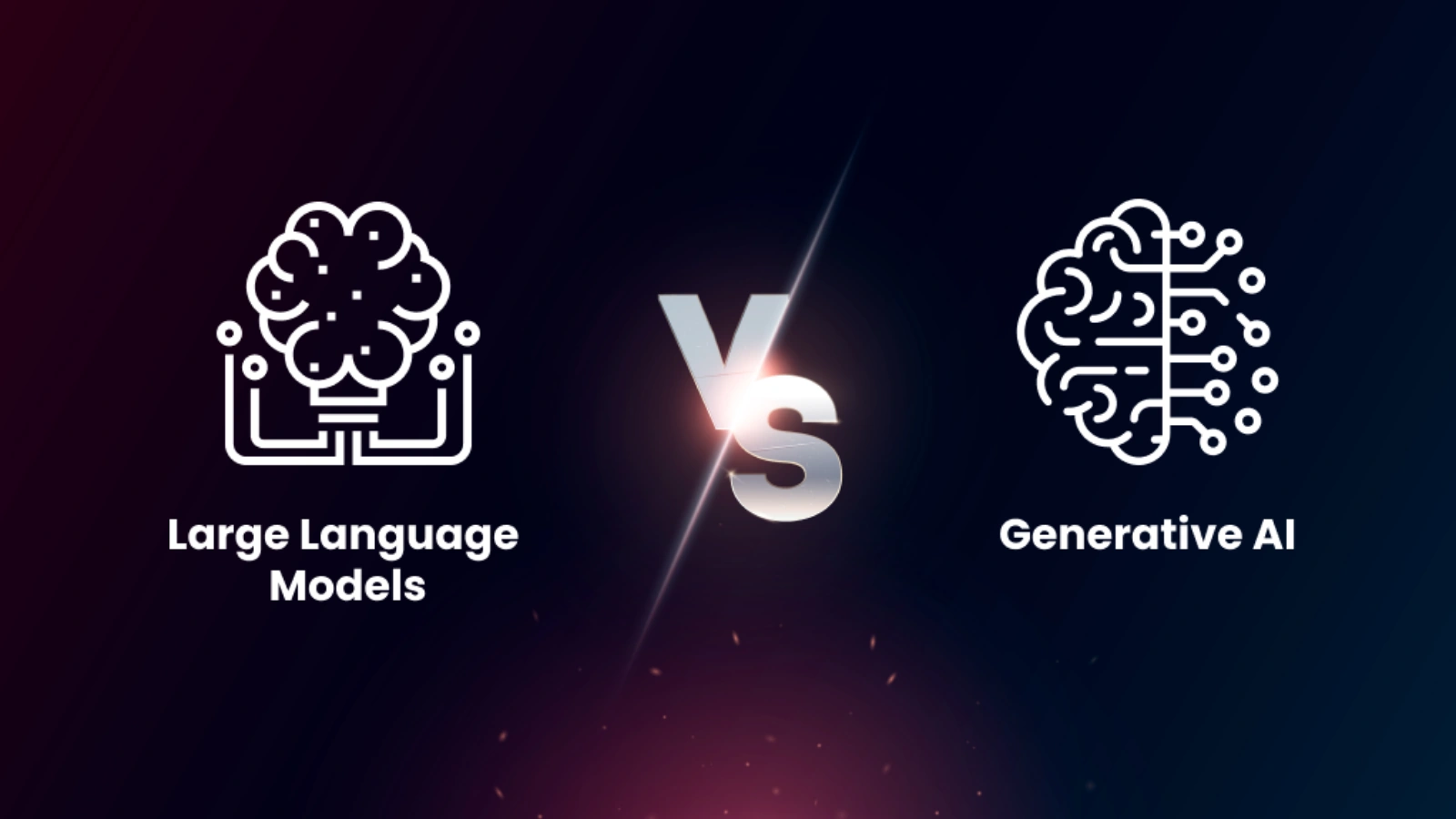
To understand LLM vs Generative AI, you must first define both terms clearly.
A Large Language Model (LLM) refers to an advanced AI model trained on vast volumes of text data. It processes language, predicts patterns, and generates human-like responses. These models excel at communication-driven tasks such as drafting content, answering questions, summarizing information, and assisting with research.
Generative AI represents a broader category of AI systems designed to create new content. That content may include text, images, videos, code, voice, or even 3D simulations. It extends beyond language and supports multiple creative and analytical outputs.
When evaluating Large Language Model vs Generative AI, remember this hierarchy:
- All LLMs fall under Generative AI.
- Not all generative AI systems are LLMs.
The phrase Generative AI vs. LLM often implies a rivalry. In reality, LLMs exist inside the generative AI ecosystem rather than competing with it.
Generative AI represents the umbrella term. LLMs represent a specific branch focused on language intelligence. Understanding this relationship eliminates confusion in the LLM vs Generative AI debate and helps businesses choose the right AI strategy based on their operational goals.
What Is A Large Language Model?
Large Language Models rely primarily on transformer-based neural networks. Engineers train these models on extensive text datasets, including books, research papers, websites, and structured documents.
LLMs perform tasks such as:
- Conversational responses
- Content drafting
- Summarization
- Translation
- Code generation
- Knowledge extraction
In the debate around Large Language Model vs generative ai, LLMs represent the language-focused segment of generative technologies.
They analyze context, recognize patterns, and predict the most relevant continuation of a text sequence. Their strength lies in linguistic reasoning and structured communication.
Also Read:
What Is Generative AI?
Generative AI describes artificial intelligence systems that create new outputs across multiple media formats. These systems use machine learning architectures such as:
- Transformers
- Diffusion models
- GANs (Generative Adversarial Networks)
- Variational Autoencoders
When exploring Large Language Model vs Generative AI, it is important to understand that generative AI extends far beyond text generation. It forms the foundation of modern generative services that enable businesses and creators to produce intelligent, automated content at scale.
It produces:
- Marketing visuals
- AI-generated images
- Synthetic voice
- Product mockups
- Video content
- Code snippets
- Written articles
If someone asks what is generative ai vs llm, the answer lies in scope. Generative AI includes text generation but also powers visual, audio, and multimodal content creation.
Architectural Differences In LLM Vs Generative AI
The architecture behind these systems influences their capabilities.
Transformer-Based Models:
Most LLMs use transformer architecture. Transformers process text in parallel and capture contextual relationships efficiently. They dominate the LLM side of the Large Language Model vs generative ai comparison.
Diffusion and GAN Models:
Generative AI models that create images and videos rely heavily on diffusion models and GANs. These architectures refine patterns into realistic visuals or synthetic outputs.
Architecture defines how each system performs. That difference shapes the practical implications of Large Language Model vs generative ai in enterprise environments.
Why Do Businesses Misinterpret Generative AI Vs LLM?
Many marketing materials blur the line between categories. Vendors often promote text-generation tools as complete generative AI platforms.
The phrase generative ai vs. llm frequently appears in search queries because business leaders want clarity before investing.
The difference matters for strategic planning. If a company needs automated blog writing, LLMs suffice. If it needs AI-powered ad creatives with visuals, it requires broader generative AI systems.
That strategic distinction defines the real meaning of Large Language Model vs generative ai in practical decision-making.
Business Applications Of LLM Vs Generative AI
AI adoption varies across industries. Each organization must align technology with goals.
Content Marketing:
LLMs generate blogs, email campaigns, product descriptions, and SEO copy efficiently. Generative AI goes further by creating banners, ad creatives, and social media visuals. In content strategy, Large Language Model vs generative ai determines whether teams automate text only or build full multimedia campaigns.
For instance, Globussoft’s AdsGPT showcases applied generative AI in marketing. It creates high-converting ad copy and suggests optimized creatives for multiple platforms, helping brands accelerate campaign performance.
Workforce Automation:
LLMs streamline internal documentation, policy drafting, employee FAQs, and HR communication. They reduce manual effort and improve clarity in everyday operations. Generative AI enhances onboarding materials, interactive training visuals, and simulation-based learning modules, creating more engaging employee experiences.
Organizations evaluating LLM vs Generative AI in workforce management must decide whether they need communication efficiency or immersive training support.
Software Development:
LLMs assist developers with writing code, debugging errors, generating documentation, and explaining complex logic. They speed up development cycles and improve productivity. Broader generative AI tools support UI mockups, rapid prototyping, design suggestions, and synthetic testing environments.
In technical teams, understanding Large Language Model vs generative ai helps balance coding assistance with end-to-end product design innovation.
The right choice depends on understanding Large Language Model vs generative ai clearly and aligning the solution with specific business objectives, scalability plans, and long-term digital strategy.
Also Read:
Performance Metrics And Evaluation
Businesses measure AI differently depending on use case.
For LLMs:
- Coherence
- Context accuracy
- Relevance
- Factual alignment
For generative AI:
- Visual realism
- Creative quality
- Output consistency
- Rendering precision
Clear evaluation standards improve decisions in the Large Language Model vs generative ai selection process.
What Are The Ethical And Security Risks In LLM vs Generative AI?
When evaluating LLM vs Generative AI, organizations must consider ethical and security implications before deployment.
- Bias and Inaccuracy: LLMs may generate biased, misleading, or factually incorrect information due to limitations in training data.
- Misinformation Risks: Language models can produce confident but inaccurate responses that influence poor decision-making.
- Deepfakes and Manipulated Media: Generative AI can create synthetic images, videos, or audio that may be misused.
- Copyright and IP Concerns: AI-generated content may unintentionally replicate copyrighted material or raise ownership disputes.
- Data Privacy Issues: Improper data handling during training or deployment can expose sensitive information.
- Regulatory Compliance Challenges: Businesses must ensure AI usage aligns with evolving legal standards and industry regulations.
To operate responsibly in the LLM vs Generative AI landscape, organizations should implement:
- Clear AI governance frameworks
- Human oversight and content validation
- Continuous monitoring and auditing systems
- Transparent usage policies
A structured risk management approach ensures ethical, secure, and trustworthy AI adoption.
What Are The Infrastructure And Cost Implications Of LLM Vs Generative AI?
Infrastructure and cost planning play a critical role when evaluating Large Language Model vs generative ai for enterprise adoption. Businesses must assess both short-term deployment expenses and long-term operational impact.
Training Costs:
LLMs require massive computational resources and high-quality datasets during training. However, most organizations rely on third-party APIs, which significantly reduce the need for in-house training infrastructure.
Deployment Scalability:
LLMs scale efficiently through cloud platforms, making them cost-effective for content generation, automation, and conversational applications.
GPU Requirements:
Generative AI systems used for image, video, or 3D creation require advanced GPUs and higher processing power, increasing infrastructure costs.
Storage Needs:
Multimedia outputs consume more storage space compared to text-based AI systems, which adds to long-term storage expenses.
Maintenance Expenses:
Both technologies require continuous monitoring, updates, model fine-tuning, and security management, contributing to recurring operational costs.
In enterprise discussions around LLM vs Generative AI, infrastructure readiness, cloud strategy, and budget allocation directly influence the final technology decision.
How Globussoft Leverages AI To Drive Real Business Impact?
Globussoft is a global technology company with over a decade of expertise in building intelligent software solutions. The company follows an AI-driven approach that blends strong software engineering with smart automation.
In the context of LLM vs Generative AI, Globussoft applies practical AI through products like AdsGPT, which uses generative AI to create high-converting ad copy and optimized creatives for digital campaigns.
Rather than just developing software, Globussoft builds AI-powered platforms that streamline workflows, improve productivity, and deliver measurable business results.
AdsGPT: A Practical Example Of Generative AI In Action
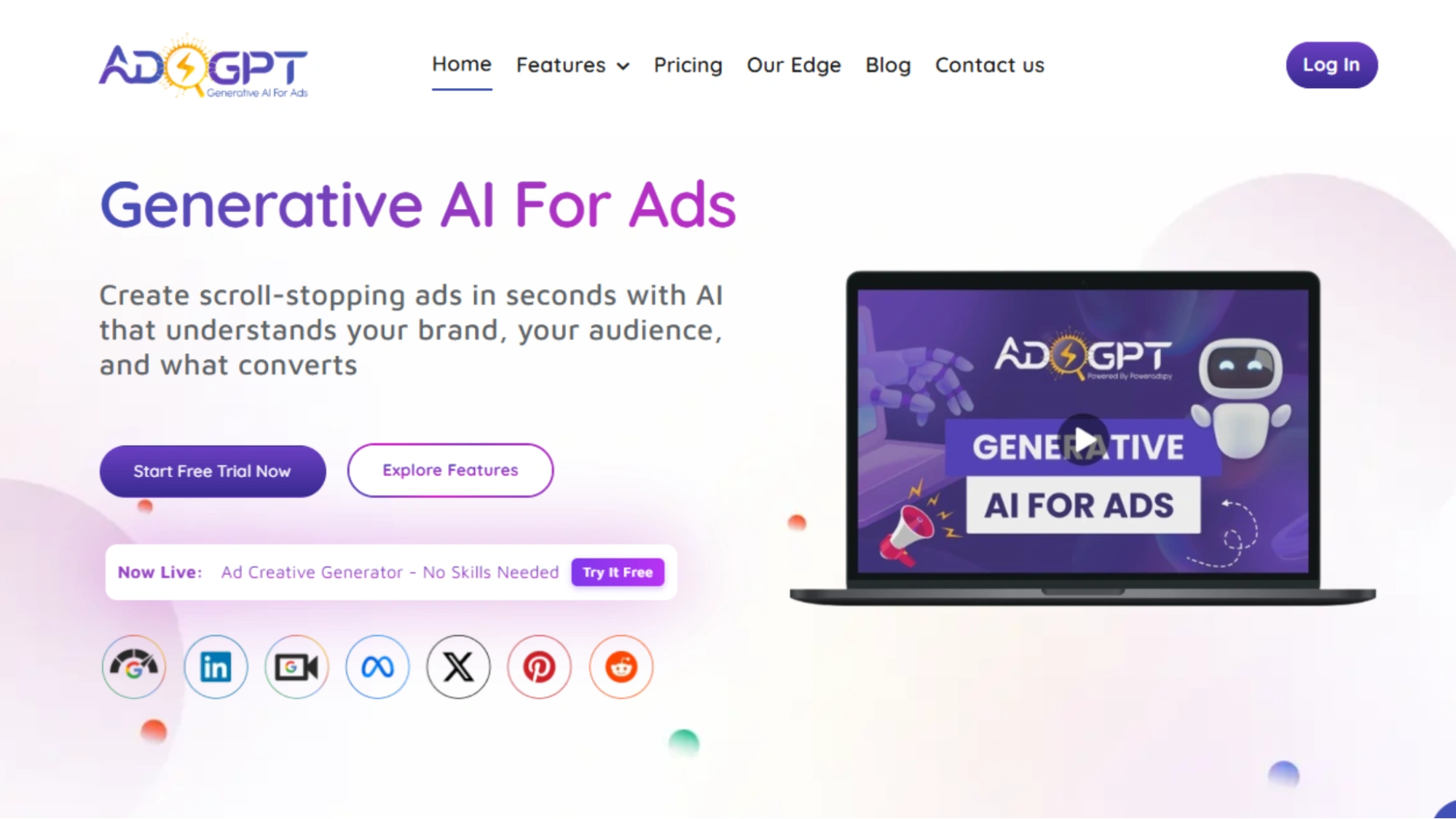
AdsGPT directly aligns with the Large Language Model vs Generative AI discussion. It functions as a generative AI tool designed for marketers and agencies.
The platform creates:
- High-converting ad copy
- Optimized headlines
- Platform-specific descriptions
- Creative suggestions for visuals
AdsGPT combines language intelligence with creative generation capabilities. It demonstrates how generative AI extends beyond pure LLM text generation into campaign-level optimization.
For businesses exploring Generative AI for ad generation, AdsGPT can help create high-quality marketing assets that improve conversions.
AI-Curated Solutions with Strategic Precision
Globussoft builds AI-enhanced solutions with commercial clarity. Its engineering-first mindset ensures that AI adoption aligns with measurable business impact.
Rather than chasing trends, Globussoft evaluates LLM and Generative AI use cases based on operational need, scalability, and ROI potential.
That approach transforms AI from a buzzword into a performance driver.
How Should You Choose Between LLM And Generative AI?

The real question in LLM vs Generative AI does not involve which technology wins. It involves which technology aligns with your objective.
Choose LLM-focused tools when:
- You automate text workflows
- You improve documentation processes
- You deploy conversational AI
Choose broader generative AI systems when:
- You create multimedia campaigns
- You design product visuals
- You scale marketing creatives
Companies that understand this distinction make smarter technology investments.
The Future Of LLM Vs Generative AI
AI innovation continues to accelerate, and the distinction between LLM vs Generative AI will evolve alongside it. Emerging technologies are reshaping how businesses deploy and integrate intelligent systems.
- Rise of Multimodal Models:
Future AI systems will combine text, image, audio, and video processing into unified architectures. This integration will reduce the gap between language-focused models and broader generative systems. - Improved Reasoning Capabilities:
Advanced reasoning and contextual understanding will make LLMs more reliable for complex decision support, analytics, and enterprise workflows. - Industry-Specific AI Solutions:
Customized AI models tailored for healthcare, finance, marketing, and manufacturing will drive more precise and scalable applications. - Greater Enterprise Integration:
AI will move from isolated tools to fully embedded systems within business operations, enhancing automation and productivity at scale.
Despite rapid innovation, conceptual clarity around LLM vs Generative AI will remain essential for long-term strategy. Organizations that understand both technologies and apply them strategically will lead in automation, creativity, and operational efficiency.
Final Thoughts
The conversation around LLM vs Generative AI centers on scope, specialization, and business application.
LLMs specialize in language-driven intelligence. Generative AI spans text, visuals, audio, and beyond.
Understanding this difference empowers companies to implement the right AI solutions at the right time.
With its AI-driven product ecosystem and engineering precision, Globussoft exemplifies how businesses can harness both LLM capabilities and broader generative AI systems for measurable, real-world impact.
The future of AI does not depend on choosing sides in the LLM vs Generative AI debate. It depends on applying the right technology with clarity, strategy, and purpose.
FAQs
1. Can small businesses implement AI without a large technical team?
Yes, small businesses can adopt AI solutions through cloud-based platforms and SaaS tools that require minimal infrastructure. Many AI providers offer ready-to-use APIs and dashboards that simplify deployment. Companies can start with pilot projects in marketing, HR, or customer support before scaling further.
2. How does AI customization differ across industries?
AI customization depends on industry-specific data and compliance requirements. For example, healthcare systems require strict data privacy safeguards, while e-commerce platforms prioritize recommendation engines and customer personalization. Tailoring AI models with domain-specific data significantly improves performance and accuracy.
3. What role does data quality play in AI performance?
Data quality directly impacts output reliability. Incomplete, biased, or outdated datasets can reduce model accuracy and produce misleading results. Businesses must clean, validate, and continuously update their data to maintain optimal AI performance.
Quick Search Our Blogs
Type in keywords and get instant access to related blog posts.

 +91 8767115115